Showing posts with label nuclear war. Show all posts

Monday, July 07, 2008

A million reasons not to attack Iran versus the madness of King George

Blowback from a Strike on Iran

By PATRICK COCKBURN

Iraq will be plunged into a new war if Israel or the US launches an attack on Iran, Iraqi leaders have warned. Iranian retaliation would take place in Iraq, said Dr Mahmoud Othman, the influential Iraqi MP.

The Iraqi government's main allies are the US and Iran, whose governments openly detest each other. The Iraqi government may be militarily dependent on the 140,000 US troops in the country, but its Shia and Kurdish leaders have long been allied to Iran. Iraqi leaders have to continually perform a balancing act in which they seek to avoid alienating either country.

The balancing act has become more difficult for Iraq since George Bush successfully requested $400m (£200m) from Congress last year to fund covert operations aimed at destabilising the Iranian leadership. Some of these operations are likely to be launched from Iraqi territory with the help of Iranian militants opposed to Tehran. The most effective of these opponent groups is the Mujahedin-e-Khalq (MEK), which enraged the Iraqi government by staging a conference last month at Camp Ashraf, north-east of Baghdad. It demanded the closure of the Iranian embassy and the expulsion of all Iranian agents in Iraq. "It was a huge meeting" said Dr Othman. "All the tribes and political leaders who are against Iran, but are also against the Iraqi government, were there." He said the anti-Iranian meeting could not have taken place without US permission.

The Americans disarmed the 3,700 MEK militants, who had long been allied to Saddam Hussein, at Camp Ashraf in 2003, but they remain well-organized and well-financed. The extent of their support within Iran remains unknown, but they are extremely effective as an intelligence and propaganda organization.

Though the MEK is on the State Department's list of terrorist groups, the Pentagon and other US institutions have been periodically friendly to it. The US task force charged by Mr Bush with destabilizing the Iranian government is likely to co-operate with it.

In reaction to the conference, the Iraqi government, the US and the International Committee of the Red Cross (ICRC) have started secret talks on the future of the MEK with the Iraqi government pressing for their expulsion from Iraq. Dr Othman, who speaks to the MEK frequently by phone, said: "I pressed them to get out of Iraq voluntarily because they are a card in the hands of the Americans."

An embarrassing aspect of the American pin-prick war against Iran is that many of its instruments were previously on the payroll of Saddam Hussein. The MEK even played a role in 1991 in helping to crush the uprising against the Baathist regime at the end of the Gulf war. The dissidents from Arab districts in southern Iran around Ahwaz were funded by Saddam Hussein's intelligence organisations, which orchestrated the seizure of the Iranian embassy in London in 1980 which was supposedly carried out by Arab nationalists from Iran.

The one community in Iran most likely to oppose the Tehran government is the Iranian Kurds. There have been an increasing number of attacks by PJAK, the Iranian wing of the Turkish PKK, which claims to be a separate party. Based in the Kandil mountains in Iraqi Kurdistan, PJAK has carried out frequent raids into Iran and has reportedly been able to win local support. But it would be extremely dangerous for the US to be seen as a supporter of PJAK as this would offend the Turks who have a military co-operation agreement with Iran against terrorism.

Patrick Cockburn is the the author of "Muqtada: Muqtada Al-Sadr, the Shia Revival, and the Struggle for Iraq."

Original article posted here.

Tuesday, June 10, 2008

Warmongering continues, and comes from new source: Dick's spawn

Hawks still circling on Iran

By Jim Lobe

WASHINGTON - Once again, notably in the wake of last week's annual American Israel Public Affairs Committee (AIPAC) policy conference and the visit to the capital of Prime Minister Ehud Olmert, there's a lot of chatter about a possible attack by Israel and/or the United States on Iran.

Olmert appears to have left the White House after meeting with President George W Bush and an earlier dinner with Vice President Dick Cheney quite satisfied on this score, while rumors - most recently voiced by neo-conservative Daniel Pipes - that the administration plans to carry out a "massive" attack in the window between the November elections and Bush's departure from office, particularly if Democratic Senator Barack Obama is his successor, continue to swirl around the capital.

What to make of this? Is this real? Or is it psychological warfare designed to persuade Tehran that it really does face devastation if it doesn't freeze its uranium-enrichment program very, very soon and/or to warn Russia and China that they have to put more pressure on Tehran or deal with the consequences of such an attack?

As I mentioned in a previous post, I've generally been skeptical of the many reports over the past two years that an attack - either by Israeli or the US - was imminent, as those reports had often warned at the time of their publication. After the release of the December National Intelligence Estimate (NIE), I, like just about everyone else, became even more doubtful that Bush would order an attack before leaving office (and I didn't think the Israelis would mount an attack without a green light from Washington). This is in part because neo-conservatives, who had been and remain the most eager champions of military action, seemed to simply give up on Bush and, in any event, were not showing any signs of orchestrating a major new media campaign to mobilize public opinion in that direction, as they did in the run-up to the Iraq invasion.

Since the abrupt resignation of Admiral William Fallon as CENTCOM commander, which I saw as a major blow to the realist faction in the administration, and Cheney's subsequent visit to the region, however, I've been increasingly concerned about the possibility of an attack, and the past week's events have done nothing to allay that concern.

Let me just lay out a few items, other than those mentioned above, that I find disturbing.

First, there were Olmert's very confident comments about "vanquish[ing] the threat" after his meeting with Bush last Wednesday. "I left with a lot less question marks [than I had entered with] regarding the means, the timetable restrictions and America's resoluteness to deal with the problem," he said after the meeting.

This, of course, was the day after Olmert had told AIPAC, "The international community has a duty and responsibility to clarify to Iran, through drastic measures, that the repercussions of their continued pursuit of nuclear weapons will be devastating." (Emphasis mine). Now, this may just be the hawkishness of a politically besieged Israeli prime minister dishing up red meat for a hawkish AIPAC audience, but I don't think it can be so easily dismissed (in contrast to the even more bellicose remarks last week of Deputy Prime Minister Shaul Mofaz, whose domestic political motivations are much more clear and who is now being blamed for much of the historic jump in oil prices last Friday).

Second, there is the "Cheney" role which is becoming more prominent. I am referring not only to Olmert's dinner with Cheney last Wednesday evening in which the two men reportedly addressed "operational subjects", whatever that means. (Remember, it was Cheney's top Middle East aide, David Wurmser, who, during the spring of 2007 when the realists were clearly in the driver's seat, was shopping around to sympathetic think-tanks a scheme - from which the vice president's office was later forced to disassociate itself - for forcing Bush into war with Iran by getting Israel to launch a cruise missile attack on some Iranian nuclear facilities and counting on Tehran to retaliate against US forces.) In other words, Wednesday's dinner was not just a courtesy call; the Israelis clearly believe that Cheney is a player.

But I am also referring to another Cheney, namely Elizabeth, the former deputy assistant secretary of state for Near Eastern Affairs and Cheney's daughter, who, during the opening plenary session of the AIPAC conference last Monday, took every opportunity to attack the policies of her former boss, Secretary of State Condoleezza Rice. Liz was particularly harsh on Rice's pet project, the effort to gain at least a framework peace accord between Israel and the Palestinian Authority before Bush leaves office, arguing that the Annapolis Middle East peace process was a waste of time compared to the importance of dealing with Iran in what she called a "zero-sum game".

"When we focus on that kind of arrangement [Israeli-Palestinian peace talks], we don't have time to focus on Iran," she declared, suggesting as well that Tehran's leadership was not "rational" and that previous efforts to engage it had also been a waste of time, or worse. Iran needs to be convinced that if it doesn't heed United Nations Security Council demands to halt enrichment, "They will face military action. We do not have the luxury of time," she said to (surprisingly) scattered applause.

Third, Liz Cheney's remarks should be seen in the context of a more concerted attack by the hawks on Rice of which the recent hatchet job by the Weekly Standard's by Stephen Hayes, the vice president's favorite reporter, was perhaps the most important piece. Hayes accused Rice of betraying the Bush Doctrine and focused much of his essay on her backing for US Assistant Secretary of State Christopher Hill's negotiations over the past year with North Korea, on which the State Department has already been forced on the defensive.

Now comes Liz's top-to-bottom repudiation of Rice's Middle East policy - from favoring Palestinian elections in 2006, to initiating the Annapolis summit in Maryland last year and then inviting Syria to attend it, to welcoming last month's Doha agreement on Lebanon. All of which, she charged, had given Iran a "real choke-hold on the region".

Now, I don't think there can be any question that the views of both Hayes and Liz reflect those of the vice president. Moreover, because their closeness to the vice president is so clear and unmistakable, the fact that these views are so harsh and so public suggests to me that Cheney feels more confident than he has felt for some time. Moreover, the campaign to discredit Rice seems to have hit its mark.

Not only did she sound defensive in her own speech to AIPAC last Tuesday morning, but she assumed a more-hawkish tone on Iran than she had previously. And, as noted by the New York Times, she was also markedly more doubtful about achieving even a framework agreement between the Israelis and the Palestinians by the end of Bush's term than ever before.

(In fact, Bush and Olmert reportedly spent much more time during their meeting on Iran than on the Annapolis process, suggesting that the president, who has never been as committed to the process as Rice, had, in that meeting in any event, accepted Liz's notion of a "zero-sum game" in which Iran should take precedence over Israel-Palestine.) In other words, there appears to be a major battle over Bush's Middle East "legacy" (apart from Iraq) between Rice, who has hoped to redeem her own "legacy" by concluding some kind of a credible Palestinian-Israeli peace agreement, and the Cheneys, who believe confrontation with Iran is inevitable and, in Liz's words, "We do not have the luxury of time."

Judging from this past week's events, I would have to say the Cheneys have gained some ground.

That does not mean they will prevail. Again, all of the hawkishness on display last week - including the dire warnings coming from Israeli officials both in the US and in Israel - may simply be psychological warfare aimed at Europe (where former German Foreign Minister Joschka Fischer, for one, seems increasingly alarmed) and Iran.

Moreover, recent statements by Secretary of Defense Robert Gates about both gaining "leverage" with Iran and recognizing that "they [Tehran's leadership] need something, too" and warnings by the US Navy commander in the Gulf, Vice Admiral Kevin Cosgriff, that war with Iran would be "pretty disastrous" and that an "incidents-at-sea" agreement with Tehran was highly desirable (reprising Fallon's efforts over the previous year) suggest that the Pentagon remains as opposed to an attack as ever.

And, despite Bush's own effective repudiation of last December's NIE, which said Iran had given up efforts to build a nuclear weapon, the intelligence community is sticking doggedly by it, if recent statements by the deputy Director of National Intelligence can be relied on.

Then there is the price of oil, whose record jump on Friday following Mofaz's bellicose warnings offered some idea of what the US (and global) economy will face if the Cheney faction prevails on Bush to either greenlight an Israeli attack or launch one himself.

So, even if Cheney neutralizes Rice in the battle for Bush's mind - or gut - he still faces some formidable obstacles. But I think he has made some progress.

This article is reproduced from the blog of Jim Lobe, best known for his coverage of US foreign policy, particularly the neo-conservative influence in the Bush administration. He is the Washington bureau chief of the international news agency Inter Press Service.

Original article posted here.

Wednesday, May 28, 2008

Never ending call for war

Bush 'plans Iran air strike by August'

By Muhammad Cohen

NEW YORK - The George W Bush administration plans to launch an air strike against Iran within the next two months, an informed source tells Asia Times Online, echoing other reports that have surfaced in the media in the United States recently.

Two key US senators briefed on the attack planned to go public with their opposition to the move, according to the source, but their projected New York Times op-ed piece has yet to appear.

The source, a retired US career diplomat and former assistant secretary of state still active in the foreign affairs community, speaking anonymously, said last week that the US plans an air strike against the Iranian Revolutionary Guards Corps (IRGC). The air strike would target the headquarters of the IRGC's elite Quds force. With an estimated strength of up to 90,000 fighters, the Quds' stated mission is to spread Iran's revolution of 1979 throughout the region.

Targets could include IRGC garrisons in southern and southwestern Iran, near the border with Iraq. US officials have repeatedly claimed Iran is aiding Iraqi insurgents. In January 2007, US forces raided the Iranian consulate general in Erbil, Iraq, arresting five staff members, including two Iranian diplomats it held until November. Last September, the US Senate approved a resolution by a vote of 76-22 urging President George W Bush to declare the IRGC a terrorist organization. Following this non-binding "sense of the senate" resolution, the White House declared sanctions against the Quds Force as a terrorist group in October. The Bush administration has also accused Iran of pursuing a nuclear weapons program, though most intelligence analysts say the program has been abandoned.

An attack on Iraq would fit the Bush administration's declared policy on Iraq. Administration officials questioned directly about military action against Iran routinely assert that "all options remain on the table".

Rockin' and a-reelin'
Senators and the Bush administration denied the resolution and terrorist declaration were preludes to an attack on Iran. However, attacking Iran rarely seems far from some American leaders' minds. Arizona senator and presumptive Republican presidential nominee John McCain recast the classic Beach Boys tune Barbara Ann as "Bomb Iran". Democratic candidate Hillary Clinton promised "total obliteration" for Iran if it attacked Israel.

The US and Iran have a long and troubled history, even without the proposed air strike. US and British intelligence were behind attempts to unseat prime minister Mohammed Mossadeq, who nationalized Britain's Anglo-Iranian Petroleum Company, and returned Shah Mohammad Reza Pahlavi to power in 1953. President Jimmy Carter's pressure on the Shah to improve his dismal human-rights record and loosen political control helped the 1979 Islamic revolution unseat the Shah.

But the new government under Ayatollah Ruhollah Khomeini condemned the US as "the Great Satan" for its decades of support for the Shah and its reluctant admission into the US of the fallen monarch for cancer treatment. Students occupied the US Embassy in Teheran, holding 52 diplomats hostage for 444 days. Eight American commandos died in a failed rescue mission in 1980. The US broke diplomatic relations with Iran during the hostage holding and has yet to restore them. Iranian President Mahmud Ahmadinejad's rhetoric often sounds lifted from the Khomeini era.

The source said the White House views the proposed air strike as a limited action to punish Iran for its involvement in Iraq. The source, an ambassador during the administration of president H W Bush, did not provide details on the types of weapons to be used in the attack, nor on the precise stage of planning at this time. It is not known whether the White House has already consulted with allies about the air strike, or if it plans to do so.

Sense in the senate
Details provided by the administration raised alarm bells on Capitol Hill, the source said. After receiving secret briefings on the planned air strike, Senator Diane Feinstein, Democrat of California, and Senator Richard Lugar, Republican of Indiana, said they would write a New York Times op-ed piece "within days", the source said last week, to express their opposition. Feinstein is a member of the Senate Intelligence Committee and Lugar is the ranking Republican on the Foreign Relations Committee.

Senate offices were closed for the US Memorial Day holiday, so Feinstein and Lugar were not available for comment.

Given their obligations to uphold the secrecy of classified information, it is unlikely the senators would reveal the Bush administration's plan or their knowledge of it. However, going public on the issue, even without specifics, would likely create a public groundswell of criticism that could induce the Bush administration reconsider its plan.

The proposed air strike on Iran would have huge implications for geopolitics and for the ongoing US presidential campaign. The biggest question, of course, is how would Iran respond?

Iran's options
Iran could flex its muscles in any number of ways. It could step up support for insurgents in Iraq and for its allies throughout the Middle East. Iran aids both Hezbollah in Lebanon and Hamas in Israel's Occupied Territories. It is also widely suspected of assisting Taliban rebels in Afghanistan.

Iran could also choose direct confrontation with the US in Iraq and/or Afghanistan, with which Iran shares a long, porous border. Iran has a fighting force of more than 500,000. Iran is also believed to have missiles capable of reaching US allies in the Gulf region.

Iran could also declare a complete or selective oil embargo on US allies. Iran is the second-largest oil exporter in the Organization of Petroleum Exporting Countries and fourth-largest overall. About 70% of its oil exports go to Asia. The US has barred oil imports from Iran since 1995 and restricts US companies from investing there.

China is Iran's biggest customer for oil, and Iran buys weapons from China. Trade between the two countries hit US$20 billion last year and continues to expand. China's reaction to an attack on Iran is also a troubling unknown for the US.

Three for the money
The Islamic world could also react strongly against a US attack against a third predominantly Muslim nation. Pakistan, which also shares a border with Iran, could face additional pressure from Islamic parties to end its cooperation with the US to fight al-Qaeda and hunt for Osama bin Laden. Turkey, another key ally, could be pushed further off its secular base. American companies, diplomatic installations and other US interests could face retaliation from governments or mobs in Muslim-majority states from Indonesia to Morocco.

A US air strike on Iran would have seismic impact on the presidential race at home, but it's difficult to determine where the pieces would fall.

At first glance, a military attack against Iran would seem to favor McCain. The Arizona senator says the US is locked in battle across the globe with radical Islamic extremists, and he believes Iran is one of biggest instigators and supporters of the extremist tide. A strike on Iran could rally American voters to back the war effort and vote for McCain.

On the other hand, an air strike on Iran could heighten public disenchantment with Bush administration policy in the Middle East, leading to support for the Democratic candidate, whoever it is.

But an air strike will provoke reactions far beyond US voting booths. That would explain why two veteran senators, one Republican and one Democrat, were reportedly so horrified at the prospect.

Former broadcast news producer Muhammad Cohen told America's story to the world as a US diplomat and is author of Hong Kong On Air (www.hongkongonair.com), a novel set during the 1997 handover about television news, love, betrayal, high finance and cheap lingerie.


Original article posted here.

Saturday, May 03, 2008

Iran trying to roll with the punches

How under-the-gun Iran plays it cool

By Pepe Escobar

More than two years ago, Seymour Hersh disclosed in the New Yorker how President George W Bush was considering strategic nuclear strikes against Iran. Ever since, a campaign to demonize that country has proceeded in a relentless, Terminator-like way, applying the same techniques and semantic contortions that were so familiar in the period before the Bush administration launched its invasion of Iraq.

The campaign's greatest hits are widely known: "The ayatollahs" are building a Shi'ite nuclear bomb; Iranian weapons are killing American soldiers in Iraq; Iranian gunboats are provoking US warships in the Persian Gulf. Iran, in short, is the new al-Qaeda, a terror state aimed at the heart of the United States. It's idle to expect the American mainstream media to offer any tools that might put this orchestrated blitzkrieg in context.

Here are just a few recent instances of the ongoing campaign: Secretary of Defense Robert Gates insists that Iran "is hell-bent on acquiring nuclear weapons". Admiral Michael Mullen, chairman of the Joint Chiefs of Staff, admits that the Pentagon is planning for "potential military courses of action" when it comes to Iran. In tandem with US commander in Iraq General David Petraeus, Mullen denounces Iran's "increasingly lethal and malign influence" in Iraq, although he claims to harbor "no expectations" of an attack on Iran "in the immediate future" and even admits he has "no smoking gun which could prove that the highest leadership [of Iran] is involved".

But keep in mind one thing the Great Saddam take-out of 2003 proved: that a "smoking gun" is, in the end, irrelevant. And this week, the US is ominously floating a second aircraft carrier battle group into the Persian Gulf.

But what of Iran itself under the blizzard of charges and threats? What to make of it? What does the world look like from Tehran? Here are five ways to think about Iran under the gun and to better decode the Iranian chessboard.

1. Don't underestimate the power of Shi'ite Islam: Seventy-five percent of the world's oil reserves are in the Persian Gulf. Seventy percent of the Gulf's population is Shi'ite. Shi'ism is an eschatological - and revolutionary - religion, fueled by a passionate mixture of romanticism and cosmic despair. As much as it may instill fear in hegemonic Sunni Islam, some Westerners should feel a certain empathy for intellectual Shi'ism's almost Sartrean nausea towards the vacuous material world.

For more than 1,000 years, Shi'ite Islam has, in fact, been a galaxy of Shi'isms - a kind of Fourth World of its own, always cursed by political exclusion and implacable economic marginalization, always carrying an immensely dramatic view of history with it.

It's impossible to understand Iran without grasping the contradiction that the Iranian religious leadership faces in ruling, however fractiously, a nation state. In the minds of Iran's religious leaders, the very concept of the nation-state is regarded with deep suspicion, because it detracts from the umma, the global Muslim community. The nation-state, as they see it, is but a way-station on the road to the final triumph of Shi'ism and pure Islam.

To venture beyond the present stage of history, however, they also recognize the necessity of reinforcing the nation-state that offers Shi'ism a sanctuary - and that, of course, happens to be Iran. When Shi'ism finally triumphs, the concept of nation-state - a heritage, in any case, of the West - will disappear, replaced by a community organized according to the will of Prophet Mohammad.

In the right context, this is, believe me, a powerful message. I briefly became a mashti - a pilgrim visiting a privileged Shi'ite gateway to Paradise, the holy shrine of Imam Reza in Mashhad, four hours west of the Iran-Afghan border. At sunset, the only foreigner lost in a pious multitude of black chadors and white turbans occupying every square inch of the huge walled shrine, I felt a tremendous emotional jolt. And I wasn't even a believer, just a simple infidel.

2. Geography is destiny: Whenever I go to the holy city of Qom, bordering the central deserts in Iran, I am always reminded, in no uncertain terms, that, as far as the major ayatollahs are concerned, their supreme mission is to convert the rest of Islam to the original purity and revolutionary power of Shi'ism - a religion invariably critical of the established social and political order.

Even a Shi'ite leader in Tehran, however, can't simply live by preaching and conversion alone. Iran, after all, happens to be a nation-state at the crucial intersection of the Arabic, Turkish, Russian and Indian worlds. It is the key transit point of the Middle East, the Persian Gulf, Central Asia, the Caucasus, and the Indian sub-continent. It lies between three seas (the Caspian, the Persian Gulf and the sea of Oman). Close to Europe and yet at the gates of Asia (in fact part of Southwest Asia), Iran is the ultimate Eurasian crossroads. Isfahan, the country's third-largest city, is roughly equidistant from Paris and Shanghai. No wonder US Vice President Dick Cheney, checking out Iran, "salivates like a Pavlov dog" (to quote those rock 'n roll geopoliticians, the Rolling Stones).

Members of the Iranian upper middle classes in north Tehran might spin dreams of Iran recapturing the expansive range of influence once held by the Persian empire; but the silky, Qom-carpet-like diplomats at the Ministry of Foreign Affairs will assure you that what they really dream of is an Iran respected as a major regional power.

To this end, they have little choice, faced with the enmity of the globe's "sole superpower", but to employ a sophisticated counter-encirclement foreign policy. After all, Iran is now completely surrounded by post-September 11 American military bases in Afghanistan, Central Asia, Iraq and the Gulf states. It faces the US military on its Afghan, Iraqi, Pakistani and Persian Gulf borders, and lives with ever-tightening US economic sanctions, as well as a continuing drumbeat of Bush administration threats involving possible air assaults on Iranian nuclear (and probably other) facilities.

The Iranian counter-response to sanctions and to its demonization as a rogue or pariah state has been to develop a "Look East" foreign policy that is, in itself, a challenge to American energy hegemony in the Gulf. The policy has been conducted with great skill by Foreign Minister Manouchehr Mottaki, who was educated in Bangalore, India. While focused on massive energy deals with China, India and Pakistan, it looks as well to Africa and Latin America. To the horror of American neo-cons, an intercontinental "axis of evil" air link already exists - a weekly commercial Tehran-Caracas flight via Iran Air.

Iran's diplomatic (and energy) reach is now striking. When I was in Bolivia this year, I learned of a tour Iran's ambassador to Venezuela had taken on the jet of Bolivian President Evo Morales. The ambassador reportedly offered Morales "everything he wanted" to offset the influence of "American imperialism".

Meanwhile, a fierce energy competition is developing among the Turks, Iranians, Russians, Chinese and Americans - all placing their bets on which future trade routes will be the crucial ones as oil and natural gas flow out of Central Asia.

As a player, Iran is trying to position itself as the unavoidable bazaar-state in an oil-and-gas-fueled new Silk Road - the backbone of a new Asian energy security grid. That's how it could recover some of the preeminence it enjoyed in the distant era of Darius, the King of Kings. And that's the main reason why US neo-Cold Warriors, Zio-cons, armchair imperialists, or all of the above, are throwing such a collective - and threatening - fit.

3. What is Ahmadinejad up to?: Ever since the days when former Iranian president Mohammed Khatami suggested a "dialogue of civilizations", Iranian diplomats have endlessly repeated the official position on Iran's nuclear program: it's peaceful; the International Atomic Energy Agency (IAEA) has found no proof of the military development of nuclear power; the religious leadership opposes atomic weapons; and Iran - unlike the US - has not invaded or attacked any nation for the past quarter millennium.

Think of George W Bush and Iranian President Mahmud Ahmadinejad as the new Blues Brothers: both believe they are on a mission from God. Both are religious fundamentalists. Ahmadinejad believes fervently in the imminent return of the Mahdi, the Shi'ite messiah, who "disappeared" and has remained hidden since the ninth century. Bush believes fervently in a coming end and the return of Jesus Christ. But only Bush, despite his actual invasions and constant threats, gets a (sort of) free pass from the Western ideological machine, while Ahmadinejad is portrayed as a Hitlerian believer in a new Holocaust.

Ahmadinejad is relentlessly depicted as an angry, totally irrational, Jew-hating, Holocaust-denying Islamo-fascist who wants to "wipe Israel off the map". That infamous quote, repeated ad nauseam but out of context, comes from an October 2005 speech at an obscure anti-Zionist student conference. What Ahmadinejad really said, in a literal translation from Farsi, was that "the regime occupying Jerusalem must vanish from the pages of time". He was actually quoting the leader of the 1979 Islamic Revolution, Ayatollah Ruhollah Khomeini, who said it first in the early 1980s. Khomeini hoped that a regime so unjust toward the Palestinians would be replaced by another more equitable one. He was not, however, threatening to nuke Israel.

In the 1980s, in the bitterest years of the Iran-Iraq war, Khomeini also made it very clear that the production, possession or use of nuclear weapons is against Islam. Iran's Supreme Leader Ayatollah Ali Khamenei later issued a fatwa - a religious injunction - under the same terms. For the theocratic regime, however, the Iranian nuclear program is a powerful symbol of independence vis-a-vis what is still widely considered by Iranians of all social classes and educational backgrounds as Anglo-Saxon colonialism.

Ahmadinejad is mad for the Iranian nuclear program. It's his bread and butter in terms of domestic popularity. During the Iran-Iraq war, he was a member of a support team aiding anti-Saddam Hussein Kurdish forces. (That's when he became friends with "Uncle" Jalal Talabani, now the Kurdish president of Iraq.) Not many presidents have been trained in guerrilla warfare. Speculation is rampant in Tehran that Ahmadinejad, the leadership of the Quds Force, an elite division of the Iranian Revolutionary Guard Corps (IRGC), plus the hardcore volunteer militia, the Basij (informally known in Iran as "the army of 20 million"), are betting on a US attack on Iran's nuclear facilities to strengthen the country's theocratic regime and their faction of it.

Reformists refer to Russian President Vladimir Putin's visit to Tehran last October, when he was received by the Supreme Leader (a very rare honor). Putin offered a new plan to resolve the explosive Iranian nuclear dossier: Iran would halt nuclear enrichment on Iranian soil in return for peaceful nuclear cooperation and development in league with Russia, the Europeans, and the IAEA.

Iran's top nuclear negotiator of that moment, Ali Larijani, a confidant of Supreme Leader Khamenei, as well as the leader himself let it be known that the idea would be seriously considered. But Ahmadinejad immediately contradicted the Supreme Leader in public. Even more startling, yet evidently with the leader's acquiescence, he then sacked Larijani and replaced him with a longtime friend, Saeed Jalili, an ideological hardliner.

4. A velvet revolution is not around the corner: Before the 2005 Iranian elections, at a secret, high-level meeting of the ruling ayatollahs in his house, the Supreme Leader concluded that Ahmadinejad would be able to revive the regime with his populist rhetoric and pious conservatism, which then seemed very appealing to the downtrodden masses. (Curiously enough, Ahmadinejad's campaign motto was: "We can.")

But the ruling ayatollahs miscalculated. Since they controlled all key levers of power - the Supreme National Security Council, the Council of Guardians, the Judiciary, the bonyads (Islamic foundations that control vast sections of the economy), the army, the IRGC (the parallel army created by Khomeini in 1979 and recently branded a terrorist organization by the Bush administration), the media - they assumed they would also control the self-described "street cleaner of the people". How wrong they have been.

For Khamenei himself, this was big business. After 18 years of non-stop internal struggle, he was finally in full control of executive power, as well as of the legislature, the judiciary, the IRGC, the Basij, and the key ayatollahs in Qom.

Ahmadinejad, for his part, unleashed his own agenda. He purged the Ministry of Foreign Affairs of many reformist-minded diplomats; encouraged the Interior Ministry and the Ministry of Culture and Islamic Guidance to crackdown on all forms of "nefarious" Western influences, from entertainment industry products to colorful made-in-India scarves for women; and filled his cabinet with revolutionary friends from the Iran-Iraq war days. These friends proved to be as faithful as administratively incompetent - especially in terms of economic policy. Instead of solidifying the theocratic leadership under Supreme Leader Khamenei, Ahmadinejad increasingly fractured an increasingly unpopular ruling elite.

Nonetheless, discontent with Ahmadinejad's economic incompetence has not translated into street barricades and it probably will not; nor, contrary to neo-con fantasy land scenarios, would an attack on Iran's nuclear facilities provoke a popular uprising. Every single political faction supports the nuclear program out of patriotic pride.

There is surely a glaring paradox here. The regime may be wildly unpopular - because of so much enforced austerity in an energy-rich land and the virtual absence of social mobility - but for millions, especially in the countryside and the remote provinces, life is still bearable. In the large urban centers - Tehran, Isfahan, Shiraz and Tabriz - most would be in favor of a move toward a more market-oriented economy combined with a progressive liberalization of mores (even as the regime insists on going the other way). No velvet revolution, however, seems to be on the horizon.

At least four main factions are at play in the intricate Persian-miniature-like game of today's Iranian power politics - and two others, the revolutionary left and the secular right, even though thoroughly marginalized, shouldn't be forgotten either.

The extreme right, very religiously conservative but economically socialist, has, from the beginning, been closely aligned with the Egyptian Muslim Brotherhood. Ahmadinejad is the star of this faction.

The clerics, from the Supreme Leader to thousands of provincial religious figures, are pure conservatives, even more patriotic than the extreme right, yet generally no lovers of Ahmadinejad. But there is a crucial internal split. The substantially wealthy bonyads - the Islamic foundations, active in all economic sectors - badly want a reconciliation with the West. They know that, under the pressure of Western sanctions, the relentless flight of both capital and brains is working against the national interest.

Economists in Tehran project there may be as much as US$600 billion in Iranian funds invested in the economies of Persian Gulf petro-monarchies. The best and the brightest continue to flee the country. But the Islamic foundations also know that this state of affairs slowly undermines Ahmadinejad's power.

The extremely influential IRGC, a key component of government with vast economic interests, transits between these two factions. They privilege the fight against what they define as Zionism, are in favor of close relations with Sunni Arab states, and want to go all the way with the nuclear program. In fact, substantial sections of the IRGC and the Basij believe Iran must enter the nuclear club not only to prevent an attack by the "American Satan" but to irreversibly change the balance of power in the Middle East and Southwest Asia.

The current reformists/progressives of the left were originally former partisans of Khomeini's son, Ahmad Khomeini. Later, after a spectacular mutation from Soviet-style socialism to some sort of religious democracy, their new icon became former president Mohammad Khatami (of "dialogue of civilizations" fame). Here, after all, was an Islamic president who had captured the youth vote and the women's vote and had written about the ideas of German philosopher Jurgen Habermas as applied to civil society as well as the possibility of democratization in Iran. Unfortunately, his "Tehran Spring" didn't last long - and is now long gone.

The key establishment faction is undoubtedly that of moderate Hashemi Rafsanjani, a former two-term president, current chairman of the Expediency Council and a key member of the Council of Experts - 86 clerics, no women, the Holy Grail of the system, and the only institution in the Islamic Republic capable of removing the Supreme Leader from office. He is now supported by the intelligentsia and urban youth. Colloquially known as "The Shark", Rafsanjani is the consummate Machiavellian. He retains privileged ties to key Washington players and has proven to be the ultimate survivor - moving like a skilled juggler between Khatami and Khamenei as power in the country shifted.

Rafsanjani is, and will always remain, a supporter of the Supreme Leader. As the regime's de facto number two, his quest is not only to "save" the Islamic Revolution of 1979 but also to consolidate Iran's regional power and reconcile the country with the West. His reasoning is clear: he knows that an anti-Islamic tempest is already brewing among the young in Iran's major cities, who dream of integrating with the nomad elites of liquid global modernity.

If the Bush administration had any real desire to let its aircraft carriers float out of the Gulf and establish an entente cordiale with Tehran, Rafsanjani would be the man to talk to.

5. Heading down the New Silk Road. Reformist friends in Tehran keep telling me the country is now immersed in an atmosphere similar to the Cultural Revolution of the 1960s in China or the 1980s rectification campaign in Cuba - and nothing "velvet" or "orange" or "tulip" or any of the other color-coded Western-style movements that Washington might dream of is, as yet, on the horizon.

Under such conditions, what if there were an American air attack on Iran? The Supreme Leader, on the record, offered his own version of threats in 2006. If Iran were attacked, he said, the retaliation would be doubly powerful against US interests elsewhere in the world.

From American supply lines and bases in southern Iraq to the Strait of Hormuz, the Iranians, though no military powerhouse, do have the ability to cause real damage to American forces and interests - and certainly to drive the price of oil into the stratosphere. Such a "war" would clearly be a disaster for everyone.

The Iranian theocratic leadership, however, seems to doubt that the Bush administration and the US military, exhausted by their wars in Iraq and Afghanistan, will attack. They feel a tide at their backs. Meanwhile the "Look East" strategy, driven by soaring energy prices, is bearing fruit.

Ahmadinejad has just concluded a tour of South Asia and, to the despair of American neo-cons, the Asian energy security grid is quickly becoming a reality. Two years ago, at the Petroleum Ministry in Tehran, I was told Iran is betting on the total "interdependence of Asia and Persian Gulf geo-economic politics".

This year, Iran finally becomes a natural gas-exporting country. The framework for the $7.6 billion Iran-Pakistan-India pipeline, also known as the "peace" pipeline, is a go. Both these key South Asian US allies are ignoring Bush administration desires and rapidly bolstering their economic, political, cultural, and - crucially - geostrategic connections with Iran. An attack on Iran would now inevitably be viewed as an attack against Asia.

What a disaster in the making, and yet, now more than ever, Cheney's faction in Washington (not to mention possible future president John McCain) seems ready to bomb. Perhaps the Mahdi himself - in his occult wisdom - is betting on a US war against Asia to slouch towards Qom to be reborn.

Pepe Escobar is the author of Globalistan: How the Globalized World is Dissolving into Liquid War (Nimble Books, 2007) and Red Zone Blues: a snapshot of Baghdad during the surge. He may be reached at pepeasia@yahoo.com.

Original article posted here
.

Tuesday, April 15, 2008

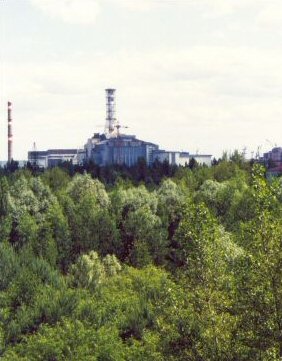
Nuclear holocaust for environmental health? First, Chernobyl's Zone of Alienation, now Bikini

Coral flourishing at Bikini Atoll atomic test site

Photo


By Rob Taylor

CANBERRA (Reuters) - Coral is again flourishing in the crater left by the largest nuclear weapon ever detonated by the United States, 54 years after the blast on Bikini Atoll, marine scientists said on Tuesday.

A team of research divers visited Bravo crater, ground zero for the test of a thermonuclear weapon in the remote Marshall Islands on March 1, 1954, and found large numbers of fish and coral growing, although some species appeared locally extinct. "I didn't know what to expect, some kind of moonscape perhaps. But it was incredible," Zoe Richards, from Australia's James Cook University, told Reuters about the team's trip to the atoll in the south Pacific.

"We saw communities not too far from any coral reef, with plenty of fish, corals and action going on, some really striking individual colonies," she said.

The 15 megatonne hydrogen bomb was 1,000 times more powerful than the blast which destroyed Hiroshima, vaporizing islands with temperatures hitting 99,000 Fahrenheit, and shaking islands even up to 124 miles away.

The resulting 4 mile-wide fireball left a crater 1 mile across and 80 yards deep, while the mushroom cloud rose 62 miles over the South Pacific and radioactive fallout reached Australia and Japan.

Richards, from the Australian government-backed Centre of Excellence for Coral Reef Studies, said the research team from Germany, Italy, Hawaii, Australia and the Marshall Islands found corals up to 9 yards high and some with 12 inch-thick trunks.

"It was fascinating. I've never seen corals growing like trees outside of the Marshall Islands," Richards said.

While above-water areas remained contaminated and unfit for human habitation, healthy sub-sea species probably traveled on strong winds and currents from nearby Rongelap Atoll, which was not bombed in a series of 23 tests between 1946-58.

"It is absolutely pristine for another tragic reason. It received fallout and was evacuated of people, so now underwater it's really healthy and prevailing winds have probably been seeding Bikini Atoll's recovery," Richards said.

Compared with a study made before the atomic tests, the team established that 42 species were missing compared to the early 1950s, with at least 28 of those locally extinct.

The team was asked by Marshall Islands authorities to investigate Bikini for the first time since the tests, in part to see if a small diving industry could safely be expanded.

The waters around Bikini are littered with wrecks of old , decommissioned ships sunk during the atomic tests, including the aircraft carrier USS Saratoga and the former Japanese flagship HIJMS Nagato, from which Admiral Yamoto gave the order to attack Pearl Harbour.

Richards said the ability of Bikini's corals to bounce back from "a single huge destructive event" was proof of their resilience, although that did not mean the threat to corals from climate change had been overestimated.

"Climate change is an ongoing struggle to survive with coral, with no reprieve in sight," she said. "After the atomic blasts they had 50 years undisturbed to recover."

Original article posted here.

Sunday, April 13, 2008

Avoiding the Dick

Cheney cold-shouldered

Dick Cheney's belligerence and aggressive anti-Iran rhetoric is driving Arab nations into the arms of Russia

Robert Fox

There is talk of new wars across the Middle East this summer - and there is nothing new about that. What is new is the reaction of America's closest allies in the Arab world to the latest outbreak of belligerent rhetoric. Led by Saudi Arabia, the Gulf states, and Egypt, they have indicated they don't like the war talk from Vice-President Cheney and his team.

Furthermore, they're hedging their bets. While not exactly cosying up to Moscow they have opened up new lines of diplomacy with the Russians on a range of issues from regional security to nuclear technology, and joining the World Trade Organisation.

Israel has been carrying out a series of emergency civil defence drills, with officials warning of possible simultaneous attacks from Syria, Lebanon and the Palestinian territories this summer.

On last month's tour of Middle Eastern capitals, Dick Cheney is reported to have blamed Iran and Syria as the primary sources for mischief in the Middle East. Both are seen as the sponsors of Hizbullah and Hamas. Damascus is the prime base for Sunni extremist groups now operating in Iraq, while Tehran is seen as the prime sponsor of trouble in the Shia communities.

And on top of all that there remain Iran's nuclear ambitions - with President Ahmadinejad announcing only a few days ago that the Iranian nuclear energy authority now has 6,000 more centrifuges up and running to enrich nuclear fuel.

The Cheney narrative of "not allowing Iran to go nuclear on my watch" has had its cover somewhat blown by recent revelations that the US has been talking quietly with Iran for some years.

One of the suggestions was that Iran would have fuel enriched outside the country, but a certain amount on enrichment could go in Iran itself, provided there is international supervision. The talks even looked at having an international approval and surveillance committee on which the Iranians said they would allow one American member.

Given the possibilities that some sort of dialogue between Washington and Tehran might bear fruit, the Arab powers were alarmed at the belligerence of Cheney's message and rhetoric on his recent tour. It sounded to them that he still very much wanted to attack Iran, or Syria, or both.

No sooner had Cheney departed than President Mubarak took off for Moscow to discuss cooperation on nuclear energy and programmes with the Russians. A few days after that Saudi Arabia and the Gulf Cooperation Council States said they would open talks with Russia about WTO membership.

The inference is clear: the conservative Arab states now believe that, in the short to medium term at least, Russia is as good a bet for containing the ambitions of Shia Iran as a Republican regime in Washington. It will not have escaped their attention that some of the leading Iran-bashers of the Washington thinktank circuit, notably John Bolton and Robert Kagan have quit team Bush to join team John McCain.

So Russia is back in the Middle East and Mediterranean security game in a big way. Moreover it is also back in the oil security game in a big way. Moscow has just struck a big gas export deal through an alliance of its own Gazprom and Italy's ENI for the export of gas from Libya. It seems a similar deal with Algeria involving Gazprom and ENI is now on the cards.

By their misguided belligerency, Dick Cheney and co appear to have undone the legacy of their hero Ronald Reagan in isolating Russia at the end of the Cold War. It is even being whispered that the princes in Riyhadh want to sign an arms deal and defence pact with Moscow.

So Russia appears to be riding high in the Arab Middle East in a way that it hasn't since the days of Gamal Abdul Nasser and his vision of Pan-Arab socialism. Interestingly, we haven't been hearing too much from Vice-President Cheney these past few weeks.

Original article posted here.

Wednesday, April 09, 2008

What some view as preparation for a US hit on Iran

War and peace, Israeli style

By Sami Moubayed

DAMASCUS - The Israelis insist they are not seeking war with the Syrians, even as Israel began its biggest military maneuver in its history since 1948. This was on the border with Syria, which has been calm since the June war of 1967.

This nation-wide "exercise" is being carried out by the Israel Defense Forces (IDF) Home Front Command, in cooperation with the recently-established National Emergency Authority.

President Shimon Peres insisted this was not a prelude to war with Syria, telling the Syrians not to worry. Israeli Radio, however, told citizens the scenario being practiced was for how things would look like on the fourth day of an "imaginary" war with Hezbollah on one front, and the Syrians on the other.

The training envisioned Kassam rockets and Katyusha missiles raining down on Israel, yet the IDF gave out a statement assuring Israelis not to worry, saying that the drill was "part of the IDF 2008 work plan". It stressed the exercise was not in preparation for any adventure, nor was it in retaliation for earlier skirmishes between Syria, Hezbollah and Israel. For its part, Hezbollah is uncomfortable with the Israeli maneuver, saying it neither routine - nor normal - for two countries technically at a state of war since 1948.

As part of the exercise, sirens went off inside Israel at 10am on April 8. News anchor Gadi Sukenik was called in to stage "emergency instructions" on television - and to do the same in the event of a real war. Between 10-11am, Channel 33, broadcasting from the Home Front Command's new studio, gave instructions on what to do in a time of war. Major General Yair Golan gave guidance and showed tutorial videos on how to behave while under attack.

Kindergarten teachers practiced how to deal with little children when and if war were to break out with Syria or Hezbollah, while a field exercise simulated various scenarios - conventional and unconventional rockets being fired onto Israel, a chemical attack, along with search and rescue training.

Adding spice to the show were the words of General Dan Harel, the deputy chief of staff of the IDF, who said, "Anyone who tries to harm Israel must remember that it is the strongest country in the region, and retaliation will be powerful - and painful."

If all of the above is not a prelude for war, then what is?

Last September, four Israeli warplanes invaded Syrian airspace and reached the village of Tal Abyan near Deir ez-Zour. Things became murky after that. Some said the planes struck at targets in Syria. Others denied this, until President Bashar al-Assad came out and confirmed the story, a few months later, confirming that they had struck, but he downplayed the targets.

Syria called it a "flagrant aggressive act" and said it confronted the planes, forcing them to drop their fuel and ammunition so they could fly faster and escape. The Israelis at first refused to comment, then confirmed they had in fact carried out an air intrusion into Syria.

The Israeli and international media were filled with speculation on why the story was leaked by the Syrians, not Israel. One theory said that the Israelis were preparing to back the Americans in an upcoming war with Iran and were trying to reach Iranian territory - thus explaining the extra fuel. Another theory claimed the Israelis were searching for Russian missiles that Syria had acquired, and wanted to test Syrian defenses.

This was seconded by Israeli counter-terrorism expert Boaz Ganor, who said his country was "collecting intelligence on long-range missiles" deployed by Syria in the north. A third speculation said the Israelis wanted to hit a training camp for Palestinian militants in Syria (Hamas and Islamic Jihad); and missed their target. A fourth tale claimed the Israelis were trying to flex their muscles and remind Syria that although taken aback - or as the Arabs would say "defeated" in the war with Lebanon in 2006, Israel was still around in the Middle East - and could create trouble. One theory even said that the Israelis were after North Korean weapons being stockpiled in Syria.

Regardless of what the target was, this was provocation and an early warning for the Syrians. The Israelis "were not to be trusted" and were capable - and willing - to engage in a new adventure with Damascus. It also made all talk of a peace process seem increasingly silly since nations interested in peace don't go around invading other nation's air space, dropping bombs then flying away.

There was much speculation in the summer of 2007 that "something" was going to happen on the Syrian-Israeli front. The Israelis had mobilized the IDF on the Golan border, and reports in Israeli dailies said that 70% of the army's reservists were taking part in exercises along the Golan. Israel also declared that one of its famous units, the Golan Brigade, had just completed intensive training in war games.

Guy Hazoot, the officer in charge of the 91st Division deployed along the border with Lebanon, noted: "The worst case is war, and we have to be prepared for the worst case." United Press International, quoted "well-informed sources in Washington" saying that a "confrontation between Syria and Israel may happen this summer".

This was echoed by Dennis Ross, a Middle East envoy of the era of US president Bill Clinton, who was quoted in Yediot Aharonot as saying there was a serious "risk" of war, adding, "The Syrians are positioning themselves for war."

Israeli Defense Minister Ehud Barak came out, however, to defuse the tension, one week before the air invasion, saying Israel was going to withdraw its troops from the Golan Heights. The mobilization, he said, raised the risk of an "accidental confrontation" between the Syrians and Israelis, something that Israel wanted to avoid. He seemed to be pouring cold water on the tensions and telling the world that there would be no war between Israel and Syria.

Syria responded with similar commitments to peace, saying that ever since it went to Madrid in 1991, its choice had been a "just and comprehensive peace" based on United Nations Security Council resolution 242; the "land-for-peace" formula.

After the intrusion, Syrian Vice President Farouk al-Shara told the Italian daily La Republica, "All I can say is that the military and political echelon is looking into a series of responses as we speak. Results are forthcoming." When asked what kind of retaliation was expected from the Syrians, he replied: "I cannot reveal details." A journalist then spoke about an appeal from Peres to Syria, to which Shara responded: "Excuse me for smiling. The talks about peace are a disguise for blatant aggression. Israel's responses in light of the aircraft infiltration are amazing, with [Prime Minister Ehud] Olmert saying he knows nothing about it."

The Syrians - who seem to be relatively calm about what is happening now - have not, however, crossed off the possibility of war with Israel. In May 2007, Assad spoke to parliament and said defeated leaders like Olmert could do strange things - like go to war rather than make peace with his neighbors, to right the wrongs done to Israel's image in 2006. Olmert responded in an interview with the Saudi channel al-Arabiyya, saying he was ready for peace with the Syrian president. "Bashar al-Assad, you know that I am ready for direct talks with you. I am ready to sit with you and talk about peace, not war." He added, "I will be happy if I could make peace with Syria. I do not want to wage war against Syria."

Assad in turn replied - indirectly - in his July 2007 inauguration address, saying: "The most Syria could do is send a Syrian to a neutral place to negotiate with a third party, who in turn would convey Syria's message to the Israelis, who might be staying at another hotel. Direct talks between Syria and Israel are also out of the question at this stage." The basis of the Syrian peace position would be resolution 242 and the border of June 4, 1967. Out of experience, however, he added, the Syrians do not trust Israel, "We did not trust them before the 1990s and now distrust them further."

The Syrians then went to Annapolis in the United States in November 2007, claiming beforehand that the entire peace conference was destined to fail because neither the Americans nor the Israelis was ready for peace. The Syrians believe Israel cannot sign a peace accord with the Palestinians or Syrians unless it corrects the damage done in the Lebanon war of 2006.

The Israelis, however, deny this, claiming that although the results were less than satisfying, they can live with them, just like the Americans learned to live with Vietnam. The Americans, however, in what remains of the George W Bush administration - are unwilling to engage the Syrians. They claim Syria is more interested in a peace process than a peace deal; a process aimed at breaking the isolation imposed by the US since 2005.

If the Israelis wanted to talk to the Syrians, however, the Americans insist they will not discourage them. They won't encourage - but they certainly won't say no. The Syrians, however, don't believe that, yet find themselves in a dilemma since they cannot enter into a peace process without an honest and reliable third party. The only acceptable broker (to the Israelis) is the United States.

The last eight months of the Bush administration cannot produce a peace deal, neither with the Syrians, nor with Palestinian President Mahmud Abbas. Left hanging is the war option.

At first glance, it is in nobody's interest to see yet another war - the fourth in the Arab world since 2001. A deeper look shows the Israelis might have their reasons for seeking a confrontation to wage a limited war - then peace - with the Syrians.

The theory goes: you cannot go to peace in the Arab-Israeli conflict without first having obtained your war medals. Olmert needs that for domestic consumption - and for a better hand at the negotiating table with the Arabs. This peace has many strings attached to it; no Hamas, no Islamic Jihad and no Hezbollah.

While the first two are to be dealt with via the Palestinian track, the last runs through peace and war with the Syrians. Many in Israel are starting to re-emphasize that the only way to get rid of Hezbollah is to alienate it from its natural allies.

Another war against Hezbollah will not succeed - and a ground invasion of Lebanon could prove disastrous for the IDF. The Israelis couldn't do it in 2006.

The Lebanese system, which in itself is on the verge of collapse, couldn't do it in 2006-2008. The UN couldn't do it with its resolutions. The Iranians would never do it.

So the Israelis believe the only people able to find a solution to the Hezbollah problem are the Syrians, and they would only do that if a full peace treaty were reached with Israel. No peace process is possible with Syria, however, without a war - a war that would redraw the front lines, impose new realities on everybody, and psychologically prepare all parties for an end to the conflict.

Re-visiting Sadat
In times like these, it is illuminating to revisit the late Anwar al-Sadat of Egypt. Undoubtedly, the Israelis learned more from Sadat than the Arabs. Sadat scored a psychological and political victory in 1973 - in addition to the famed crossing of the Suez Canal - by catching the Israelis off guard.

He began to send off messages to Tel Aviv - using all kinds of language to assure them that Egypt was not seeking war with the Jewish state. First, he requested that all Soviet experts working in Egypt since the days of Gamal Abdel Nasser return to the Soviet Union in July 1972. In all, almost 20,000 advisors were expelled. He wanted to assure the Americans, and also wanted the Israelis to believe that he was not planning a war.

Israeli intelligence believed Egypt would not and could not go to war unless it had arms from the Russians. A spy in the Egyptian army, whose name until today has not been revealed and is known only as "the source", told the Israelis Egypt wanted to regain Sinai, but Cairo would not go to war unless Moscow supplied it with fighter-bombers to neutralize the Israeli Air Force and scud missiles to be used against Israeli cities.

As long as the fighter-bombers had not arrived, Israel believed Sadat would never attack because he did not have the weapons for war. The Israelis also believed that if Egypt did not attack, then Syria also would not. Both the Americans and Israelis believed the expulsion of the Soviet advisors would greatly weaken the Egyptian army.

Sadat also made sure that a constant stream of false information was given to Israeli intelligence. For example, Egypt made it public that it did not have trained or qualified soldiers to work with the new weapons that came from Russia. It also sent messages to Israel that it had a major problem with spare parts for its tanks and airplanes. In May and August 1973, he threatened to go to war. The Israelis mobilized to fight and Sadat did nothing.

Each mobilization cost Israel about US$10 million. Because he always threatened to go to war against Israel and never did anything, nobody believed him in 1973. That is exactly what Sadat wanted and he, along with Syrian president Hafez al-Assad, managed to catch the Israelis off guard on October 6, 1973.

That is why the Syrians should worry about the Israeli operations that started on April 6. It might be costly to mobilize in defense, but a lack of response and believing the assurances of Peres would certainly be more costly for the region as a whole, not only for Syria. There are no assurances in war; and no promises kept in the Arab world. The Israelis said one thing and did the opposite in September 2007. They can - and might - do it again in April 2008.

Sami Moubayed is a Syrian political analyst.
Original article posted here.

Monday, April 07, 2008

With humans gone, live thrives

Chernobyl: No People But A Thriving Ecosystem
By Rusty Rockets

When the Chernobyl nuclear reactor melted down in 1986, scores of people died, many more became ill with acute radiation sickness, and 135,000 people were evacuated. The blast spread more than 200 times the radioactivity of the bombs that were dropped on Hiroshima and Nagasaki combined. The prognosis for Chernobyl and its environs – succinctly dubbed by the Soviets as the "Zone of Alienation" – was grim. But surprisingly, Chernobyl’s surrounding flora and fauna have flourished remarkably. In Wormwood Forest: A Natural History of Chernobyl (October 2005, Joseph Henry Press), author Mary Mycio vividly describes an extraordinary – and at times unearthly – new ecosystem that is flourishing in this no-man’s land, where radiation levels are too intense for people to live.

In 1986, people were already overwrought as a result of the tense and relentless brinkmanship presented on the nightly news in an era when two superpowers existed. As Martin Amis wrote: “Of course, the mid-to-late Eighties was one of the warmer phases of the Cold War: the time of the Reagan build-up, or spend-up; ‘the evil empire’; Star Wars (‘the force was with us’). Gorbachev had yet to show his hand, and it was hereabouts that Reagan accused the Russian language of having no word for détente.” The threat of nuclear war always seemed imminent and our anxiousness was further heightened by the unsettling predictions of what would occur should a nuclear exchange eventuate.

Popular culture ensured that apocalyptic wasteland scenarios were welded in the public psyche. So when Chernobyl melted down, it was no surprise that the world’s media painted a grim picture. As a reflection of that time, Mycio recalls how a friend called her up and exclaimed: "A nuclear bomb exploded in Ukraine!" Chernobyl may not have been the nuclear apocalypse that we were all waiting for, but it may as well have been. We were all obviously prepared for the worst.

As Mycio says, the very word “Chernobyl” has become a synonym for “horrific disaster,” conjuring the frightful radioactive deserts that form the landscapes of Atomic Age science fiction and resonate deeply in modern imaginations haunted by the specter of nuclear war. Mary Mycio’s first assumptions prior to visiting the Zone were probably not too dissimilar from anybody else asked to speculate on the disaster. “Whenever I thought about the irradiated lands 50 miles north of Kiev, it was like contemplating a black hole. All I could picture was a dead zone, like a giant parking lot paved with asphalt or a barren desert of dust and ash where nothing could grow and nothing living could survive without protective gear. Only gloomy shades of black and gray colored my mental images,” writes Mycio.

But Wormwood Forest tells an astonishing tale that while tragic, is in many respects uplifting. The book’s important and remarkable observations come at a high price, but the Chernobyl disaster clearly demonstrates what happens to the environment when humans are not present. “Though Chernobyl is widely considered the worst environmental disaster in history, the Zone’s evacuation has – paradoxically – allowed nature to flourish. Nature barely notices radiation – at least the type and levels of radiation Chernobyl released. Human activities are far more damaging. In a way, we are the environmental disaster,” says Mycio. Ten years after the disaster, Mycio discovered a wilderness teeming with large animals, even more than before the nuclear disaster, with many of them members of rare and endangered species. Like the forests, fields and swamps of this burgeoning wilderness, everything is radioactive, and will be for the next 400,000 years. Packed into the muscles and bones of every animal inhabitant is Cesium-137 and strontium-90 respectively. But, quite astonishingly, they are thriving. Chernobyl’s flourishing new ecosystem is: “one of the first examples of how, in the absence of human intervention, nature in the Zone could recover its balance – even in the face of radioactive: “ghost towns and villages [that] stand in tragic testimony to the devastating effects of technology gone awry,” adds Mycio.

Mycio, originally from Long Island, earned a bachelor’s degree in biology from Hunter College and a law degree from New York University in 1984. While working toward her degree, Mycio also spent a number of years in the East Village of New York, at the heart of the East Coast Ukrainian community, promoting Ukrainian affairs and issues. While working as a freelance journalist, Mycio felt she needed to write a book that dealt specifically with a Ukrainian theme. Mycio recently told The Ukrainian Weekly that after the Chernobyl disaster occurred, she became fixated on collecting as much information on the disaster as she possibly could in the hope of writing a book that exposed the criminal negligence of the Soviet government. However, the book was to become something even more fascinating and useful than a railing against the machinations of the Soviet government. “What I tried to do was weave personal travels with lyrical explanations of the natural history and science of Chernobyl. It’s the story of my travels in a radioactive wilderness.”

As it happens, Mycio’s book release coincides with a 600 page Chernobyl Forum Report that was released in early September. The Forum is made up of 8 United Nations agencies, including the International Atomic Energy Agency (IAEA), World Health Organization (WHO), United Nations Development Program (UNDP), Food and Agriculture Organization (FAO), United Nations Environment Program (UNEP), United Nations Office for the Coordination of Humanitarian Affairs (UN-OCHA), United Nations Scientific Committee on the Effects of Atomic Radiation (UNSCEAR), and the World Bank, as well as the governments of Belarus, Russia and Ukraine. The report states that a total of up to four thousand people could eventually die of radiation exposure from the 1986 Chernobyl nuclear power plant disaster. This figure represents a massive departure from the original predictions made that suggested anywhere up to hundreds-of-thousands of fatalities. As of mid-2005 fewer than 50 deaths had been directly attributed to radiation from the disaster, almost all being highly exposed rescue workers, many who died within months of the accident but others who died as late as 2004, the report says. The report also notes that while 4,000 cases of thyroid cancer, mainly in children and adolescents at the time of the accident, have resulted from the accident's contamination, the survival rate among such cancer victims, judging from experience in Belarus, has been almost 99 percent.

According to The Ukrainian Weekly, the Chernobyl Forum report has drawn much criticism from groups in the Ukraine. Alexander Kuzma, executive director of the Children of Chernobyl Relief and Development Fund, says the casualty figures are “dubious, at best.” Mycio can understand the frustration felt by such individuals, who she claims have had their concerns marginalized for years. Mycio told The Ukrainian Weekly that while there was nothing wrong with the environmental report, the predicted health effects are somewhat more controversial. “They based their prediction of future cancer on the people they studied, but they didn’t study all the people who were affected,” she pointed out. Mycio claims that there are about 1 million considered “highly affected” by Chernobyl, but the Chernobyl Forum only examined 600,000 of them, while ignoring 400,000. “They’re making conclusions based on a limited, incomplete population,” Mycio said. She also adds that the report states that there have been no increases in solid cancer tumors as a result of Chernobyl, yet there haven’t been any epidemiological studies of these tumors. “That’s logically incorrect,” states Mycio. “Since there are no epidemiological studies on the changes in the rate of solid tumors, it’s impossible to make any conclusions.” Despite these concerns, however, Mycio believes that to some extent the Chernobyl case in regard to fatalities has been exaggerated.

The Chernobyl disaster also intersects with a number of other present day worries, such as our dependence on fossil fuels in spite of many scientists claiming that the Earth’s once bountiful reserves have entered their twilight years. Not to mention the effects of global warming that will continue to linger as a legacy of our longer than necessary dalliance with fossil fuels. Having spent a considerable amount of time researching and writing on the effects of the Chernobyl disaster, Mycio’s thinking on these important issues has been transformed in fundamental ways. “For the record, I have gone from adamant opponent of nuclear energy to ambivalent supporter – at least for giving a window of time for reducing our dependence on fossil fuels while pursuing research on alternative energy sources,” says Mycio. She explains that: “Initially, the disaster made me oppose nuclear energy. In 1986 that was a painless position to hold, because the price of American dependence on foreign oil had not yet become two Iraq wars, the second of which still has undetermined costs and consequences. Nor had I yet moved to Ukraine, whose complete dependence on Russian fossil fuels seriously compromised the young state’s political independence. It was also before I could feel the real evidence of global warming on my own skin.”

Many people may find it unbelievable that Chernobyl’s story can go from worst-ever-environmental-disaster-in-history, to flourishing eco wilderness, twenty odd years later. Mycio states emphatically that she has never been approached by anyone looking to influence her assessment of the Chernobyl situation. An apologist she is not. The book is as much about the resilience and tenacity of a woman eager to get at the truth of something close to her heart, as it is about the resilience of nature itself in the face of what we assume to be insurmountable odds. As Mycio says: “The extraordinary and unexpected fate of the evacuated ‘Zone of Alienation’ around Chernobyl provides only a part of the answer. I hope that the rest will form in the mind of the reader after joining me on my journeys through the fascinating, beautiful – and radioactive – Wormwood Forest.”

Further reading:

Mary Mycio’s Wormwood Forest homepage: http://chernobyl.in.ua/en/chapter_1/1
UN Chernobyl Forum Report (12 MB!):
http://www.iaea.org/NewsCenter/Focus/Chernobyl/pdfs/05-28601_Chernobyl.pdf

Original article posted here.

Monday, March 31, 2008

So much for "One Korea". So much for the Moron bringing peace and stability into the Peninsula

N Korea 'will turn South to ash'


North Korea has said it will stop all South Korean officials from crossing the border [EPA]


North Korea has threatened to turn its southern neighbour to "ashes" after South Korea's military chief said he would conduct a pre-emptive strike if the North tried to carry out a nuclear attack.

The warning is the latest outburst in an escalating war of words since South Korea's new president took office last month pledging a tougher line on relations with the North.

An unidentified military commentator was quoted as saying in the North's official Korean Central News Agency: "Our military will not sit idle until warmongers launch a pre-emptive strike.

"Everything will be in ashes, not just a sea of fire, once our advanced pre-emptive strike begins."

The warning comes as a South Korean newspaper said on Monday that North Korean fighter jets had been testing South Korean nerves by flying close to southern air space.

Escalating tensions

February 25 Lee Myung-bak takes office as South Korean president. Promises to end unconditional aid to the North, saying Pyongyang must improve rights record and return Southerners captured or held since the 1950-53 Korean War

March 26 South Korean military chief tells MPs military will strike suspected nuclear weapons site in North if Pyongyang attempts to attack South with atomic bombs

South Korean foreign ministry says it will back a UN resolution condemning North's human rights record, ending a decade of reluctance by previous administrations

March 27 Pyongyang expels South Koreans working at joint industrial zone in the North

March 28 North Korea test-fires missiles into sea and warns it will "mercilessly wipe out" any South Korean warships that violate its waters

March 29 North warns inter-Korean reconciliation may be in jeopardy, implements ban on South Korean officials entering the country
The report in the Chosun Ilbo newspaper said South Korean fighters had been scrambled at least 10 times in the past month in response to near incursions.

Last week, Kim Tae-young, the chairman of South Korea's joint chiefs of staff, told a parliamentary hearing that the military would strike a suspected North Korean nuclear weapons site if it believed the North was about to launch a nuclear attack.

In reports on state television on Monday North Korea's military said Kim's remarks would be seen as "tantamount to a declaration of war" if Seoul did not apologise.

Lee Myung-bak was sworn into office last month
pledging a tougher line on the North [EPA]


North Korea has become increasingly angry over the tougher line taken by Lee Myung-bak, the South Korean president, since assuming office last month.

Lee's predecessors had sent billions of dollars in aid to the North, getting little in return, according to critics.

But the new president has said that if Pyongyang wants to keep receiving aid, it should improve its human rights record, abide by an international nuclear disarmament deal and start returning the more than 1,000 South Koreans captured or held since the 1950-53 Korean war.

The war ended in a truce rather than a peace treaty, leaving the two sides still technically at war.

Its latest comments come just before parliamentary elections next week in South Korea that could strengthen Lee's hand if conservative allies win control of the legislature.

The North has made similar statements in the past, usually in response to joint South Korean-US military drills. In 1994, a North Korean official threatened to turn Seoul into a "sea of fire".

Its comments also came ahead of a visit to South Korea by the chief US negotiator in stalled North Korean nuclear disarmament talks.

Christopher Hill was due to arrive in Seoul on Tuesday to speak at a forum and talk with South Korean officials.

On Thursday North Korea expelled South Koreans working at a joint factory park in the North after South Korea said it would hold off expanding the joint industrial zone until the dispute over Pyongyang's nuclear programmes was resolved.

The Kaeson industrial park, located on North Korean territory, had been hailed as a model of economic co-operation,

South Korea's defence ministry has said it will consider whether to send a response to the North over its demand for a retraction of Kim's pre-emptive strike statement.

A senior officer at the defence ministry said officials were working "to ensure the public would not worry about" the North's recent actions and statements, but did not elaborate.

Original article posted here.

Looks like the war criminals cannot help themselves but to go out with a BANG

Russian intelligence sees U.S. military buildup on Iran border

MOSCOW, March 27 (RIA Novosti) - Russian military intelligence services are reporting a flurry of activity by U.S. Armed Forces near Iran's borders, a high-ranking security source said Tuesday.

"The latest military intelligence data point to heightened U.S. military preparations for both an air and ground operation against Iran," the official said, adding that the Pentagon has probably not yet made a final decision as to when an attack will be launched.

He said the Pentagon is looking for a way to deliver a strike against Iran "that would enable the Americans to bring the country to its knees at minimal cost."

He also said the U.S. Naval presence in the Persian Gulf has for the first time in the past four years reached the level that existed shortly before the invasion of Iraq in March 2003.

Col.-Gen. Leonid Ivashov, vice president of the Academy of Geopolitical Sciences, said last week that the Pentagon is planning to deliver a massive air strike on Iran's military infrastructure in the near future.

A new U.S. carrier battle group has been dispatched to the Gulf.

The USS John C. Stennis, with a crew of 3,200 and around 80 fixed-wing aircraft, including F/A-18 Hornet and Superhornet fighter-bombers, eight support ships and four nuclear submarines are heading for the Gulf, where a similar group led by the USS Dwight D. Eisenhower has been deployed since December 2006.

The U.S. is also sending Patriot anti-missile systems to the region.

Original article posted here.

Saturday, March 29, 2008

One step closer to midnight

Saudi Newspaper: Prepare for radioactive fallout from US nuclear attack on Iran

by Richard Clark

Bush sends nuclear sub and more warships to the Gulf

According to Chris Floyd at the Empire Burlesque web site:


The Saudi government is now preparing plans to deal with "any sudden nuclear and radioactive hazards" that may arise from an attack on Iran's nuclear reactors. This was reported by a top Saudi newspaper, Okaz, and relayed by a leading German news service, DPA -- one day after Dick Cheney paid a visit to the kingdom. As we noted, no one knows exactly what was said at that confab of allied authoritarians -- but something sure lit a fire under the Saudis, and convinced them that urgent action is needed to brace for the lethal overspill from a strike on Iran.

Floyd points out that nothing in Saudi Arabia becomes the top news story without government approval. That such a story should be released the day after Cheney's visit, sends a message to everyone about what’s on Cheney's mind.

This, combined with the dismissal of Centcom chief, Admiral Fallon, Petreus' claim to have evidence (which he doesn't produce) that Iran was responsible for the recent shelling of the Green Zone,

. . and the Egyptian report that a nuclear sub has been ordered by Bush into the Gulf, the bleak picture in both Pakistan and Afghanistan (accelerating collapse of Musharraf's power and strategy, the coming spring offensive in the Taliban's announced drive for Kabu),

. . plus the oft-stated desire of Bush and Cheney to attack Iran, and, as noted by former mideast policy official William K. Polk at Juan Cole's site just a few days ago, the last time Cheney visited the nations he visited this time was right before the Iraq attack,

. . then only a moron would deny that Bush and Dick have nothing but contempt for the will of the people, congress and the courts, and that they crave war like a junkie craves his fix.


Original article posted here.


============


Cheney Visits them, and Saudis then Prepare for "Sudden Nuclear Hazards"

One Tick Closer to Midnight

Last Friday, Dick Cheney was in Saudi Arabia for high-level meetings with the Saudi king and his ministers. On Saturday, it was revealed that the Saudi Shura Council -- the elite group that implements the decisions of the autocratic inner circle -- is preparing "national plans to deal with any sudden nuclear and radioactive hazards that may affect the kingdom following experts' warnings of possible attacks on Iran's Bushehr nuclear reactors," one of the kingdom's leading newspapers, Okaz, reports. The German-based DPA news service relayed the paper's story.

Simple prudence -- or ominous timing? We noted here last week that an American attack on Iran was far more likely than most people suspect. We pointed to the mountain of evidence for this case gathered by scholar William R. Polk, one of the top aides to John Kennedy during the Cuban Missile Crisis, and to other indicators of impending war. The story by Okaz -- which would not have appeared in the tightly controlled dictatorship without approval from the top -- is yet another, very weighty piece of evidence laid on the scales, pointing toward a new, horrendous conflict.

We don't know what the Saudis told Cheney in private -- or even more to the point, what he told them. But the release of this story now, just after his departure, would seem to be a clear indication that the Saudis have good reason to fear a looming attack on Iran's nuclear facilities, and that they are actively preparing for it.

And they certainly should be bracing themselves. A U.S. attack on Iran will come suddenly, and if it is indeed aimed at destroying Iran's nuclear capabilities -- a "threat" being talked up again with new urgency by both Cheney and Bush lately -- it has the potential for unimaginable consequences.

click here

Original article posted here.