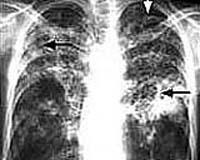
Showing posts with label XDR-TB. Show all posts

Monday, December 03, 2007

Problem-response-solution: Broadcast headlines of new, deadly uncurable disease from which the public needs protection. Bury that it's bullshit.


Report: Man has less severe form of TB


ATLANTA — An Atlanta lawyer undergoing treatment for extensively drug-resistant tuberculosis, XDR-TB, in Denver has a form of the disease that is less drug-resistant and more curable than previously reported, doctors said Tuesday.

Officials at National Jewish Medical and Research Center said multiple tests done there indicate Andrew Speaker's TB will respond to some of the antibiotics that a lab at the Centers for Disease Control and Prevention said would be ineffective. They have changed the drugs being used to treat him and have tabled plans for surgery to remove diseased lung tissue.

Mitchell Cohen, director of the CDC's Coordinating Center for Infectious Diseases, says it is not clear why the CDC test indicated the more drug-resistant form, but the public health response would not have differed.

"Without question, people with these infections should not be flying on commercial airlines," he said. MDR-TB is "a serious illness that can be transmitted to others," he said, and travel restrictions under World Health Organization guidelines are the same for MDR-TB as for XDR-TB.

Speaker, 31, became the focus of world attention after it became known that he flew to Europe in May for his wedding, knowing he had MDR-TB, a rare form of the disease that is resistant to at least the two of the most potent anti-TB drugs. While he was away, results of lab tests at the CDC indicated he had the even rarer form, XDR-TB, which is resistant not only to the first-line drugs, but also to most of the other available drug options.

Despite admonitions by CDC officials who told him to remain where he was — in Rome on his honeymoon — Speaker and his wife traveled to the Czech Republic, flew to Montreal, and drove back into the US in a rental car. The CDC and health ministries in several other countries have begun testing Speaker's fellow airline passengers to see if they became infected during either of the trans-Atlantic flights.

In a statement read at a press briefing, Speaker expressed relief that "I do not have, nor have I ever had XDR-TB." He repeated his contention that he was not prohibited from traveling to Europe, suggesting the international furor created was an overreaction. "The truth is my condition is the same as in early May when I was told I could carry on my life and that I was not a threat to anyone," he said.

Speaker was moved last month from Atlanta to the Denver hospital, which is considered the top TB treatment center in the U.S. Charles Daley, head of infectious diseases at National Jewish, said three tests conducted on three sputum samples produced the same results, indicating a broader range of treatment choices for Speaker, and also suggesting that if any fellow airplane travelers became infected, there are more options for preventive therapy.

However, Cohen noted, MDR-TB is still very difficult to treat and Speaker may need to take drugs for two years or more before he can be cured. Of the 14,000 cases of TB in the USA each year, Cohen said, only about 125 are MDR-TB.

Cohen said when properly treated, regular, drug-susceptible TB, is curable about 95%-97% of the time. With MDR-TB, it's about 70%, though Speaker's chances are much higher, Daley said, because he is otherwise healthy and getting the best treatment available. XDR-TB is very rare, but so far only 30%-40% of cases have been cured.

Original article posted here.

Saturday, October 20, 2007

Well, another CIA project not arriving at the intended goal of massive population reduction on the dark continent. Nice for XDR-TB to arrive on time.

After extinction fears, Botswana learns to live with AIDS

Botswana, a country whose president once feared could be wiped off the map by AIDS, is living proof to other African countries that the pandemic should not be regarded as a death sentence.
After embarking on a programme to provide HIV sufferers with anti-retroviral drugs on a scale never before seen in Africa, only 8.5 percent of patients have died in the last five years, according to the southern African country's national AIDS coordinating agency (NACA).

Free White Papers!
"People were dying like birds, but since the ARVs arrived, life has started again," says Francinah Moumakwa-Sinos, who had thought she would have been dead long ago after learning she carries the virus at the turn of the decade.

According to UNAIDS, 270,000 of Botswana's two million population are living with HIV. Of those whose condition is so advanced that they need ARVs, 85 percent receive drugs free of charge from the government.

That figure compares for example with 21 percent in neighbouring South Africa where 5.5 million people are affected, and eight percent in its troubled eastern neighbour Zimbabwe, UNAIDS said on its website.

"We have been able to contain death," said NACA's chief spokesman Joseph Kefas.

It's an impressive achievement for a country whose president, Festus Mogae, warned in 2001 that "we are threatened with extinction" as people were "dying in chillingly high numbers."

The ultimate goal is to have the number of new cases at zero by 2016 when the former British colony marks the 50th anniversary of its independence.

With big diamond reserves, Botswana is one of Africa's wealthiest countries but, even so, some campaigners believe it may not be able to indefinitely afford ARVs and it would be better off changing attitudes towards sex.

Monica Tselayakgosi, NACA programme planning manager, is among those who warn the ARV programme "is really expensive and we can't sustain it as it is."

One of the most successful campaigns has been to provide all pregnant women with the virus with medication, which has helped ensure only four percent of their babies are affected -- a figure comparable to levels in the West.

Moumakwa-Sinos, 38, has been one of the beneficiaries but her plight highlights some of the obstacles to progress.

"My husband didn't believe the virus exists," she says at an interview in her home in Gabane, just outside the capital Gaborone.

"He didn't want me to take medication or to have protected sex."

Then in 2003, she fell pregnant again.

"I joined the PMTCT (prevention of mother-to-child transmission) programme. I had to protect the kid. My boy is negative but my husband left me."

While Botswana may have made progress in the medical battle against HIV, it still faces a mountain to overcome in changing attitudes towards sufferers.

"When you disclose your status, people don't believe you or they reject you. They say HIV is a sickness for witches or adultery," says Moumakwa-Sinos.

Uyapo Ndadi, legal officer for the Botswana network on Ethics, Law and HIV/AIDS (BONELA), says the government has failed to take adequate leadership on demolishing the stigma attached to the illness.

"Stigma and discrimination manifest themselves in the workplace and in the community," said Ndadi.

He cited the example of a cleaning lady who was laid off only days after she revealed her status to one of her colleagues and then found herself the target of taunts that she was a lethal presence.

The continuing stigmatisation means that many Botswanans are still reluctant to discover whether they are sufferers. Less than 30 percent of the population is aware of its status, inevitably increasing the risk of the virus spreading.

"If people are not changing behaviour as we wish, it is because they don't believe it is useful for them," said NACA's Kefas.

Original article posted here.

Sunday, October 14, 2007

The nightmare subsides for XDR-TB victim

One year in solitary - TB sufferer's nightmare

A Russian-American citizen who went to America to treat his virulent tuberculosis has had to return to Russia to avoid jail. Robert Daniels spent a year in prison after endangering others with his illness, and authorities say that he is still a risk to public health.

One year in solitary - TB sufferer's nightmare

Robert Daniels is now free but he is still traumatised by the events of the past 18 months.

“It was just so horrible, I've just been thinking about killing myself,” he said.

When he contracted TB in Moscow, he thought he'd get the best treatment in America.

Born to an American father and a Russian mother, he has dual citizenship. He travelled to Arizona and immediately told the authorities about his condition. But that was only the start of his troubles.

He had XDR-TB a highly virulent and drug resistant form of the disease and was made to wear a special mask. He says he ignored these orders just once, during a trip to the supermarket. The consequences though were disastrous.

He was immediately arrested for recklessly exposing others to his illness, and placed in solitary confinement.

According to the documents provided by his lawyers, Robert Daniels was allegedly subjected to more than 20 different forms of inhumane treatment.

He was only allowed to go outside once, his lights were kept on 24 hours a day, he wasn't allowed a TV, or a phone to call his family, and he wasn't even allowed to take showers. As a result he has suffered psychological deterioration, severe mood swings and post traumatic stress disorder.

He has the same rights as any other citizen of the U.S. He is a U.S. citizen, he is not contagious,

Burt Rosenblatt,
Robert Daniels' lawyer

Robert Daniels says that he was not against being isolated for his treatment, but does not believe the extra measures were necessary.

“I think that locking people up is too extreme. We don't do this to people these days. We don't lock people up unless they commit a crime,” he said.

Eventually, under pressure from the media and his lawyers, Mr Daniels was transferred to a hospital.

This summer one of his lungs was removed and now he says he is no longer ill.

But not according to the Arizona authorities. They have prescribed a course of medicine, which Mr Daniels claims causes severe side effects and which he does not need. By refusing to take it, he is once again breaking the law.

He has fled to Moscow to avoid further prosecution.

But he has not abandoned hopes of once again living in the U.S.

“He has the same rights as any other citizen of the U.S. He is a U.S. citizen, he is not contagious,” Burt Rosenblatt, Robert Daniels' lawyer, said.

Robert Daniels is renting a small apartment with his wife and young child. He does not have a job,and still suffers from the severe after-effects of his treatment.

While he feels remorse over his actions, he feels the treatment he received was out of proportion to the danger he posed to the public.

Original article posted here.

Monday, August 20, 2007

Underreported Stories

World’s 10 Stories You Don’t (MayBe) Know,Because It’s Underreported

After months of fighting, Islamist militants in June defeated the warlords in capital city Mogadishu and now control most of southern Somalia. The country, which has not had a functioning central government since 1991, has become “the largest potential safe haven for al Qaeda in Africa,” according to the International Crisis Group. This fall a U.N. report detailed how Iran and other countries were smuggling arms to the Islamists and how some 700 Somali fighters were sent to Lebanon to fight alongside Hizballah. Amid all the bloodshed, humanitarian workers are struggling to deliver aid to Somalis, who, after enduring a severe drought, are now dealing with massive flooding.

No.2 TUBERCULOSIS GETS EVEN SCARIER


Worldwide, tuberculosis — a bacterial lung disease spread mainly by coughing — kills one person every 18 seconds. And because HIV activates latent TB infection, tuberculosis has become the leading cause of AIDS-related deaths in the developing world. The TB vaccine is not very effective; diagnostic tests fail to identify at least 50% of cases, and patients often fail to complete the six-month treatment regimen, which contributes to new drug-resistant strains. Of the 9 million or so new TB cases each year, about 425,000 of them are resistant to standard medicines. One severely resistant strain that emerged in southern Africa this year is virtually impossible to treat.

No.3 INTELLIGENCE COMMUNITY REFORMS


Whatever happened to the post-9/11 push to reform U.S. intelligence gathering and make sure the myriad agencies are all playing nice with each other? Not surprisingly, there has been little information about what’s going on with the spooks. Details from classified documents revealed that the intelligence budget has more than doubled in the past eight years and that the CIA is teaching FBI agents some of its tradecraft. But five years after the World Trade Center attacks, there was also word of new initiatives being launched to eliminate overlap and bring order to the chaotic fight against terrorism. So… uhh… how’s that going?

No.4 CONGO’S STILL-RAVAGED STATE


Although the Democratic Republic of Congo received some attention this year for holding its first free elections in four decades, the war-torn country — where nearly four million people have died as a result of the conflict since 1998 — is still home to one of the world’s worst humanitarian crises. Congo is plagued by malnutrition, malaria and other largely preventable conditions that kill 1,200 people a day — a death toll, as UNICEF points out, that is the equivalent of suffering a 2004 Indian Ocean tsunami every six months. More children die in Congo before reaching their fifth birthday than in China, a country with 23 times the population.

No.5 CIVILIAN CASUALTIES IN IRAQ


Not credible. That’s how President Bush described a peer-reviewed study this fall that calculated some 600,000 Iraqis had died from war-related violence since March 2003. The Johns Hopkins study, based on a survey of 1,849 Iraqi households, was dismissed by the White House for its small sample size. But in December, the Iraq Study Group (ISG) lambasted the Pentagon for “significant underreporting of the violence in Iraq.” For example, official accounts tallied 93 attacks one day in July, yet, according to the ISG, “a careful review of the reports for that single day brought to light 1,100 acts of violence.” Maybe those Johns Hopkins academics weren’t so far off after all.

No.6 THE $10 BILLION EFFORT TO REBUILD AFGHANISTAN


Things are bad in Iraq, but how goes it in Afghanistan? A joint report by the Defense Department and the State Department found that the U.S.-trained police force in Afghanistan is not capable of carrying out routine law enforcement work. Managers of the $1.1 billion training program, the report concluded, can’t keep track of how many officers are on duty, let alone what happened to all the equipment that has gone missing. Another report on contractors, by a California-based watchdog group, detailed such grim outcomes as new schools so shoddy they had to be rebuilt after a winter’s worth of snow and a highway that started crumbling before it was finished.

No.7 RECORD NUMBER OF AMERICANS JAILED


The Justice Department reported in November that a record 7 million people — or one in every 32 adults in the U.S. — were behind bars, on probation or on parole at the end of last year. Some 2.2 million Americans were in prison or jail on Dec. 31. 2005, but there was little coverage of this population’s 2.7% rise from the previous year or of its eight-fold increase since 1975. Nor was there much discussion of overcrowding (the federal prison system is operating at 34% over capacity) or of the cost associated with keeping so many people behind bars (it costs more than $20,000 per year for every person incarcerated).

No.8 MORE U.S. TROOPS WILLING TO REENLIST


While there was much talk about the Army raising the maximum age for new recruits from 35 to 42, the lesser-known development is that the Pentagon managed not only to meet, but to exceed its 2006 reenlistment goals for every branch of the military. Most significantly, the Army met its retention goal of 64,200 in August, with two months to spare before the end of the fiscal year. Another surprising sign of the times: by mid-October, the Marine Corps had received 3,870 re-enlistment applications and thus was on its way to meeting 63% of its annual retention goal less than two weeks into the new fiscal year.

No.9 A SPRAWLING INSURGENCY IN INDIA


Fueled by rampant poverty in rural areas, a 10,000-strong Maoist army threatens to take the shine off of India’s economic boom. The rebels are known as Naxalites after the eastern town of Naxalbari, where the violent peasant uprising began in 1967. Their attacks in impoverished but mineral-rich regions — on everything from mines and factories to trains and jails — led to at least 625 deaths in the first nine months of 2006, according to the Asian Centre for Human Rights. In August, India’s Prime Minister Manmohan Singh ranked the growing Maoist rebellion alongside terrorism as the greatest threats facing the country’s stability.

No.10 MIDDLE-CLASS NEIGHBORHOODS ARE SHRINKING IN THE U.S.


The percentage of middle-income neighborhoods in the 100 largest metropolitan areas across the country dropped from 58% in 1970 to 41% in 2000, according to the Brookings Institution. The study, which defined moderate-income families as those with incomes between 80% and 120% of the local median, found that these neighborhoods are disappearing faster than the proportion of metropolitan families earning middle incomes, which in three decades has fallen from 28% to 22%. The trend suggests that people are moving out of economically diverse neighborhoods, and the resulting disparities between high- and low-income neighborhoods make it harder for lower-income homeowners to move up the residential ladder.

Original article posted here.

Wednesday, July 04, 2007

Problem-Response-Solution: Turns out Man Didn't have XDR-TB after all. But not before terrorizing population to promote quarratine legislation

Official: Man Has Less Severe Form of TB

By COLLEEN SLEVIN and MIKE STOBBE

New tests show the globe-trotting American lawyer who caused an international health scare by traveling with a dangerous form of tuberculosis has a less severe form of the disease, doctors said Tuesday.

The dramatic announcement from the doctors treating Andrew Speaker raised immediate questions about the accuracy of the diagnosis by U.S. government health officials who had ordered Speaker quarantined in May.

But the Centers for Disease Control and Prevention stood by its earlier test and its action to isolate Speaker. And both Speaker's doctor in Denver and an official with the CDC who appeared at a news conference here said the public health response should be the same to both forms of drug-resistant TB.

"The public health actions that CDC took in this case, and are continuing to take, are sound and appropriate," said Dr. Mitchell Cohen.

For the patient himself, the news that he apparently has a more treatable form of TB means he may avoid surgery and has a much better chance for a cure.

"These new test results are good news for Mr. Speaker. His prognosis has improved," said Dr. Charles Daley, who is treating Speaker at National Jewish Medical and Research Center. "We now have more effective medications available to fight his disease and may be able to treat him successfully without surgery."

The 31-year-old patient said in a statement that he was relieved by the new diagnosis.

"The truth is that my condition is just the same as it was back in early May, long before there was a huge health scare, and back when I was allowed to carry on my daily life and was told, 'I was not a threat to anyone,'" Speaker said.

He also gave a harsh critique of the government's handling of the case: "In the future I hope they realize the terribly chilling effect they can have when they come after someone and their family on a personal level. They can in a few days destroy an entire family's reputation, ability to make a living, and good name."

For the past month, Speaker has been isolated at the Denver hospital, which specializes in treating TB and other respiratory diseases. His bride, Sarah, has paid regular visits.

Speaker was diagnosed in May with extensively drug resistant TB, based on an analysis of a sample taken in March by the U.S. Centers for Disease Control and Prevention. The XDR-TB, as it is called, is considered extremely difficult to treat and is a growing public health threat.

But later tests have shown Speaker's TB to be the more treatable form of the disease, multidrug-resistant TB. And CDC's own re-testing of its original sample now matches that result. Multidrug-resistant TB can be treated with some antibiotics that the more severe form resists.

Daley said he didn't know why the initial tests by CDC showed that Speaker had XDR. "I don't think we'll ever know why this happened," he said.

The CDC's Cohen explained that the test is not a black-and-white one.

It's possible for a couple of types of TB to be in one sample, and in one patient, he said. That is one of several possible explanations why CDC might have found XDR in March, while subsequent test results show MDR, Cohen said.

The CDC's diagnosis of XDR-TB was a key factor in issuing a quarantine order against Speaker, who had flown to Greece to be married in May despite warnings from health officials that he shouldn't travel. Cohen said Tuesday that the same advice is appropriate for the lesser multidrug-resistant TB type that Speaker now appears to have - and in fact that was the earliest diagnosis before he left for a wedding and honeymoon in Europe.

His case became an international public health story and even raised questions about U.S. border security. Congress held a hearing on the CDC's handling of the case and Speaker's father-in-law, a TB researcher who works for the CDC, also came under scrutiny.

Federal health officials said Speaker ignored their warnings to seek medical help in Europe and not to get on an airplane. Instead, Speaker and his wife crossed the border into the United States after taking a commercial flight to Canada and he was briefly placed under federal quarantine.

The incident prompted a hunt for passengers on the cross-Atlantic flights taken by Speaker so they could be tested for the disease.

Original article posted here
.

Wednesday, June 27, 2007

Just what the government ordered: possible forced treatments for possible man-made disease

Can Government Force TB Treatments?

TB cases have steadily decreased over the past 10 years in the United States, falling to 13,767 last year.

by Rosalie Westenskow

Controlling tuberculosis requires a massive effort, and although many communities effectively track and treat the disease, success relies heavily on patient cooperation, experts say. In the aftermath of the highly publicized Andrew Speaker incident -- an Atlanta attorney who traveled across the Atlantic and back while infected with a rare strain of TB -- leaving compliance largely in the patients' hands may seem overly risky to some.

As an airborne disease, TB can spread rapidly if infected individuals fail to receive proper treatment. Treatment involves extensive therapy, and, if patients don't complete the entire regimen, the disease comes back -- often in a form resilient to traditional antibiotics.

As a result, local governments have stepped in and created TB-treatment programs to help stem the tide of infections.

States must strike a tricky balance between patients' rights and general welfare, however, said James Hodge Jr., executive director of the Center for Law and the Public's Health at Georgetown and Johns Hopkins University, during a panel discussion Monday hosted by the National Association of County and City Health Officials.

"Let's be sure to do what we can to protect the public's health while perpetuating a principle of volunteerism," Hodge said. "People with tuberculosis have committed no crime."

Each state has its own laws outlining the government's role in the process. Georgia, for instance, takes a less heavy-handed course of action.

"You see in Georgia a very consistent approach to respect the liberties and interests of the patient first," Hodge said. "At some juncture, a written order can be issued" mandating the patient's compliance.

But that action wouldn't occur until authorities felt certain the individual would not voluntarily participate.

"That's a last-ditch effort," Hodge said.

California, however, encourages greater legal intervention.

"What you see here is a strong concentration in local health authorities and the law to protect the public's health," Hodge said.

Authorities in California may issue orders to isolate patients during the contagious stage or mandate participation in therapy programs.

Relying on voluntary compliance works most of the time, said Hodge, calling Speaker, who took a commercial flight back to the United States against the requests of health authorities, an "outlier case."

However, some states should reexamine their stance on TB, said Karen Smith, public health officer for Napa County, Calif.

"There are some states that haven't looked at their legislation in a very long time and these are the states that might have significant pieces missing" which would impede local health officials, Smith said.

TB control comprises a major collaborative effort in any community, she said, and involves correct diagnosis of the disease as well as treatment.

"It's our responsibility to ensure local healthcare providers know when to suspect TB and how to accurately diagnose it," she said. "The healthcare provider also needs to know how to report both confirmed and suspected TB patients to the local TB program."

The TB program in Napa County, where Smith works, also must assist patients in overcoming numerous treatment barriers, including homelessness, transportation needs and mental health issues.

In addition, staff provide a support system to help patients get through the time-consuming treatment, which lasts six months to a year.

TB cases have steadily decreased over the past 10 years in the United States, falling to 13,767 last year. However, a decrease in funding could pose a threat to progress, said Michael Fleenor, chair of the Advisory Committee on Tuberculosis at the Centers for Disease Control and Prevention.

"There is a direct correlation between rates of TB in this country and the efforts, through funding, given to stop it," Fleenor said.

In 2006, Congress approved $138 million for TB mitigation, almost half of the $252.4 million the National Coalition for the Elimination of Tuberculosis estimates would be required to fully fund the country's TB control programs. This year's appropriation is expected to be 5 percent less than the 2006 figure.

This could mean bad news for the treatment of multi-drug resistant (MDR) or extensively drug resistant (XDR) strains of the disease.

"There's some indication that there's a beginning of an upturn in tuberculosis (cases), including MDR and now the spectrum of XDR TB," Fleenor said.

While treatment for a normal TB case costs about $6,000, a multi-drug resistant strain pushes the bill up to at least $25,000 and an extensively drug resistant case packs a $500,000 punch.

"That one case could drive the local health department to its knees," Fleenor said.


Original article posted here.

Monday, June 25, 2007

Pretty effective little concoction, eh?

Up to 30,000 have new untreatable form of TB - WHO

By Stephanie Nebehay

GENEVA (Reuters) - A new, untreatable form of tuberculosis is striking up to 30,000 people a year, the World Health Organisation said on Friday, and warned it could spark an "apocalyptic scenario" if unchecked.

The United Nations agency appealed for $2.15 billion to combat drug-resistant TB under a programme which it said could save up to 134,000 lives over two years.

Extensively drug resistant TB (XDR-TB), a form virtually immune to antibiotics, has been reported in 37 countries in all regions since emerging in 2006, according to the WHO.

"There is somewhere between 25,000 and 30,000, we roughly estimate, cases of extensive drug resistant TB each year," Paul Nunn, coordinator of WHO's Stop TB Department, told a briefing.

"Ultimately, to face down this epidemic, we need new tools -- we need new drugs, we need new diagnostics," he added.

The recent case of an American man with XDR-TB who travelled abroad triggered an international health scare, highlighting the potential risks of rapid spread.

XDR-TB cases are particularly difficult to treat, and a patient could infect other people for years, according to Mario Raviglione, director of the WHO's Stop TB Department.

"That is the big threat here. If you have more and more of these cases, you will automatically magnify the problem by having transmission going on to other individuals ... Once they become infected they are sort of a time bomb," Raviglione said.

"If this is kept unchecked and goes on, then you may also see an apocalyptic scenario where the present epidemic of TB is replaced by an epidemic of TB which is now fully resistant to everything," he added.

"PRE-ANTIBIOTIC ERA"

Some 8.8 million people each year develop normal TB, a bacterial infection that usually attacks the lungs and which kills 1.6 million people a year, according to the WHO.

About 450,000 get a multi-resistant form (MDR-TB) each year which is resists the main first-line drugs, but XDR-TB occurs when there is resistance to even second-line drugs.

"The possibility is that you could replace that epidemic with a drug-resistant epidemic, in other words you could have 8 million cases of drug-resistant TB wandering around. And then you will be back to the pre-antibiotic era," said Nunn.

An outbreak in KwaZulu-Natal province of South Africa last year confirmed the WHO's fears about XDR-TB, which killed 52 of the 53 patients, mainly carriers of the HIV virus, he said.

"We really now have to focus on problems of infection control. We can't allow drug-resistant MDR or XDR to get into populations of HIV-infected people," he added.

Regular TB can be diagnosed with a microscope, but drug-resistant forms require laboratories which can do more sophisticated tests -- a capacity lacking in many poor countries, especially in sub-Saharan Africa, he said.

"The reality of the situation right now is that we only have the drugs that we have and very likely we will not have new drugs for at least another 5 to 10 years," Nunn said.

Original article posted here.

Friday, June 22, 2007

If at first you don't succeed, kill them some other way

Sharp rise in XDR-TB cases in Western Cape

Cases of extensively drug-resistant tuberculosis (XDR-TB) have more than quadrupled in the Western Cape in the past three months, the Cape Times reported on Thursday.

The newspaper cited provincial health department figures.

Also, the Brooklyn Chest TB Hospital has no room for more patients. It has 22 beds in the isolation wards to treat XDR-TB cases.

This comes as the City of Cape Town has drawn up contingency plans in the event of an XDR-TB outbreak.

Since World TB Day in March, 45 XDR-TB cases have been notified in the province. Eight people have died, according to department figures. In March, there were 10 known XDR-TB cases in the province.

XDR-TB, which withstands first- and second-line antibiotic treatment, is almost impossible to treat. It has killed 290 patients nationwide.

Department spokesperson Faiza Steyn said most patients with XDR-TB were admitted as quickly as possible to Brooklyn.

"At times, patients do have to wait for a bed at Brooklyn Chest Hospital," Steyn said.

Some patients were treated in side wards at the hospital, while the rest were in isolation at prisons in the province, she said.

City health director Ivan Toms said the department and clinics had implemented steps to reduce the health risk of TB and XDR-TB.

"These include clinic designs to separate waiting areas for TB clients, ensuring good airflow in TB areas, providing masks to coughing TB patients and respirators for all staff in the TB area," he said.

He said that in the last quarter, Cape Town achieved its best cure rate of 79% for TB.

According to XDR-TB statistics, 437 cases have been reported, with 290 deaths among them. Most were in KwaZulu-Natal, where the strain was first detected.

Original article posted here
.

Monday, June 18, 2007

Interesting take on XDR-TB

U.S. leadership could eradicate global TB

by Ken Patterson

In early 2006, in a small clinic in South Africa, 52 of 53 patients died of XDR-TB (extensively drug resistant tuberculosis).

But it wasn’t until it came to light that Andrew Speaker got on a flight from Atlanta with XDR-TB in early May that most people, including the media, took notice.

The truth is that this disease storm has been brewing for some time, but because tuberculosis is primarily a disease of the poor, it has attracted little attention.

Without a serious commitment to diagnosing and controlling TB in the U.S. and around the world, it is likely that we will hear more stories like Speaker’s in the future.

So what is XDR-TB? Is it just some rare form of the disease that Speaker happened to picked up in some deep, dark cave?

No, XDR-TB is man-made — it is the common, treatable form of TB gone wild. It forms when dangerous MDR-TB (multi-drug resistant TB) is ineffectively monitored and treated.

In turn, MDR-TB arises when common TB is incorrectly or incompletely treated. So Speaker came into contact with someone who received ineffective treatment for his or her TB twice.

Millions affected

And it is not as rare as the media makes it sound. XDR-TB has been found in 35 countries, including the U.S. In the country of South Africa alone there are an estimated 600 cases of XDR-TB.

Most people do not know that there was an outbreak of around 300 cases of MDR-TB in the late 1980s and early 1990s that cost New York City more than $1 billion to control.

This seems incredibly costly given that common TB can be cured in the developing world for $20 to $100 (the drugs themselves costing only $16).

Probably the most alarming part of the TB story is that nearly one-third of the world’s population (2 billion people) carries TB latently, about 1.6 million people needlessly die of it each year, and around 9 million people develop active cases of TB each year, most in poor countries.

Each new case is an opportunity for someone to develop MDR- or XDR-TB if treatment is poor. And we have allowed many of the world’s people to live in situations where the likelihood of them completing treatment is not good.

In the U.S., an hourly worker with a family to support is unlikely to stay isolated during a six-week treatment period because he or she cannot afford to — who else will he or she infect?

In the developing world, side effects of the medicines are a deterrent to completing treatment for people who suffer of malnutrition. Also, inadequate health clinics, unsteady drug supply, too much expense or poor monitoring can also cause patients to cease treatment (patients may stop taking drugs because they feel better). The good news is that, although common TB is the greatest infectious killer worldwide, effective treatment will cure common TB 95 percent of the time.

A call to action

What now? Thankfully, because they understand the global threat of TB, certain members of Congress and organizations like the Gates Foundation, RESULTS and the international Stop TB Partnership have been working on TB for years. Last year Bill Gates helped introduce the Global Plan to Fight TB, an international business plan to improve TB diagnosis, monitoring and treatment around the globe, with the ultimate goal of eradicating TB by 2050. In the shorter term, the plan, if adequately funded, will save 14 million lives and treat 50 million people for TB, and will work toward new medical solutions for tuberculosis. But executing the plan will require leadership.

There are currently two bills in the U.S. House of Representatives (HR 1567 and HR 1532) and similar legislation in the U.S. Senate that address global and domestic TB. The domestic legislation will increase funding for U.S. TB control and bolster research into new medical solutions for TB. Global legislation will assure that the U.S. does its part in executing the Global Plan to Stop TB. Sens. Elizabeth Dole and Richard Burr, Rep. Shuler and other North Carolina representatives should co-sponsor this legislation. In addition, they should determine what other leadership measures should be taken to prevent a deadly, drug-resistant TB pandemic.

Other Facts on Tuberculosis:

¤ Ten million to 14 million Americans are infected with latent tuberculosis.

¤ TB is predicted to kill 30 million people in the next decade.

¤ TB is the leading global killer of women of reproductive age, ahead of HIV, heart disease and war.

¤ TB is also the leading killer of people with HIV/AIDS.

Ken Patterson is a former Peace Corps administrator and is currently national grass-roots manager for RESULTS.


Original article posted here.

Thursday, June 14, 2007

Problem-Response-Solution: Didn't take long for them to spit out legislation in response to XDR-TB fright

The Stop TB Now ACT of 2007 (H.R.1567, S.968)

Full text of the Stop TB Now ACT of 2007

The Stop TB Now Act (H.R.1567) was introduced in the House on March 19 by Representatives Eliot Engel (D-NY), Adam Smith (D-WA), and Heather Wilson (R-NM); Chairman Lantos is a cosponsor. It was introduced in the Senate (S.968) by Senators Barbara Boxer (D-CA) and Gordon Smith (R-OR).

The new bill is similar to the Stop Tuberculosis (TB) Now Act of 2006 (H.R.5022), which was introduced in the House last March by Representatives Sherrod Brown (D-OH) and Jim Leach (R-IA) — so it should be easy to ask members who were previous sponsors to cosponsor the new bill.

The bill calls for the U.S. to commit the funds and put in place the policies necessary to reach the Millennium Development Goal (MDG) of halting and reversing the spread of TB. It specifies that the U.S. should strive to halve TB deaths by 2015 and sustain or exceed diagnosis of at least 70 percent of TB cases and cure at least 85 percent of those patients. It puts in place policies to help ensure the most effective investments to achieve these targets.

This bill comes at a key time to help move support for TB to a new level, especially given the recent attention to XDR-TB and its link to AIDS.

Ask Your Representative and Senators to Cosponsor the Stop TB Now ACT
To cosponsor in the House, contact Joe Moser in Rep. Wilson’s office at (202) 225-6316 and Emily Gibbons in Rep. Engel’s office at (202) 225-1464 and Emily.gibbons@mail.house.gov. To cosponsor in the Senate, contact Sean Moore in Sen. Boxer’s office at (202) 224-3553.
For more information about the Stop TB Now Act of 2006, contact Jennifer Maurer at jmaurer@results.org.

For coaching to get your representative to sign on to this important legislation, contact Ken Patterson kpatterson@results.org.

Please also ask your representative to cosponsor the domestic TB bill: Comprehensive TB Elimination Act (H.R.1532).

Previous cosponsors of the Stop TB Now Act in 2006: Wilson (R-NM), Udall (D-NM), Lee (D-CA), McCollum (D-MN), Berman (D-CA), Honda (D-CA), McNulty (D-NY), Crowley (D-NY), McDermott (D-WA), Schakowsky (D-IL), Waxman (D-CA), Miller (D-CA), Inslee (WA), Grijalva (AZ), R. Andrews (D-NJ), Holt (D-NJ), Baird (D-WA), Baldwin (D-WI), Barrow (D-GA), Capps (D-CA), Clyburn (D-SC), Cummings (D-MD), J. Davis (D-FL), S. Davis (D-CA), DeGette (D-CO), Delahunt (D-MA), Dicks (D-WA), Dingell (D-MI), Doggett (D-TX), Edwards (D-TX), Emanuel (D-IL), Eshoo (D-CA), Farr (D-CA), Filner (D-CA), Frank (D-MA), A. Green (D-TX), G. Green (D-TX), Hall (R-TX), Hastings (D-FL), Herseth (D-SD), Inglis (R-SC), Jackson (D-IL), Jefferson (D-LA), Kucinich (D-OH), Larsen (D-WA), Larson (D-CT), Lewis (D-GA), Lofgren (D-CA), Matheson (D-UT), Matsui (D-CA), McCaul (R-TX), McCotter (R-MI), McKinney (D-GA), Meehan (D-MA), Meeks (D-NY), Moran (D-VA), Ortiz (D-TX), Pallone (D-NJ), Pastor (D-AZ), Payne (D-NJ), Price (R-NC), Reichert (R-WA), Reyes (D-TX), Rohrabacher (R-CA), Sanders (I-VT), Saxton (R-NJ), Schwarz (R-MI), Scott (D-GA), Serrano (D-NY), A. Smith (D-WA), C. Smith (R-NJ), Spratt (SC), Stark (D-CA), Tauscher (D-CA), Tierney (D-MA), M. Udall (D-CO), Van Hollen (D-MD), Walsh (R-NY), Waters (D-CA), Wexler (D-FL), Wilson (R-NM), Young (R-AK).

Original article posted here.

Sunday, June 10, 2007

More Problem-Respose-Solution propaganda to type the evisceration of rights in the wake of overblown TB case

TB Case Shows Need for Tighter Law
By KEVIN FREKING, Associated Press Writer

(AP) -- States should have the power to restrict the movement of patients with contagious diseases even before they have the chance to disobey doctors' orders, federal health officials say.

The need for such authority to order someone quarantined emerged as lesson No. 1 from the case of the Atlanta lawyer who went to Europe despite having a dangerous form of tuberculosis.

If we believe the patient has a strong intent to put others at risk, we need to have confidence we can take action absent documentation of intent to cause harm," Dr. Julie Gerberding, head of the Centers for Disease Control and Prevention, told lawmakers last week.

Gerberding also mentioned outfitting a CDC plane so the government could fly patients long distances without fear of contaminating others on board and improving communications among government agencies.

Also cited by the Senate Appropriations subcommittee hearing was the lapse at the U.S.-Canadian border that allowed Andrew Speaker to enter the U.S. even though his name was on a watch list with instructions to detain him. Officials said a lone border agent made a bad decision.

The ability to require that someone be kept in isolation leads to legal and ethical questions about possible overreaching by the government.

"First of all, up front, before the patient left the United States, we believe that we could strengthen our states' ability to restrict the movement of patients before they demonstrate noncompliance with the medical order," Gerberding told lawmakers.

Peter Jacobson, a health law professor, had concerns about Gerberding's statement on two fronts.

"That's not the federal government's role and it's far, far too broad a statement. There has to be a credible threat, a direct threat of harm before you restrict someone's freedom to move, before you intrude on their individual liberties," said Jacobson, director of the Center for Law and Ethics and Health at the University of Michigan.

"For her to say in such a broad manner that a state should restrict people before they're noncompliant is extremely intrusive in my view," he said.

Also, the District of Columbia-based association representing state health officials noted that it is now up to the states, not the federal government, to determine when to issue an isolation order.

Even if Congress went along with Gerberding's idea, state legislatures seemingly would have to follow with their own changes for the proposal to take effect.

"Each governor does have the ability to quarantine. But the circumstances around it, how it's done and for how long, is tailored to each state," said Paula Steib, communications director for the Association of State and Territorial Health Officials, an organization that represents state health departments.

Besides granting states more power to isolate patients, Gerberding said the federal government should clarify its quarantine laws. Now, the laws focus on preventing sick people from coming into the country.

"Our statutes weren't really designed for this modern age of global travel," she said.

Gerberding said health officials in Fulton County, Ga., knew that Speaker had tuberculosis that was resistant to antibiotics and that he had travel plans. They met with him on May 10.

In the following days, county health officials tried to serve Speaker with written notice summarizing what was discussed at the meeting, including advice that he not travel. But they could not find him. He flew from the U.S. on May 12 for his wedding and honeymoon.

Speaker told lawmakers that doctors recommended he not travel, but they never said he was contagious or a threat to others. A county official disputed Speaker's recollection.

"I was not in the meeting, but the patient's chart indicates that he was told he was not highly contagious," said Dr. Steven Katkowsky, director of the county's Health and Wellness Department.

Sen. Tom Harkin, D-Iowa, questioned the CDC's ability to take quick and decisive action.

Harkin, the chairman of the Senate Appropriations subcommittee that questioned Gerberding, said the agency was notified May 18 that Speaker had multiple drug resistant tuberculosis, but the Homeland Security Department was not told until four days later. Speaker was not placed on a no-fly list until May 24.

"Again, with the rapidity of world travel today, it seems to me that this time frame should have been collapsed to just a few hours," Harkin said.

Said Gerberding: "I think we should have done it faster, and I think we'll be able to accelerate this next time. In retrospect, that was a mistake and I wish we had done it differently."

---

On the Net:

CDC background on Extensively Drug-Resistant Tuberculosis: http://www.cdc.gov/tb/xdrtb/

CDC background on isolation and quarantine: http://tinyurl.com/33kohf

Original article posted here.

Wednesday, June 06, 2007

Problem-Response-Solution: Kangaroo Congress convenes court to curtail Constitution on behest of crony and criminal CDC


Are you petrified, terrified, horrified and shocked at reckless insensitivity of this LAWYER who needlessly endangered the lives of so many!??

Extreme TB Patient's 3rd Test is Negative

TB patient Andrew Speaker's prognosis is good, say doctors, after the Atlanta attorney tested negative in two tests for the spread of the drug-resistant bacteria that has landed him in quarantine. (Photo: AP)

DENVER (AP)- A third sputum test on a man quarantined with a dangerous strain of tuberculosis was negative for the presence of TB bacteria, hospital officials said Tuesday, opening up the possibility that he could be briefly allowed out of isolation.

The tests results mean Andrew Speaker is considered to have a relatively low chance of spreading the disease, given certain precautions, doctors said.

Normally, TB patients with three negative sputum tests who have undergone two weeks of treatment are allowed to leave their isolation room for short periods as long as they wear a mask. No decision has been made yet on when Speaker will be able to leave his room, said William Allstetter, a spokesman for National Jewish Medical and Research Center.

Allstetter had cautioned previously that although a third negative test result would mean Speaker was "relatively noncontagious," it would not mean that Speaker cannot transmit the disease because the bacteria could still grow in his lungs and sputum.

Doctors are hopeful Speaker's tuberculosis can be cured because it is not widespread, he is otherwise healthy and young, and his hospital has extensive experience in removing stubborn, drug-resistant infections.

"He has a number of features that make us optimistic about the potential outcome of his treatment," said Dr. Michael Iseman, senior staff physician at National Jewish Medical and Research Center.

The negative test result means no germs were visible in a sputum sample. However, a culture test has yielded TB bacteria. That laboratory test was performed in Georgia, where after a few weeks germs replicated and were visible in Speaker's sputum, according to Iseman.

Iseman said other factors - including whether other people have weakened immune systems - also contribute to whether Speaker can spread the disease.

Speaker, 31, an Atlanta lawyer, was initially found to have multidrug-resistant TB, which can withstand two mainline drugs used to treat tuberculosis. While he was in Europe on his honeymoon last month, tests revealed he had extensive drug-resistant tuberculosis, or XDR-TB, which can withstand more drugs.

Speaker's TB was caught early by chance in January when he had a chest X-ray for a rib injury. Otherwise, he hasn't shown any symptoms of the disease - coughing, loss of weight or a fever.

Speaker's strain has so far resisted at least 10 of 14 drugs available for treating TB, according to tests performed in Georgia, Iseman said. Surgery to remove infected lung tissue, about the size of a tennis ball, is one option. The infection's relatively small size increases the chances of success of surgery.

Surgery to eradicate TB is one of National Jewish's specialties, noted Dr. Neil Schluger, a professor of medicine at Columbia University Medical Center.

"In particular, they've had more experience operating on patients with drug-resistant TB than just about any other hospital in the United States," Schluger said.

A study of 205 patients treated for multidrug resistant TB at National Jewish between 1983 and 1998 showed that those who underwent surgery had a 90 percent cure rate, Iseman said. About 20 of those patients are believed to fall into the newly created XDR category, and doctors are trying to find cure and survival rates for those patients, he said.

Of all 205 patients, 9 percent died of TB, Iseman said.

Original article posted here.

Tuesday, June 05, 2007

Problem-Response-Solution: Raise the fear, then CDC presses for expanded powers to quarantine in XDR-DR hype

Specialists say TB case a sign of things to come

The unexpected turns in the case of Andrew Speaker, the Atlanta lawyer with extensively drug-resistant tuberculosis, have riveted the country.

By John Donnelly, Globe Staff

Alerts Speaker made two trans-Atlantic flights against the counsel of public health officials. A border guard let him into the United States apparently because he appeared healthy. His father-in-law works in the field of tuberculosis research. And Monday, his doctors in Denver reported that two tests of his sputum show no presence of the TB bacteria.

But TB specialists said Monday that the real importance of the case is that it is a warning to all Americans: The United States should brace itself for many more cases of the drug-resistant airborne germ in the months and years ahead.

"This is the tiniest tip of the iceberg," said Dr. Paul Farmer, a Harvard professor who has treated drug-resistant TB in Haiti, Peru, and Siberia. "We need to take excellent care of our own but also acknowledge that we're lucky as a nation: We have little TB, drug resistant or otherwise. We need to think about this much more globally."

Farmer said poor countries need laboratory diagnostic tools, more drugs, better trained doctors who could perform surgery if necessary, and a cadre of community health workers. Those workers visit patients in their homes, which ensures they are taking their drugs properly and protects them from hospital-acquired infections or illnesses.

Senior World Health Organization officials met privately Monday in Geneva to review the lessons of Speaker's case. Dr. Mario Raviglione, director of WHO's Stop TB Department, said in an interview that the TB specialists "found a number of things that failed in the system" that allowed Speaker to travel from country to country in Europe and eventually to the United States.

Speaker, who is under a federal quarantine order while being treated at a Denver hospital, flew to Greece last month for his wedding and honeymoon.

While in Europe, he learned he had an extensively drug-resistant strain TB, known as XDR-TB, and the Centers for Disease Control and Prevention told him not to fly and turn himself into a clinic. Instead, Speaker took a series of steps to avoid the no-fly order, eventually taking a plane from Prague to Canada and then driving into the United States.

Raviglione said Speaker's evasive actions exploited poor communication abilities among international health authorities, airline carriers, and border patrol posts that allowed him to travel from Rome to Prague, and then from Prague to Montreal, before crossing into the United States in a private car.

But most critically, he said, the US case revealed the lack of urgency in fighting drug-resistant tuberculosis, including the most dangerous type, XDR-TB. Since XDR-TB was identified a year ago in South Africa, when 52 of 53 patients died from the disease, health authorities have identified cases in 37 countries, including the United States.

"TB is not just a disease of the poorest people," Raviglione said. "This is a disease that can hit everyone, even reach a lawyer in the United States. It spreads through the air and respects no border. No one should feel safe in this world."

An estimated 424,000 new cases of multiple-drug resistant TB were contracted in 2004 -- the latest available statistics -- up from roughly 273,000 in 2000. Because many patients survive for years after diagnosis, specialists estimate that as many as 2 million people around the world are infected with a form of drug-resistant TB. Of the cases in 2004, an estimated 62 percent were in China, India, and Russia.

While funding for AIDS and malaria have greatly increased in recent years -- the Bush administration last week proposed $30 billion in additional money to fight AIDS starting in 2009 -- the amount for fighting tuberculosis has lagged well behind. Raviglione said WHO will publish a report in the coming weeks estimating that the cost of controlling XDR-TB alone will be an extra $1 billion annually. Now, he said, the TB fight needs an additional $1.5 billion to $2 billion a year, including funding for XDR-TB.

Senator Edward M. Kennedy, a Massachusetts Democrat, along with two other US senators -- Sherrod Brown, an Ohio Democrat, and Kay Bailey Hutchinson, a Texas Republican -- will introduce legislation Tuesday calling for giving US public health officials the "resources needed to eliminate TB in the US," including funding for new research on anti-TB drugs and vaccines.

Mycobacterium tuberculosis, which has been found in 4,000-year-old Egyptian mummies, has been treated with antibiotics since 1944. But the TB bacteria has developed mutant strains when patients didn't use the drugs properly.

Some of those strains eventually developed multiple resistances, and much of the medical world, including the WHO, believed for years that drug-resistant TB was virtually incurable in poor countries.

But successful treatment of patients by Farmer, Dr. Jim Yong Kim, and others at the Boston-based Partners in Health in the late 1990s in the Carabayllo slum outside Lima, Peru, showed that belief was false.

Drug-resistant TB is no longer a death sentence in many poor countries, but the discovery of XDR-TB in South Africa more than a year ago raised new difficulties about treating strains of a disease that respond to fewer and fewer drugs.

"We need to wake up and pay attention to what's happening with TB in other parts of the world," said Dr. Mark L. Rosenberg, the Harvard-educated executive director of the Task Force for Child Development and Survival in Atlanta. "We need to start treating XDR-TB where it is, not just respond to one case of one American who will get the finest treatment."

John Donnelly can be reached at donnelly@globe.com.

Original article posted here.


TB Quarantine Raises Legal Questions

By MIKE STOBBE

ATLANTA (AP) -- The case of a jet-setting tuberculosis patient might soon shift from the hospital wards to the courts. The patient, Andrew Speaker, an Atlanta personal injury attorney, could sue the federal government for being quarantined on the basis of federal regulations that some scholars see as unconstitutional.

Or Speaker could be sued by fellow airline passengers, especially if any caught the disease from him - which some legal scholars say is much more likely.

"He may be personally liable if someone contracts TB" from being near him on his recent flights to and from Europe, said Peter Jacobson, a University of Michigan professor of public health law. "I can see a jury coming down very hard on someone like that who willfully ignored advice not to travel."

Speaker flew to Europe for his wedding and honeymoon after being advised by health officials not to make the trip because he had TB. Then, while he was in Rome, U.S. health officials told him to stay put because further tests showed he had an even more dangerous, drug-resistant type of TB than previously thought.

The 31-year-old newlywed disregarded those instructions, taking commercial jets to Prague and then Montreal in an attempt to sneak back into the United States.

In an interview earlier this week with The Atlanta Journal-Constitution, Speaker said he declined to report to Italian health officials because he believed the only lifesaving care for his condition was available in the U.S.

"I'm a very well-educated, successful, intelligent person," he told the newspaper. "This is insane to me that I have an armed guard outside my door when I've cooperated with everything other than the whole solitary-confinement-in-Italy thing."

A barrage of criticism was posted Thursday on the Web site of a Georgia newspaper that carried Speaker's engagement announcement and allows outsiders to post comments.

Under a picture of the smiling couple on the Appen Newspapers Web page, a person signed as 'Concerned Citizen' wrote: "Warned not to fly but just put your personal pleasure above the safety of other passengers. I hope you get sued by potential victims for your actions."

Lawrence Gostin, a public health law expert at Georgetown University, agreed with those who feel Speaker has exposed himself to possible litigation.

"There are a number of cases that say a person who negligently transmits an infectious disease could be held liable," he said.

Perhaps the most significant legal issues in Speaker's case concern the federal quarantine law, and the difficulty federal health officials had trying to learn the identities of those who were exposed to Speaker, Gostin said.

The quarantine order was the first issued by the federal government since a patient with smallpox was isolated in 1963, according to the Centers for Disease Control and Prevention.

CDC officials have been requesting changes in the nation's antiquated quarantine laws to gain easier access to airline and ship passenger lists, provide patients a clearer appeals process when subjected to quarantines and give health officials explicit authority to offer vaccinations and medical treatment to quarantined people.

In the past week, Speaker was quarantined in New York City and then again - under guard - at an Atlanta hospital. The quarantine order was not approved by a judge, but rather issued under the CDC's administrative powers.

There's a reason for that, Jacobson said: In certain rare instances, such action is deemed necessary to avoid legal delays in rapidly protecting the public from a disease-carrying person.

While Speaker was still in Atlanta on Wednesday, a CDC official said Speaker had the right to request an administrative hearing to appeal the quarantine order but had not. (On Thursday, Speaker was flown to a Denver hospital, where he is no longer under guard.)

The legal rights of a quarantined person, including the right to request a hearing, are not clear under current law, Gostin said. Some legal scholars said the absence of clear guidelines could lead to a legal tangle that might stall government quarantine actions during an outbreak of pandemic flu or other contagious diseases.

Speaker can challenge the constitutionality of the quarantine order, and might even be able to seek a federal payment for damages, Gostin said.

Airlines can be slow to hand over passenger information because of concerns of violating customer privacy. It was not until late Wednesday that the CDC got full information from Air France about U.S. passengers on Speaker's May 12 flight from Atlanta to Paris.

One proposed change in the law would require airlines and cruise lines to electronically submit passenger and crew lists to the CDC upon request.

Original article posted here.

Monday, June 04, 2007

Study in contrasts: Treatment of Robert Daniels

Drug-resistant TB strain cropping up

It has surfaced in 37 countries. At least 50 percent of those who contract it will die.

By Peter Finn
Washington Post

Robert Daniels, shown with his son in Russia, has the new strain of TB and is held in the prison wing of a Phoenix hospital. This illustrates the sometimes extreme steps taken to stop the disease's spread.


MOSCOW - A virulent strain of tuberculosis resistant to most available drugs is surfacing around the globe, raising fears of a pandemic that could devastate efforts to contain TB and prove deadly to people with immune-deficiency diseases such as HIV/AIDS.

Known formally as extensively drug-resistant TB, or XDR-TB, the strain has been detected in 37 countries. It arises when the bacterium that causes TB mutates because antibiotics used to combat it are carelessly administered by poorly trained doctors or patients don't take their full course of medication. Rather than being killed by the drugs, the microbe builds up resistance to them.

At least 50 percent of those who contract this strain of TB will die of it, according to medical experts. In trying to stop the spread of the disease, which can be transmitted through coughing, spitting or even speaking, health officials have imposed sometimes extreme controls on infected people.

Robert Daniels, a 27-year-old dual Russian-U.S. citizen, underwent months of treatment for TB in Russia, where he often led a homeless existence. After telling people he was feeling better, he flew from Moscow to New York on Jan. 14 last year, then on to Phoenix.

In fact, his disease had not disappeared. The microbe causing it had mutated, apparently helped by his failure to complete a drug regimen in Russia. Weeks after arriving in Phoenix, Daniels was again coughing, feeling weak and losing weight.

Doctors in Phoenix diagnosed his illness as the new resistant strain of TB. Daniels again failed to follow doctors' orders, authorities say. So health officials got a court order, and he was locked up in the prison wing of a Phoenix hospital.

He has remained there, in hermetically sealed isolation, for nine months.

"It's not right," Daniels said in a telephone interview. "I'm not a criminal."

He has become a case study in the bleak choices society faces in dealing with the new strain and attempting to balance protection of individual rights against protection of the public.

Evidence of TB has been found in ancient skeletons and mummified remains. From the 17th century to the 20th, it was a major killer in the United States and Europe, taking the lives of such notable people as the poet John Keats, the composer Frederic Chopin, the writer Stephen Crane and the actress Vivien Leigh.

Even in the antibiotics age, TB has remained a scourge in poorer countries and communities. Today, one in three people globally is estimated to be infected with dormant TB, according to the World Health Organization.

Most will never get sick, but in one in 10 cases the bacterium becomes active when the host's immune system is compromised. An estimated 1.7 million people worldwide die of the disease every year.

Two events last year alerted the medical community to a frightening new version of the disease. The U.S. Centers for Disease Control and Prevention, drawing on a survey of TB labs on six continents, reported that the prevalence of the super strain of TB increased from 3 percent of patients to 11 percent between 2000 and 2004. It reached 15 percent in South Korea and 19 percent in Latvia.

There are no statistics yet about the new strain in Russia, China or Africa, areas with major TB populations.

In the United States, 13,767 TB cases were recorded in 2006, the lowest rate of infection since reporting began in 1953. A retrospective analysis by the CDC found 49 cases of the new strain in the country since 1993.

The CDC survey was followed by a report from Yale University researchers that the superbug had raged through a rural hospital in South Africa in 2005 and early 2006, killing 52 of 53 who contracted it, including six health-care workers. The victims, apparently infected by airborne transmission of the virus, died on average just 16 days after diagnosis; most of them also had HIV.

"We have to come to grips with this quickly," said Vladislav Yerokhin, director of the Central Tuberculosis Research Institute in Moscow. "This is not just a threat for TB patients. This is a serious threat for the general population."

Original article posted here.

Voice of America's propaganda regarding XDR-TB. Naturally occuring? South African roots? But it's in Russia? How'd that happen? Beware of misinfo

Saturday, June 02, 2007

Do you trust your president with your life? Bird Flu Implementation Plan drawn up in 2006 that could easily be applicable to XDR-TB.

National Strategy for Pandemic Influenza: Implementation Plan

National Strategy for Pandemic Influenza: Implementation Plan-PDF
Link to Full PDF Document Full PDF Document

My fellow Americans,

On November 1, 2005, I announced the National Strategy for Pandemic Influenza, a comprehensive approach to addressing the threat of pandemic influenza. Our Strategy outlines how we are preparing for, and how we will detect and respond to, a potential pandemic.

Since then, our Nation has taken a series of historic steps to address the pandemic threat. In December, the Congress appropriated $3.8 billion. The International Partnership for Avian and Pandemic Influenza, which we launched at the United Nations in September 2005, has encouraged openness and coordinated action by the international community. Here at home, we have made major investments in vaccine and antiviral development, research into the influenza virus, surveillance for disease in animals and humans, and the local, State, and Federal infrastructure necessary to respond to a pandemic. By making these critical investments, the Federal Government has begun strengthening our ability to safeguard the American people in the event of a devastating global pandemic and helping to prepare the Nation’s public health and medical infrastructure.

Building upon these efforts, the Implementation Plan for the National Strategy for Pandemic Influenza ensures that our efforts and resources will be brought to bear in a coordinated manner against this threat. The Plan describes more than 300 critical actions, many of which have already been initiated, to address the threat of pandemic influenza.

Our efforts require the participation of, and coordination by, all levels of government and segments of society. State and local governments must be prepared, and my Administration will work with them to provide the necessary guidance in order to best protect their citizens. No less important will be the actions of individual citizens, whose participation is necessary to the success of these efforts.

Our Nation will face this global threat united in purpose and united in action in order to best protect our families, our communities, our nation, and our world from the threat of pandemic influenza.

GEORGE W. BUSH
THE WHITE HOUSE
May 2006

And just in case this bird flu strain doesn't come about naturally, they're working hard on it on creating it!


US To Create A Bird Flu Virus Mutation

The U.S. Centers for Disease Control and Prevention has begun a series of experiments to see how likely the bird flu virus could result in a human pandemic.‘The six-month series of experiments seeks to simulate the mixing and matching of genes from the H5N1 avian flu virus that has plagued Asia and a common human flu virus that public-health experts fear could turn avian flu into a pandemic, the Wall Street Journal reported Thursday.

‘CDC scientists inside an ultra-secure laboratory have started swapping the genes of the H5N1 avian virus with the genes of an H3N2 virus, the strain behind most recent human flu outbreaks.

‘The goal is to substitute the eight genes of each virus, one by one, with the eight genes from the other virus to see which of more than 250 possible combinations create flu viruses that could spread easily among humans.’

Original article posted here.

Friday, June 01, 2007

An old article that may prove prophetic . . .

January 29, 2006

Why Revive a Deadly Flu Virus?

By JAMIE SHREEVE

One morning last August, Terrence Tumpey, a research scientist at the Centers for Disease Control and Prevention in Atlanta, walked into a room across a corridor from his office and took off all his clothes. He pulled on cotton scrubs and a disposable gown, two pairs of latex gloves and headgear with a clear plastic shield enclosing his face and a tube running out the back to a set of filters strapped to his waist. He walked through another door and down a hallway to a large upright freezer. Mounted beside the freezer was a retinal scanner. Tumpey, who is 6 feet tall, bent down a little to position his eyes in line with the lens. In a digital voice, the scanner asked him to step forward. Tumpey complied. "Identification confirmed," the scanner said, and a lock on the freezer clicked open.

Inside the freezer were trays and boxes containing "select agents" - highly pathogenic microbes that under the Patriot Act cannot be handled without special clearance from the Department of Justice. Tumpey wiped the frost off a box. He was the only person in the C.D.C., or anywhere else, authorized to handle this particular agent: a synthesized version of an influenza virus that, nearly a century before, killed between 20 million and 50 million people. He placed the box in a secure container, and after showering and dressing, carried the container through secure corridors to another building at the C.D.C., where he entered another suite of rooms, dressing once again according to Biosafety Level 3+ protocols, the second most stringent level of biosecurity. For the next couple of hours, he squirted the virus into the nostrils of laboratory mice. He was fairly certain they would all soon die.

Getting the flu can be a real drag. Your head pounds, your muscles ache, you lie in a bed of misery, surrounded by clammy tufts of used Kleenex you're too tired to pick up. Every year, 5 to 20 percent of the American population catches a flu virus. The elderly, very young children and people with certain health conditions are at risk for more serious complications, and annually some 36,000 of them die. Every few decades, a particularly virulent strain appears and causes a global pandemic. In the 20th century, flu pandemics occurred in 1918, 1957 and 1968. The last two killed two million and 700,000 people respectively - again, claiming most of their victims among the young, the old and the weak.

The 1918 flu virus is remarkable for two reasons. First, it caused perhaps the most lethal plague in the history of humankind. In the fall of that year it spread across the planet, perversely striking down healthy young adults. Once ensconced in their lungs, the virus triggered a havoc of inflammation, hemorrhage and cell death. Trying to draw air into such lungs was like breathing through meat. Many of the afflicted died within hours after they first began to feel a little feverish. Others succumbed more slowly to secondary bacterial infections. By the spring of the following year, the virus had disappeared as mysteriously as it had come.

The second, and in some ways even more remarkable, thing about the 1918 flu virus is that it has literally been brought back to life. In October, a team of scientists, Tumpey among them, announced that they had recreated the extinct organism from its genetic code - essentially the scenario played out in the movie "Jurassic Park," albeit on a microbial scale. In the movie, the scientists' self-serving revivification of dinosaurs leads to mayhem and death. Tumpey and his colleagues say they hope that their resurrected microbe will help prevent a calamity, not cause one. They want to know what made the 1918 flu, which began as a virus native to wild birds, mutate into a form that could pass easily from one human to another. That question has been weighing on the minds of flu experts since 1997 - since the first fatal case in Hong Kong of the avian flu that has since killed more than 70 people in Asia. So far, all of its victims probably caught the disease from handling infected poultry and not from other people. How close is it to crossing the same lethal line that the 1918 virus did? What can be learned from the virus that caused the great pandemic that might help us avert another one?

The risks involved in trying to answer such questions are hard to calculate, because the experiment has no precedent. In essence, Tumpey and his colleagues have brought one serial killer back from the grave so that it can testify against another. How dangerous is the 1918 virus to today's population? Its genetic code is now in public databases, where other researchers can download it to conduct experiments. Scientists from the University of Wisconsin and the National Microbiology Laboratory in Canada have already collaborated to reconstruct the virus from the publicly available sequence. How easy would it be for a bioterrorist to exploit the same information for malevolent ends?

"Give me $100,000 and two months, and I can recreate it right here in my lab," says Earl Brown, a flu researcher who specializes in the evolution of virulence at the University of Ottawa. "You wouldn't be able to tell it from the real thing that was around a hundred years ago. Would it kill at the same rate as in 1918? Probably. But you really don't want to have to find that out. You don't want to give this thing a second time around."

Terrence Tumpey is not moved by such talk. Even if the virus was to get out into the population, he says he believes it would cause far less sickness than it did in 1918. And he is sure that it is not getting out, ever, at least from his lab at the C.D.C. But whatever the danger posed by the virus in his freezer, it is literal living proof that science has crossed into an uncertain new world, where the drive to know life on its most fundamental level has given birth to the means to create it.


The resurrection of the 1918 influenza virus was a team effort engaging the resources of the C.D.C. in Atlanta, an obscure military pathology lab outside Washington, D.C., an esteemed group of influenza experts at Mount Sinai School of Medicine in New York and one elderly Swede. Though the story has been told before, it is impossible not to begin with the Swede. In 1950, Johan Hultin, then a 25-year-old graduate student at the University of Iowa, was searching for a Ph.D. topic when he heard a visiting virologist say that the only way to solve the mystery of the 1918 pandemic would be to recover the virus from a victim who had been buried in permafrost. Hultin suddenly had a topic.

After some planning, he found what seemed like an ideal site in the remote settlement of Brevig Mission on Seward Peninsula in Alaska. In a mere five days in November 1918, 72 of the 80 residents of Brevig died and were later buried in a mass grave. Hultin arrived there alone, obtained permission to dig up the grave and after two days of hacking through frozen ground came across the preserved body of a little girl in a blue dress, red ribbons in her hair. He and some colleagues eventually found four more bodies and cut out samples of their pocked and peppered lungs, keeping them frozen with dry ice exuded from fire extinguishers.

Back in Iowa, Hultin injected a solution of the lung tissue into fertilized chicken eggs - a standard method for growing flu virus - and inoculated mice, rats and finally ferrets, which have a peculiar susceptibility to human flus. Nothing worked. If the virus was there at all, it was dead. So was Hultin's Ph.D. thesis. He gave up, went to medical school and enjoyed a successful career as a pathologist in San Francisco. In his spare time he traveled all over the world, invented auto-safety equipment, restored archaeological sites, built a replica of a 14th-century Norwegian cabin in the Sierras (it took him 36 years) and did research on Mount Everest. But he never forgot about the one time in his life that he failed.

Jeffery Taubenberger, the man most responsible for resurrecting the 1918 flu virus, was looking a little sick. His face was pale and his eyes red-rimmed, and he had barely touched the pasta he ordered for lunch. He pulled out a handkerchief and sneezed hard.

"There's not a respiratory virus on earth that I don't seem to want to amplify," he told me. "If I were alive in 1918, I'd be dead."

Taubenberger is the chairman of the department of molecular pathology of the Armed Forces Institute of Pathology in Rockville, Md. His department was, in the early 90's, in the process of developing an expertise in retrieving tiny whispers of genetic code from putrefied flesh. As Gina Kolata described in her book "Flu," Taubenberger decided in 1995 to look for the 1918 virus in samples of preserved lung in the A.F.I.P.'s tissue repository, which contains about three million pathological samples dating back to the Civil War. His techniques were far more advanced than anything Hultin had at his disposal, and his goal was more modest. Taubenberger knew that flu particles are too unstable to remain intact in a frozen corpse, and he wanted only to find a remnant of the virus's genetic code, perhaps enough to reveal what made it so virulent. But for a year and a half, he, too, failed. Finally, when Taubenberger was on the verge of giving up, he recovered from a soldier's lung a tiny fragment of the killer flu's identity, like the upturned edge of a sneering mouth.

"From that moment on, I became the steward of this virus," Taubenberger said. "Whether I liked it or not, I was obligated to get the whole thing."

Taubenberger is a compact, attractive man in his mid-40's, with big, dark eyes and a quiet, precise manner of speech. He looks a bit like Frodo the hobbit in the movie version of "The Lord of the Rings," if you can imagine a middle-aged Frodo wearing a paisley tie and an oxford shirt, a cellphone strapped to his belt. Like Tolkein's hero, Taubenberger seems both obsessed with his quest and a little tired of shouldering its weight. The trace of the virus in the soldier's lung was unimaginably faint. But by using what is called the polymerase chain reaction (P.C.R.), a common method of amplifying a signal of DNA in a sample, he and his colleague Ann Reid were able to fish out a strand large enough to sequence; then they used that sequence as a hook to fish out another strand, then another, gradually overlapping pieces that matched on their ends to build increasingly longer and more coherent pieces.

"We had to tweak the P.C.R. method to its ultimate level of detection," Taubenberger said. "It wasn't simple. It was painful. Everything we did here was painful."

Almost immediately he and Reid ran into another problem: they were running out of raw material. Then, out of the blue one day in 1997, he got a letter. It was from Johan Hultin, then 72, who had read about Taubenberger's initial success in Science magazine. He told Taubenberger about his expedition to the mass grave in Brevig in 1951 and said he would be willing to go back and try to find the virus again. Hultin said he would pay for the expedition himself. If he failed, no one else need know that it had ever happened.

And that is how Johan Hultin returned to Brevig - a tall, gray-bearded figure arriving unannounced, carrying his wife's pruning shears to help him cut through bone. After again obtaining permission, he reopened the grave, and on the fourth day of digging found the body of an obese woman whose lungs were well preserved, insulated from the occasional ground thaw by her fat. He returned home with samples of her lungs and other organs and sent them to Taubenberger. The entire expedition took five days.


"Ten days later, he called me," Hultin said of the conversation with Taubenberger. "I was in my Norwegian cabin in the mountains. 'We have the virus,' he said. I'd been waiting 50 years to hear that."

A flu particle is a sphere about a millionth of an inch in diameter, containing just eight disconnected gene segments. Its surface is covered with a thicket of spikes, like a burr. The spikes are made of a protein called hemagglutinin, which sticks to receptors on the surface of cells in your respiratory tract, much as the hooked spines on a burr catch fast on fibers in your trouser leg when you're walking through high brush. In among the spikes are some other, mushroomlike protrusions of another protein, neuraminidase. These two surface proteins define the virus's identity - the face that your immune system sees and attacks. Sixteen "flavors" of hemagglutinin are known, and nine of neuraminidase. The different major families of flu are combinations of the two, hence the designation "H5N1" for the current threat. The 1918 virus was H1N1, the mother of all flus.

Flu viruses mutate very rapidly, and each season's version is a little different. But your immune system preserves a memory of its previous encounters with a flu, which are dragged up, like old photographs from the back of a closet, every time your system responds to a new flu invasion. Very rarely, a virus comes along bearing a surface protein that your immune system has never seen. Often this occurs when a single host - it could be a pig, but might also be a person - becomes infected with two strains of flu simultaneously, one from a mammalian lineage, the other from an avian one. Inside the host, the eight gene segments of the two strains are shuffled randomly into new configurations, like the symbols in the window of a slot machine. If one of these configurations happens to be both pathogenic and transmissible from human to human, jackpot: a pandemic ensues. The 1957 and 1968 pandemics both probably occurred through this kind of "reassortment." For a long time, most scientists believed the same kind of gene-shuffling triggered the far more calamitous 1918 pandemic as well.

In his hunt for the cause of the 1918 flu's virulence, Taubenberger focused first on the hemagglutinin gene. Seasonal flus are normally confined to the respiratory tract because before it can infect a cell, the hemagglutinin protein needs to be split down the middle by an enzyme found there. But some forms of avian flu - including H5N1, the one now threatening us - bear a specific mutation in their hemagglutinin gene that allows other, more ubiquitous enzymes to cleave apart the protein, freeing the virus to invade cells deeper in the lungs or even in other organs. Taubenberger looked for the same killer mutation in the 1918 virus's hemagglutinin gene, but it wasn't there. After months of more work, he and Reid decoded the gene for neuraminidase. It, too, gave no hint why this particular virus was so deadly.

Same for the next gene, and the one after that. A year went by, then another. Instead of revealing some peculiar feature that might tip off the secret of its virulence, the genetic sequence of the virus slowly emerging seemed chillingly ordinary. Among the chain of some 4,000 amino acids that made up its proteins, only 25 or 30 distinguished it from a common, nonvirulent avian flu. Rather than originating from a reassortment of genes from both an avian and mammalian source, like the viruses that caused the later pandemics, the 1918 flu most likely began as a bird-adapted strain that, with just a handful of mutations, made itself at home in human beings. To flu researchers and public-health officials, the resemblance of the 1918 sequence to those of common avian flus underscores the stark fact that there is more than one way for a virulent strain like H5N1 to make the jump and become transmissible person to person. According to Taubenberger, this suggests a new strategy for surveillance, one that would include identifying and isolating a local variant of the virus on the verge of acquiring a complete complement of the essential mutations, after which point it would become impossible to contain.

What the genetic sequence of the 1918 virus did not reveal, however, was why the virus killed so ruthlessly, or how it made that critical leap to become transmissible. For those answers, they would have to take a more drastic step. "Jeff spent 10 years of his life doing this, and it told us nothing about pathogenicity," says Robert Webster, a noted flu researcher at St. Jude Children's Research Hospital in Memphis. "That's when we realized the sequence wasn't enough. It was necessary to put the damn thing together."


Necessary or not, the fact that it had become possible was probably enough to ensure that it would be done. In biology, the direction determined by what is possible has been downward, toward the exploration of ever more reduced levels of complexity. The progression started with the ancients, who first opened up the human body to ponder its organs and their functions. Once microscopes were developed in the 17th century, it became possible to observe the anatomy and behavior of the tissues and cells making up the organs, and with later advances, the proteins that build cells and determine their functions. In the last century we reached the level of the genes that conjure the proteins into being. Only in the last decade has automated sequencing made it possible to peer beneath genes at the individual letters of DNA constituting a complex organism's complete genome, including our own.

This is the bottom of the biological hierarchy, the fundament, where all of life rests upon the bedrock of inert information. Now that we have reached down this far, it becomes possible to use that information to do a U-turn and start back up, not just trying to understand life, but recreating and inventing it - first simple viruses, but soon bacteria and other more complex organisms. The resurrection of the 1918 flu incarnates this turning point. It is not the first virus to be reconstituted from its genetic code. But it is so far the largest, and the meanest, and the only one to be snatched back into existence from a time when we knew so much less and were so much more at its mercy.

The wonder is not that scientists could reconstitute the "damn thing" from its genetic code. The wonder, and for some the fear, is that they could do it with so little effort or expense. Biosupply companies use synthesizing machines to build tiny pieces of DNA to order, using the sequence of letters in the virus's code. When placed in solution, these chemical snippets naturally assemble into longer pieces. With the help of a copying enzyme to fill in any gaps, the DNA molecules stitch themselves together into a complete gene, which can be inserted into a stable little circle of DNA called a plasmid - packaged to go, so to speak. If you have plasmids containing all eight flu gene segments, it is a fairly simple matter to inject them along with some flu proteins into a cell and let nature take its course.

This method of building flu-virus particles from pure code is a clever application of the approach to understanding life called "reverse genetics" - that is, looking at a gene to figure out its function, rather than the other way around. But it is not one requiring some spectacular insight or technological breakthrough. The method employs fairly routine molecular biology and was developed independently by two different flu teams, one at Mount Sinai School of Medicine in New York, the other at the University of Wisconsin. Peter Palese, from the Mount Sinai team, contacted Jeffery Taubenberger and suggested that if he would supply the blueprint for the virus, Mount Sinai would function as the parts factory, putting together the genes. Another laboratory, one with the biosecurity facilities required to work with highly infectious agents, would be recruited as the final assembly plant. That role would fall to Terrence Tumpey of the C.D.C.

The team did not even have to wait for Taubenberger to finish the whole sequence of the 1918 virus to begin testing its virulence. In 2001, Adolfo Garcia-Sastre and Christopher Basler, also at Mount Sinai, reconstructed the genes for just the two critical surface proteins and sent them on to Tumpey, at that time working at the Southeast Poultry Research Laboratory in Athens, Ga. Taking advantage of influenza's innate ability to mix and match genes from two strains, he combined the two 1918 genes with others from an innocuous laboratory strain to make a complete set. Tumpey infected some lab mice, which are normally not affected much by human flus. Five days later, he came into the laboratory at around 11 at night for a quick check on their progress. All the mice were dead.

In person, Tumpey is unnervingly imperturbable; ask him what it's like handling an infectious agent that killed perhaps 50 million people, and he stares back at you and gives a little shrug. But this first demonstration of the virus's power got to him.

"I literally felt a chill go down my spine," he told me. "I knew I had this awesome virus, and I'd eventually be able to put the whole thing together."

He did not have much longer to wait. It took nearly 50 years to find a trace of the virus in preserved tissue, and nearly 10 years for Taubenberger to sequence its code, finishing the last of three genes driving the virus's replication machinery early last year. From that point, it required just a few months for the Mount Sinai group to transform the code into actual genes, and in Tumpey's lab mere days for the genes to begin assembling themselves into viable virus particles and come bursting out into the surrounding solution.

Tumpey and his colleagues were well aware that bringing such a lethal pathogen back into the world was going to cause controversy. But he was fairly certain that he had laid the groundwork to defend the decision, obtaining approvals from the highest levels at the C.D.C. and the National Institute of Allergy and Infectious Diseases, which had financed the work. He had conducted experiments showing that mice were protected from the virus by the current human flu vaccine and by Tamiflu, the antiviral drug. In any case, because a virus descended from the 1918 one has been circulating in the population since 1977, Tumpey is confident that everyone carries at least partial immunity to the 1918 virus itself.


Not everyone is as sanguine as Tumpey. "I believe that this was research that should not have been performed," says Richard Ebright, a Howard Hughes Medical Institute investigator at Rutgers University. "If this virus was to be accidentally or intentionally released, it is virtually certain that there would be greater lethality than from seasonal influenza, and quite possible that the threat of pandemic that is in the news daily would become a reality."

Neither Terrence Tumpey nor Richard Ebright really knows how vulnerable the population today would be to the resurrected virus. Nobody does. This uncertainty would seem to limit the virus's value as a bioweapon. In theory, anyone with nefarious intent and the requisite training in molecular biology could recreate the virus from the sequence published on the Internet. But why would any sensible bioterrorist go to such lengths to create a weapon that might do no more harm than a seasonal flu bug, or, if it did prove undiminished in its virulence, would kill his own people as indiscriminately as his enemies?

Then again, common sense is not a prerequisite for membership in a terrorist organization. Accidental release of the virus cannot be ruled out, either. While few question the experience and expertise of the C.D.C. in containing dangerous microbes, other labs will be working with the virus, and there is ample precedent for accidents occurring under stringent biosecurity, including release of the SARS virus in the past few years from three separate laboratories in Asia, which led to one death. In fact, the reason those of us who were not around in 1918 still may have some immunity to that pandemic strain is that a relatively innocuous descendant H1 type was reintroduced into the environment in 1977, probably by accident in China or Russia.

Given the potential danger, Robert Webster, the esteemed flu researcher who supported the reconstruction, is among those who say it would be better to conduct future research on the 1918 virus under Biosafety Level 4 conditions - the maximum degree of security, used for working with lethal microorganisms like the Ebola virus and smallpox. But currently, only four institutions in the U.S. have functioning BSL-4 facilities, including the C.D.C. Imposing such restrictions would necessarily slow the progress of research.

This is something that Terrence Tumpey, among others, insists that we cannot afford. Earlier this month, the H5N1 virus recorded an extraordinary rash of cases, including four fatalities in Turkey, the first outside East Asia. All the victims appear to have caught the virus from eating or handling infected poultry. But most flu researchers worry that as the virus's range increases, so does the likelihood that somewhere, sometime, some random set of mutations will send it over the edge into transmissibility, unleashing a pandemic. Everyone agrees that at some point, another pandemic will come - if not from this strain, then from some other one perhaps not even yet under surveillance. The best hope of containing its impact is to understand how it works. What are its mechanisms of infection and replication? How does it foil the host's immune response and jump from a conquered host to a fresh one?

In Tumpey's view, the 1918 virus is the star witness in a murder trial, and the interrogation should proceed without unnecessary impediments. Taubenberger's sequence can help indicate what questions to ask. Experiments with individual genes can suggest some possible answers. But only the living virus can reveal the full truth. The first round of interrogation is already under way. Using reverse genetics to test the contribution of any particular gene to the virus's pathogenicity, Tumpey and his colleagues can replace any target gene in the 1918 virus with its complement from a harmless strain, then measure the effect on the virus's potency. When he replaced the 1918 hemagglutinin gene with one from a garden-variety seasonal flu, the virus replicated at less than 1100th the rate in mice; it was definitive proof of the essential role played by that gene in virulence. Tumpey already knew that the 1918 virus did not need one of the host's own enzymes to turn traitor and cleave apart the hemagglutinin protein to help the virus infect a cell. But when he created a 1918 virus without its own neuraminidase gene, this ability was lost, revealing that the virus toted its own cleaving mechanism into the host on that gene, like a butcher who brings his own knife. Meanwhile, Peter Palese's group has shown that another gene in the 1918 virus is especially good at blunting the human immune system's initial counterattack.

"It was perfect genes, working together, that made this virus what it was," Palese said. Then he gave a little laugh. "Or what it is."

Scientists can also examine the role in virulence and transmission of particular mutations on the virus's genes. Taubenberger's sequence again offers guidance. One of the large genes driving replication, for instance, bears a single mutation that is found not only in the 1918 virus, but also in all human flus. But no bird flus have this mutation - not even H5N1. Is this mutation perhaps necessary for an avian virus to become transmissible from human to human? Combining reverse genetics with some other molecular tricks, you could insert that mutation into the gene of a nonvirulent avian flu, construct the virus and see how it behaves. The ultimate hope of such experiments is to uncover a clue to how the virus spreads or kills, and possibly a way to cripple it. Terrence Tumpey is already planning experiments with several research groups and companies that will use the 1918 virus to test possible antiviral drugs to block some universal mechanism of virulence, like the binding of hemagglutinin to the host cell. That work has added urgency, since the H5N1 flu appears to have developed resistance to one of two flu drugs currently on the market.

What may be the most informative research he intends to conduct must surely be the most dangerous as well. Tumpey's freezer contains the resurrected 1918 virus, which is lethal and highly transmissible. It also contains samples of the H5N1 virus, which is lethal but not yet transmissible. Using reverse genetics, he imagines "a great set of experiments" combining the genes of these two killers in various combinations, seeing if one might have the capacity to transmit from an infected animal model, like a ferret, to an uninfected one. This would create in the laboratory the very pandemic strain that researchers most fear may emerge at any time in nature. According to Tumpey, plans for these experiments are already "on paper." Needless to say, they will require complete approval first, and may have to be performed under Biosafety Level 4 conditions, since we would have no immunity to the recombinant organism.

For Richard Ebright, the prospect that the C.D.C. or some other lab would "jump the gun on nature" is worrisome under any circumstances. Other scientists and bioethicists are also calling for more independent, international review and control of further research on the 1918 virus and other synthetic pathogens yet to be concocted. It all comes down, of course, to whether what we can learn justifies the risk of bringing them into existence. While that debate moves forward, nature will go on conducting its own creative experiments, indifferent as always to our abilities to defend ourselves against them.

Jamie Shreeve is the author of "The Genome War: How Craig Venter Tried to Capture the Code of Life and Save the World." His last article for the magazine was about chimeras.


Original article posted here.