


The Pentagon’s alarming project: Avian Flu Biowar Vaccine
By F. William Engdahl
There is alarming evidence accumulated by serious scientific sources that the US Government is about to or already has ‘weaponized’ Avian Flu. If the reports are accurate, this could unleash a new pandemic on the planet that could be more devastating than the 1918 Spanish Flu epidemic which killed an estimated 30 million people worldwide before it eventually died out. Pentagon and NIH experiments with remains in frozen state of the 1918 virus are the height of scientific folly. Is the United States about to unleash a new racially selective pandemic through the process of mandatory vaccination with an alleged vaccine "against" Avian Flu?
There is reason to believe that sections of the international pharmaceutical industry cartel are acting in concert with the US Government to develop a genetically modified H5N1 virus substance that could unleash a man-made pandemic, perhaps more deadly than the 1918 ‘Spanish Influenza’ pandemic claiming up to 30 million lives.1
Rima E. Laibow, MD, head of the Natural Solutions Foundation, a citizen watchdog group monitoring the pharmaceutical industry states, "Our best intelligence estimate is that pandemic Avian Flu has already been created through genetic engineering in the United States, fusing the deadly genome of the 1918 Pandemic, misnamed the ‘Spanish Flu’, with the DNA of the innocuous H5N1 virus in a growth medium of human kidney cells, according to the National Institutes of Health and the vaccine’s manufacturer. Some virologists believe that this would insure that the man-made mutant virus recognizes human cells and knows how to invade them." 2
If true, as Laibow points out, "A basic virological fact that the public has not been told is that it is impossible to make a vaccine against a virus that does not yet exist. Public relations efforts to the contrary, IF a vaccine is being made against the Avian Flu virus in its pandemic form, that means that the pandemic virus must already exist, period, end of discussion."3
The genome of the 1918 pandemic, the so-called "Spanish Flu", was recently intentionally resurrected by the United States government from a frozen corpse that died of the flu in 1918 in Alaska. Because of that resurrection, both the Avian Flu, and its "vaccine" are now a significant threat to public health.
The Spanish Flu, which was not Spanish at all, was created in the US through an early bioweapons program and injected into healthy young men (i.e., ’soldiers’) as the first mandatory vaccination in the military during World War I. The "Spanish Flu", which originated in Kansas on US Military bases, was one of the deadliest pandemics in modern history. It was also one of the most successful biological weapons ever created, until now.Aspartame and Tyson Foods doubts
To date, there have only been around 385 human cases of Avian Flu identified worldwide (assuming those identifications are trustworthy, of course), with 243 deaths. To put the absurdity of this effort into perspective, Laibow points out, Sudden Cardiac Death (SCD), which researchers believe is heavily associated with aspartame consumption, is a leading cause of death which, according to the CDC, for example, killed 460,000 Americans in 1999 and the numbers keep rising (www.cdc.gov/mmwr/preview/mmwrhtml/mm5106a3.htm.)
But, aspartame is not under criticism. Interesting as a footnote on Aspartame, G.D. Searle, the Chicago drugs company that held the patent on Aspartame was in danger of losing its license from the US Government Food & Drug Administration in the 1980’s until Donald Rumsfeld, out of Government, was named President of Searle. Rumsfeld used his contacts in Washington to get the FDA to approve Aspartame despite known tests showing serious health effects on rats.
As I document in detail in my book, Seeds of Destruction: The Hidden Agenda of Genetic Manipulation, the same Don Rumsfeld went on to become chairman and principal stockholder of a California pharmaceutical company, Gilead Sciences Inc., which developed and patented Tamiflu in 1996, first as a drug for AIDS, later as a vaccine for H5N1 Avian Flu. In 1997 Donald H. Rumsfeld was named Chairman of the Board of Gilead Sciences, where he remained until early 2001 when he became Defense Secretary. As Secretary he refused to sell his stock at the time he came under conflict of interest allegations when he ordered $1 billion worth of Tamiflu be bought to injected into the US military personnel as a "precaution." It was later proven that Tamiflu was in no antidote for H5N1 and its side effects were sometimes very severe.
Laibow adds, "Given the shockingly obvious lack of any threat from an un-weaponized H5N1 virus, how can we explain the Bush Administration spending billions of dollars preparing each of the 50 States, for what it calls the ‘inevitable Bird Flu pandemic,’ which they say could kill half or more of all Americans and similar numbers of people around the globe?"4
Ominously, on June 3, Associated Press reported, "Tyson Foods Inc. has begun killing and burying the carcasses of 15,000 hens from a flock that tested positive for exposure to a strain of the bird flu in northwest Arkansas, state officials said Tuesday."
Tyson Foods is the largest industrialized producer of chickens in the world and has been repeatedly under attack for its unsanitary conditions of breeding and slaughtering. In January 2005, a US Government Accountability Office (GAO) report to the US Senate, "Safety in the Meat and Poultry Industry," concluded that US meat and poultry processing plants had "one of the highest rates of injury and illness of any industry." They cited exposure to "dangerous chemicals, blood, faecal matter, exacerbated by poor ventilation and often extreme temperatures. Workers typically faced hazardous conditions, loud noise, must work in narrow confines with sharp tools and dangerous machinery."
The industrialization of chicken-raising and slaughtering in the USA has progressed to the point that by 2003 when the first cases of H5N1 Avian Flu virus were reported from Asia, five giant multinational agribusiness companies dominated the production and processing of chicken meat in the United States. The five companies were Tyson Foods, the largest in the world; Gold Kist Inc; Pilgrim’s Pride; ConAgra Poultry; and Perdue Farms.5 Most outbreaks of Avian Flu in Asia have been traced back to such mass chicken industrial factory centers.6
In May this year, The Canadian Press reported from Toronto, "An experiment mating H5N1 avian flu viruses and a strain of human flu in a laboratory produced a surprising number of hybrid viruses that were biologically fit, a new study reveals. And while none of the offspring viruses was as virulent as the original H5N1, about one in five were lethal to mice at low doses, showing they retained at least a portion of the power of their dangerous parent." 7
The Toronto article went on, "The work suggests that under the right circumstances - and no one is clear what all of those are - the two types of flu viruses could swap genes in a way that might allow the H5N1 virus to acquire the capacity to trigger a pandemic. That process is called reassortment. ‘This study is just showing exactly that: There is a risk this virus can successfully reassort with a human virus,’ said Richard Webby, director of the World Health Organization's collaborating centre for influenza research at St. Jude Hospital in Memphis, Tennessee." 8
Pentagon Bioweapon research
Prof. Mathew Meselson, a professor of molecular biology at Harvard, and well-respected scientist in the area of chemical and biological warfare, confirms that the United States government has extensively researched and developed biological weapons in the past. Meselson described an American facility, north of Terre Haute, Indiana, built in 1944 that would have produced 500,000 four pound anthrax bombs monthly once in full operation.
Meselson was part of a team that proved the accidental release of anthrax at a Soviet facility in 1979, disproved charges of biological warfare in Laos and Cambodia in the late 1970s, and was a driving force behind popularizing the Chemical Weapons Convention in 1994.
Since coming in office, the Bush-Cheney Administration has done much to weaken that Chemical Weapons Convention as well as ones on biological weapons. One of George W. Bush’s first acts as President in early 2001 was to oppose a proposed international Biological and Toxic Weapons Protocol, without explanation, leading to the death of the talks.
In a 2004 study, the British Medical Association warned that the world was perhaps only a few years away from "terrifying biological weapons capable of killing only people of specific ethnic groups," citing advances in genetic weapons technology. 9
The US Department of Homeland Security has ominously enough announced it is ordering production and stockpiling of a pandemic influenza vaccine: "The U.S. Government is taking steps to minimize the need to make vaccine allocation decisions by supporting efforts to increase domestic influenza vaccine production capacity. Significant funding is being
provided to develop new vaccine technologies that allow production of enough pandemic influenza vaccine for any person in the United States who wants to be vaccinated within six months of a pandemic declaration." 10The curious role of Sanofi Pasteur
The US Government has been financing the development of a vaccine against H5N1 on a "fast track" basis since 2004. Sanofi Pasteur in Swiftwater, Pennsylvania, a subsidiary of the giant French pharmaceutical firm, the third largest in the world, manufactured an inactivated vaccine made from an H5N1 virus isolated in Southeast Asia in 2004. Sanofi Pasteur, part of the French-based Sanofi Aventis Group, was awarded a contract by the US Government’s National Institute of Allergy and Infectious Diseases (NIAID), part of the National Institutes of Health (NIH), NIAID to manufacture the H5N1 vaccine in May 2004.11
In April 2007 the FDA approved the Sanofi Pasteur vaccine for H5N1 even though one year before the FDA cited Sanofi Pasteur for producing contaminated Fluzone vaccines.12 The FDA approved H5N1 vaccine is itself apparently not really effective in event of a human-to-human outbreak of Avian Flu. On announcing its approval, the FDA stated, "two injections given 28 days apart may provide ‘limited’ protection if a pandemic occurs. About 45% of people who got the vaccine in a study developed an immune response to the virus."13
Until now H5N1 has not mutated into a form that can easily spread from person to person. Is that what the researchers at Sanofi Pasteur and various labs under contract to the US Government are engaged in? If so it would be classified Top Secret, clearly. The respected British magazine, New Scientist, commented, "If H5N1 does mutate, it is unclear if vaccines developed now would still work against a pandemic strain. Manufacturers could tailor a new vaccine to that strain, but current production methods take months."14
The magazine noted that research on the Sanofi vaccine was conducted by the National Institutes of Health as part of the US Government's efforts to prepare for a flu pandemic. The salient question is whether they prepare "for a flu pandemic" or whether they prepare a flu pandemic. Why is the US Government spending hundreds of millions of taxpayer dollars to stockpile this H5N1 vaccine which likely would not work against such a pandemic outbreak?
On July 2, 2008, the London Daily Telegraph newspaper reported, "Three Polish doctors and six nurses are facing criminal prosecution after a number of homeless people died following medical trials for a vaccine to the H5N1 bird-flu virus." 15
The report added that the medical staff, from the northern town of Grudziadz, were being investigated over medical trials on as many as 350 homeless and poor people last year, which prosecutors say involved an untried vaccine to the highly-contagious virus. Authorities claim that the alleged victims received €3 to be tested with what they thought was a conventional flu vaccine but, according to investigators, was actually an anti bird-flu drug. The director of a Grudziadz homeless centre, Mieczyslaw Waclawski, told a Polish newspaper that last year, 21 people from his centre died, a figure well above the average of about eight.
The Polish report did not specify if it was the vaccine being developed under contract to the US Government Department of Homeland Security by Sanofi-Pasteur. However, it is known that Sanofi-Pasteur has been producing large quantities of such a vaccine at a factory they have in China.
Dr. Laibow reports that the "Pandemic Avian Flu Vaccine" was scheduled to be delivered to the United States this month by the French vaccine maker, Sanofi Pasteur, from a facility they own in China, where it is being produced. The US Government issued its "Vaccine" allocation plan in July. Laibow fears that a most sinister scenario of a deliberate release of Avian Flu pathogens on the population that could activate martial law and forced vaccination with resulting deaths in the millions could be imminent. Spanish Flu virus revived by Pentagon
In 2003 US Army scientists created ‘Spanish Flu’ virus in the laboratory. According to a report at the time by the watchdog group, The Sunshine Project, which monitors biological and chemical weapons research of the United States Government issued a statement that "The 'Spanish Flu' influenza virus that killed 20-40 million people in 1918 is currently under reconstruction. Several genes of the extraordinarily lethal 1918 flu virus have been isolated and introduced into contemporary flu strains. These proved to be lethal for mice, while virus constructs with genes from a current flu virus types had hardly any effect. These experiments may easily be abused for military purposes, but provide little benefit from a medical or public health point of view."
They continued, "The 1918 Spanish Flu was highly infectious and – in comparison to contemporary flu viruses – killed a very high percentage of those infected, including many younger people. The Spanish Flu alone caused the medium life expectancy in the US in 1918 to drop by 10 years. Hence, flu viruses are perceived today as a serious biological warfare threat. Just two weeks ago, a 15 million dollar research grant was awarded in the US to develop protective measures especially against a bioterrorist attack with flu viruses."
The statement added, "Despite the very dangerous nature of the 1918 virus, efforts to reconstruct it started in the mid 1990s, when Dr Jeffrey Taubenberger from the US Armed Forces Institute of Pathology in Washington DC succeeded in recovering and sequencing fragments of the viral RNA from preserved tissues of 1918 victims. In the current issue of the scientific journal Emerging Infectious Diseases new genetic details of the 1918 flu virus will be published."
Most ominously, they report, "But after (partially) unravelling the genetic sequence of the virus, the scientists went a step further and began bringing the Spanish flu back to life. Unnoticed by the public, they succeeded in creating a live virus containing two 1918 genes that proved to be very lethal in animal experiments. This experiment is only one genetic step away from taking the 1918 demon entirely out of the bottle." 16
They conclude, "A resuscitation of the Spanish flu is neither necessary nor warranted from a public health point of view. Allegedly, the recent experiments sought to test the efficacy of existing antiviral drugs on the 1918 construct. But there is little need for antiviral drugs against the 1918 strain if the 1918 strain had not been recreated in the first place. ‘It simply does not make any scientific sense to create a new threat just to develop new countermeasures against it.’ says Jan van Aken, biologist with the Sunshine Project, ‘Genetic characterization of influenza strains has important biomedical applications. But it is not justifiable to recreate this particularly dangerous eradicated strain that could wreak havoc if released, deliberately or accidentally.’"17
Let us sincerely hope not, but as Prof. Stephen Block, Stanford University biophysicist with years of experience in classified Pentagon and US Government biological research remarked in another context, "We’re tempted to say that nobody in their right mind would ever use these things." Block added, "But not everybody is in their right mind…" 18Sanofi Pasteur delivers H5N1 vaccine
On April 28 of this year in an official Press Release from Sanofi Pasteur US headquarters in Swiftwater, Pennsylvania and Lyon, France, the company stated, "Sanofi Pasteur, the vaccines division of Sanofi-Aventis Group, announced today that the US Department of Health and Human Services (HHS) has accepted H5N1 bulk vaccine antigen to produce approximately 38.5 million doses of vaccine to protect against a new strain of avian influenza. Sanofi Pasteur has a multi-year contract with HHS as part of its pandemic program, and will receive a payment of $192.5 million booked in the second quarter of 2008 for acceptance of the bulk vaccine lot."19
Then, on June 16 of this year, Sanofi Pasteur issued the following release announcing that it will, "donate 60 million doses of H5N1 vaccine to the World Health Organization (WHO) over 3 years for the establishment of an H5N1 vaccine global stockpile."
The President and CEO of Sanofi Pasteur, Wayne Pisano, said in the release, "The H5N1 virus is currently circulating in some of the poorest regions of the world and an outbreak of pandemic influenza would most likely hit populations living in areas with limited access to vaccines. This donation of H5N1 vaccine aims to address the needs of those most vulnerable populations. In addition to supporting the efforts of governments," Pisano added, "it is essential that industry collaborates with international organizations such as WHO, the Bill and Melinda Gates Foundation and other global health players. This is the best way to build a stockpile of vaccines for developing nations, ready to be deployed on the ground in the event of a pandemic flu outbreak."20
The Bill and Melinda Gates Foundation, in addition to being a financial supporter of the so-called Doomsday Seed Vault in the Arctic, has dedicated its foundation billions to support population control especially inAfrica. Among other projects they, as well as the Rockefeller Foundation, are financing The Alliance for a Green Revolution in Africa, whose head is former UN Secretary General Kofi Annan. 21
As the world's leading influenza vaccine manufacturer, Sanofi Pasteur produces approximately half of the influenza vaccine distributed worldwide. In the US it produced more than 40 percent of the influenza vaccine distributed for the 2007-2008 influenza season. The fact that the US Government has revived the 1918 Spanish Flu virus to make "tests" indicates that anything is possible. There are in this world some people not in their "right mind." God forbid if it is so in this instance.
F. William Engdahl is author of Seeds of Destruction: the Hidden Agenda of Genetic Manipulation
He may be contacted through his website, www.engdahl.oilgeopolitics.net. (see details on William engdahl's book below)
Notes
1 Alfred W. Crosby, America’s Forgotten Pandemic: The Influenza of 1918, Cambridge, Cambridge University Press, 1989, pp.207-8. The Spanish Influenza was unusual in that it struck infants as well as elderly. Crosby described its effects: "a disease that turned people the color of wet ashes and drowned them in the fluids of their own bodies and inspired names like the ‘purple death.’
2 Rima E. Laibow, M.D., Weaponized Avian Flu Intelligence Report, in http://www.healthfreedomusa.org/?p=742
3 Ibid.
4 Ibid.
5 F. William Engdahl, Saat der Zerstörung: Die dunkle Seite der Gen-Manipulation, Kopp Verlag, Rottenburg am Neckar,2007, pp. 269-271.
6 GRAIN, Fowl Play: The Poultry Industry’s Central Role in the Bird Flu Crisis, http://www.grain.org/go/birdflu , February 2006. In their report they note, "The transformation of poultry production in Asia in recent decades is staggering. In the Southeast Asian countries where most of the bird flu outbreaks are concentrated—Thailand, Indonesia, and Viet Nam—production jumped eightfold in just 30 years, from around 300,000 metric tonnes (mt) of chicken meat in 1971 to 2,440,000 mt in 2001. China’s production of chicken tripled during the 1990s to over 9 million metric tons per year." (Cited in Engdahl, Op. Cit., p. 288.).
7 As well, a report by a Canadian organization, Beyond Factory Farming, described the transmission likely pathways from the giant industrialized chicken centers: ‘In Thailand, China and Vietnam there is a highly developed industrial poultry industry which has expanded dramatically in the past decade. The large poultry companies raise millions of birds, hatch chicks to supply other intensive poultry operations, export live birds and eggs to countries such as Nigeria (where the first Highly Pathogenic Avian Influenza outbreak in Africa was recently reported) and produce and export feed which often includes "litter" (i.e., manure) in the ingredients.
…
‘Manure that may contain live virus is spread on surrounding farmland, or exported as fertilizer, and through run-off may end up in surface waters where wild birds feed and rest. Chicken manure is even found in fish farm feed formulations where it is introduced directly into the aquatic environment. Wild birds and poultry that
have fallen victim to HPAI in Asia, Turkey and Nigeria appear to have been directly exposed to HPAI virus originating in the factory farm system. In Asia, a flock of wild ducks died from HPAI—after having come into contact with the disease at a remote lake where a fish farm used feed pellets made from poultry litter from a factory farm. In Turkey a massive cull of backyard flocks—and the deaths of three children—took place after a nearby factory farm sold sick and dying birds to local peasants at cut rate prices. Nigeria has a large and poorly regulated factory poultry production sector which is supplied with chicks from factory farms in China.’ (Engdahl, Op. Cit., p. 289)
8 Study shows hybrids of bird flu and human flu viruses fit well, could occur, The Canadian Press, Toronto, undated. May 2008.
Ibid.
9 F. William Engdahl, Op. Cit., pp. 262-263.
10 United States Department of Homeland Security, Health & Human Services Department, Guidance on Allocating and Targeting Pandemic Influenza Vaccine, p. 2, accessed in http://www.pandemicflu.gov/vaccine/allocationguidance.pdf.
11 NIH News, NIAID Initiates Trial of Experimental Avian Flu Vaccine, Washington, D.C., March 23, 2005, accessed in http://www3.niaid.nih.gov/news/newsreleases/2005/avianfluvax.htm.
12 Quoted in, sanofi pasteur, The Largest Company In The World Devoted To Human Vaccines, April 18, 2007, accessed at http://noonehastodie.blogspot.com/2007/04/sanofi-pasteur-largest-company-in-world.html
13 The New Scientist, US Approves First Bird Flu Vaccine for People, 17 April, 2007, accessed at http://www.newscientist.com/channel/health/bird-flu/dn11626-us-approves-first-bird-flu-vaccine-for-people.html
14 Ibid.
15 Matthew Day, Homeless people die after bird flu vaccine trial in Poland, Daily Telegraph, July 2, 2008, accessed in http://www.telegraph.co.uk/news/worldnews/europe/poland/2235676/Homeless-people-die-after-bird-flu-vaccine-trial-in-Poland.html.
16 The Sunshine Project, Lethal Virus from 1918 Genetically Reconstructed: US Army scientists create ‘Spanish Flu’ virus in laboratory - medical benefit questionable, 9 October 2003, accessed at http://www.sunshine-project.org/publications/pr/pr091003.html.
17 Ibid.
18 Cited in F. William Engdahl, Op. Cit., p. 277.
19 Press Release of Sanofi Pasteur, U.S. Government accepts $192 million of sanofi pasteur H5N1 bulk vaccine antigen for pandemic stockpile: Vaccine for new strain of virus broadens government readiness program, April 28, 2008, accessed at
http://198.73.159.214/sanofi-pasteur2/ImageServlet?imageCode=22971&siteCode=SP_CORP
20 Press Release of Sanofi Pasteur, Sanofi Pasteur to donate 60 million doses of H5N1 vaccine to WHO over 3 years for its influenza vaccine global stockpile, June 16, 2008, accessed at
http://198.73.159.214/sanofi-pasteur2/ImageServlet?imageCode=22987&siteCode=SP_CORP.
21 William Engdahl, ‘Doomsday Seed Vault’ in the Arctic: Bill Gates, Rockefeller and the GMO giants know something we don’t, in Global Research, December 4, 2007, accessed in http://www.globalresearch.ca/index.php?context=va&aid=7529
Original article posted here.
Showing posts with label eugenics. Show all posts
Showing posts with label eugenics. Show all posts
Tuesday, October 07, 2008


Thursday, August 21, 2008
Trying to uncover the cause of Morgellans
Agrobacterium & Morgellons Disease, A GM Connection? by Dr. Mae-Wan Ho and Prof. Joe Cummins | |
Global Research, August 20, 2008 | |
Preliminary findings suggest a link between Morgellons Disease and Agrobacterium, a soil bacterium extensively manipulated and used in making GM crops; has genetic engineering created a new epidemic? A fully illustrated and referenced version is posted on ISIS members’ website. Details here. An electronic version of the complete report, or any other complete ISIS report, can be sent to you via e-mail for a donation of £3.50. Please e-mail the title of the report to: report@i-sis.org.uk CDC launch investigation on Morgellons’ Disease The Centers for Disease Control (CDC) in the United States announced the launch of an investigation on ‘Morgellons Disease’ in January 2008 [1], after receiving thousands of complaints from people with this bewildering condition, which it describes as follows [2]: “Persons who suffer from this unexplained skin condition report a range of cutaneous (skin) symptoms including crawling, biting and stinging sensations; granules, threads, fibers, or black speck-like materials on or beneath the skin, and/or skin lesions (e.g., rashes or sores). In addition to skin manifestations, some sufferers also report fatigue, mental confusion, short term memory loss, joint pain, and changes in visions.” Morgellons Disease first became known in 2001, when Mary Leitao created a web site describing the illness in her young son, which she named after a 17th century medical study in France describing similar symptoms [3]. Until then, people with Morgellons Disease have been diagnosed as cases of “delusional parasitosis”, in which the symptoms are deemed entirely imaginary, and lesions allegedly due to self-inflicted wounds. Indeed, the debate over Morgellons Disease has continued in the pages of medical and scientific journals right up to the CDC’s announcement [4-7] Dr. Michele Pearson, principal investigator for the CDC said [1] that the primary goals of the study are “to learn more about who may be affected with this condition, the symptoms they experience and to look for clues about factors that might contribute to the condition,” adding that the condition is “complex”, and “may be due to multiple factors.” In response to questions from journalists at the CDC press conference, Pearson said: “ We are aware that many patients have suffered from this condition. And, I can tell you that here at CDC, we have really been seeing an increasing number of these reports over the past year or so.” CDC’s investigation is to be carried out in conjunction with Kaiser Permanente’s Northern California Division of Research and the US Armed Forces Institute of Pathology. Dr. Joe Selby, Director of the Kaiser Permanente’s Northern California Division of Research, said the study would proceed in three stages. In the first stage, they will identify all members who may have seen a Kaiser Permanente physician with symptoms suggestive of this condition at any point during the 18 months between July 1 2006 and December 31, 2007, and determine whether they meet eligibility criteria for the study. In stage two, all eligible members will be invited to complete a comprehensive web based or telephone survey conducted by the CDC that examines the duration and severity of a variety of symptoms. And in stage three, those with active symptoms will be invited to the division of research for an extensive clinical examination including collection of skin biopsies, blood and urine samples. In a paper [6] published in 2006, researchers from the Morgellons Research Foundation [3] identified the states of California, Texas and Florida as having the highest number of cases of Morgellons disease in the United States. Primary clusters were noted in Los Angeles and San Francisco (California) and Houston, Dallas and Austin (Texas). California accounted for 26 percent of cases in the US, but all 50 US states and 15 other nations, including Canada, the UK, Australia, and the Netherlands, have reported cases of Morgellons disease. The two main occupational groups reporting symptoms are nurses and teachers, with nurses outnumbering teachers three to one. The risk factor common to both groups is suspected to be the possibility of transmitted infectious agents. Skin lesions and fibres may not be readily apparent in all individuals with the disease, as family members of patients often report similar systemic disease symptoms without skin symptoms. Families in which all members are affected often have suspected simultaneous exposure to an inciting agent. Contact with soil or waste products appears to be associated with the disease. Cases have been reported in cats and dogs, as well as horses. What finally prompted CDC to investigate the disease? The Morgellons Research Foundation [3] was set up in 2002 in honour of Mary Leitao, the Foundation’s executive director. It publicises the plight of patients with similar conditions and operates a registry of afflicted families. The Foundation also funds scientific research. It has a Medical Advisory Board of seven with M.D. degree and two with nursing degrees. In addition, it has a Board of Nursing with five other nurses, and a Scientific Advisory Board of six scientists, all with Ph.D. degree; one of which is Vitaly Citovsky. It may have been Citovsky’s discovery last year that finally persuaded the CDC to announce an investigation. The Agrobacterium connectionVitaly Citovsky is a professor of molecular and cell biology at Stony Brook University in New York (SUNY). He is a world authority on the genetic modification of cells by Agrobacterium, a soil bacterium causing crown gall disease in plants, that has been widely used in creating genetically modified (GM) plants since the 1980s because of its ability to transfer a piece of its genetic material, the T-DNA on its tumour-inducing (Ti) plasmid to the plant genome (see later for details). Citovsky’s team took scanning electron microscope pictures of the fibres in or extruding from the skin of patients suffering from Morgellons disease, confirming that they are unlike any ordinary natural or synthetic fibres (see Fig. 1, assembled from Citovsky’s website [8]). Figure 1. Scanning electron microscope images of fibres from skin biopsies of patients with Morgellons Disease - a, white fibre with calcite, scale bar 10 mm; b, green fibre with alumina ‘rock’ protruding, scale bar 20 mm; c, various ribbon-like, cylindrical and faceted fibres all coated with minerals, scale bar 10 mm; d, skin lesion with fibres stabbing through the epidermis, scale bar 300 mm They also analysed patients for Agrobacterium DNA. Skin biopsy samples from Morgellons patients were subjected to high-stringency polymerase chain reaction (PCR) tests for genes encoded by the Agrobacterium chromosome and also for Agrobacterium virulence (vir) genes and T-DNA on its Ti plasmid. They found that “all Morgellons patients screened to date have tested positive for the presence of Agrobacterium, whereas this microorganism has not been detected in any of the samples derived from the control, healthy individuals.” Their preliminary conclusion is that “Agrobacterium may be involved in the etiology and/or progression” of Morgellons Disease. The unpublished findings have been posted on a website [8] since January 2007. They were further publicized in the “first ever” Morgellons conference in Austin Texas, attended by 100 in March 2008 [9]. A growing list of people are registered with Morgellons Disease, totalling 12 106 worldwide recorded by Morgellons Research Foundation [3], as of 12 April 2008. San Francisco physician, Raphael Stricker, one of only a few doctors who believe the disease is real, said [9]. “There’s almost always some history of exposure to dirt basically either from gardening or camping or something.” He is one of the co-authors on the Agrobacterium research done in SUNY, which reported finding Agrobacterium DNA in all 5 Morgellons patients studied. Stricker suggests it is transmitted by ticks, like Lyme disease, and in a recent survey of 44 Morgellons patients in San Francisco, 43 of them also tested positive for the bacterium causing Lyme disease. Another factor consistent with Agrobacterium being a causative agent, if not the causative agent, is that when patients are treated with antibacterials for their Lyme disease, remission of Morgellons symptoms is seen in most of them [6]. Stricker also told his audience that Agrobacterium lives in the soil, and is known to cause infections in animals and human beings with compromised immune systems. It can cause skin lesions when injected into Swiss mice, a strain that is immune deficient, he said. At this point, the findings on the Agrobacterium connection are still preliminary, as only seven patients have been studied. Nevertheless, the implications are far-reaching if this connection is confirmed, as existing evidence (reviewed below) suggests a link between Agrobacterium and genetic engineering in the creation of new disease agents, and it is paramount for the CDC investigation to include this aspect, if only to rule it out. Agrobacterium and the genetic engineering connectionAgrobacterium not only infects human and other animal cells, it also transfers genes into them. It was SUNY professor Citovsky and his team that made the discovery some years ago [10]. Until then, the genetic engineering community had assumed that Agrobacterium did not infect animal cells, and certainly would not transfer genes into them. Agrobacterium was found to transfer T-DNA into the chromosomes of human cells. In stably transformed HeLa cells, the integration occurred at the right border of the T-DNA, exactly as would happen when it is being transferred into a plant cell genome, suggesting that Agrobacterium transforms human cells by a mechanism similar to that involved in transforming plants cells (see Box 1). Human cancer cells, neurons and kidney cells were all transformed with the Agrobacterium T-DNA. Commenting on this research in 2001, Joe Cummins had warned of hazards to laboratory and farm workers [11] (i-sis news11/12) The Agrobacterium vector system for gene transferSince the discovery in the 1970s that Agrobacterium can transfer genes into plants causing crown gall disease, the soil bacterium has been developed into a vector for inserting desirable genes into the plant genome to create transgenic (GM) plants [12]. Agrobacterium transfers T-DNA – a small region of approximately 5 to 10 percent of a resident tumour-inducing (Ti) or root-inducing (Ri) plasmid – into numerous species of plants; and as later turns out, also to fungi, algae, and even animal and human cells [13, 14] (see main text). Transfer requires three major elements [13]: T-DNA border direct repeat sequences of 25 base pairs that flank the T-DNA and delineate the region transferred into the host, the virulence (vir) genes located on the Ti/Ri plasmid, and various genes on the bacterial chromosome. Plant genes are also involved in the successful integration of T-DNA [15]. The T-DNA contains oncogenes (cancer genes or gene for forming tumours) and genes for synthesizing opines; none of which is essential for T-DNA transfer, so they can be deleted and replaced with genes of interest and selectable markers. Furthermore, the vir genes and T-DNA region need not be on the same replicating plasmid. This gave rise to the binary vector systems in which T-DNA and the vir genes are located on separate replicating units. The T-DNA containing unit is the binary vector and contains also the origin(s) of replication that could function both in E. coli and Agrobacterium tumefaciens, and antibiotic resistance marker genes used to select for the presence of the binary vector in bacteria. The replicating unit containing the vir genes is the ‘helper’ plasmid. Strains of Agrobacterium harbouring the two separate units are considered ‘disarmed’ if they do not contain oncogenes that could be transferred to a plant. The association of Morgellons Disease with dirt and soil where Agrobacterium lives, the widespread use of Agrobacterium in genetic engineering of plants, and the ability of Agrobacterium to infect human cells, all point towards a possible role of genetic engineering in the aetiology of Morgellans disease via Agrobacterium. Extensive genetic manipulation of Agrobacterium does have the potential to transform it into an aggressive human pathogen. Genetic engineering is nothing if not enhanced and facilitated horizontal gene transfer and recombination, which is widely acknowledged to be the main route for creating new pathogens. Mae-Wan Ho was among an international panel of scientists have raised this very issue in 1998, calling for a public enquiry into the possible contributions of genetic engineering biotechnology to the aetiology of infectious diseases which has greatly increased since genetic engineering began in the 1970s [16]. The epidemiological data of Morgellons Disease are very incomplete, and the Morgellons Research Foundation’s registry of more than 12 000 families afflicted worldwide is almost certainly only a fraction of the emerging epidemic. Still, it is significant that the majority of the cases are in the United States, the first country to release GM crops and remaining the top producer ever since. There are other findings implicating Agrobacterium in transgenic plants released into the environment, particularly during the early years of field trials, when knowledge was poor and safety measures not as stringent as they may be today. Agrobacterium persists in transgenic plants and is a vehicle for gene escapeBy the late 1990s, the Agrobacterium vector system became very widely used, and many GM crops created were commercially released. Scientists at the Kinsealy Research and Development Centre in Dublin, Ireland, and the Scottish Crop Research Institute in Dundee, Scotland, were concerned that the inserted genes in plants would spread to wild populations by cross-pollination or by horizontal gene transfer to unrelated species, which was by then well-documented in the scientific literature. They considered it “imperative” to address the risk posed in using Agrobacterium as a tool in genetic engineering [17], given its ability to transfer genes to plants. The transformation procedure involves inoculating the cells or tissue explants with Agrobacterium and co-cultivation the plant cells and bacterium for a short period, followed by the elimination of the bacterium with antibiotics. However, if all the bacteria were not eliminated, then “release of these plants may also result in release of the Agrobacterium [with the foreign genes]”, which will serve as a vehicle for further gene escape, at least to other Agrobacterium strains naturally present in the soil. Although various antibiotics have been used to eliminate Agrobacterium following transformation, the researchers stated that “very few authors actually test to ensure that the antibiotics succeed.” The difficulty is compounded because the bacterium can remain latent within the plant tissue. So putting transgenic plant material into culture medium without antibiotics and finding no Agrobacterium is no guarantee that the transgenic plant is free of the bacterium, as was often assumed. In their study, they investigated the ability of antibiotics to eliminate Agrobacterium tumefaciens after transformation in three model systems: Brassica (mustard), Solanum (potato), and Rubus (raspberry). The antibiotics carbenicillin, cefataxime and ticaracillin were used respectively to eliminate the bacterium at four times the minimum bactericidal concentration, as recommended. They found that none of the antibiotic succeeded in eliminating Agrobacterium. The contamination levels increased from 12 to 16 weeks to such an extent that transgenic Solanum cultures senesced and died. Contamination in shoot material decreased over 16 to 24 weeks possibly because only the apical node was used in further culture, but even that did not eliminate Agrobacterium from all the samples; 24 percent remained contaminated at 24 weeks. The binary vector was also present under non-selective conditions up to 6 months after transformation, where approximately 50 percent of contaminated material still harboured bacterial cells with the binary vector at high levels of about 107 colony forming units per gram. The researchers pointed out: “Here is where the possibility of gene escape arises. The presence of the disarmed Agrobacterium in the tissue would not be a problem if the binary vector had been lost, but now its survival and spread are real possibilities.” The binary vector contains the foreign genes as well as antibiotic resistance marker gene(s). There is no limit to the foreign genes that can be inserted into the binary vector. A few years earlier, a research group in Israel had inserted a viroid that causes disease in citrus fruits into the disarmed Ti plasmid of Agrobacterium and used that to infect and transform several plant species including tomato (Lycopersicon esculentum) Gynura aurantiaca, avocado (Persea americana), and grapefruit (Citrus paradisi) grafted on Troyer citrange (Pancirus trifoliate x C. sinensis) [18]. Extracts prepared from tissues of the infected plants 38-90 days after inoculation were plated on selective media and found to contain large amounts of the engineered bacteria. The researchers warned of “newly formed combinations of persistently transmitted viruses” coupled with “the opportunistic and systemically moving Agrobacterium vector infectious to a wide host range might eventually cause infection and damage to crop plants or natural vegetation” that are “not presently visited by the traditional vectors of the virus disease.” In other words, Agrobacterium persisting in transgenic plants released into the environment has the potential to spread new diseases, and to plants that normally would not be infected by the disease agents. At the time, the researchers did not know that Agrobacterium would also infect animals and humans, and could spread new diseases to them as well. Have these warnings been heeded by other researchers? There is no evidence they have been taken on board. Agrobacterium has since been shown to transform at least 80 different non-plant species including yeasts and other fungi, algae, mammalian and human cells, also the gram positive bacterium Streptomyces lividans. In a recent review, the researchers stated [14]: “Future research has to show whether Agrobacterium-mediated transformation contributed to horizontal gene transfer between microorganisms in the rhizosphere.” But there is already evidence suggesting that Agrobacterium can indeed engage in horizontal gene transfer with a wide range of bacteria in the soil. (For more on horizontal gene transfer see [19] Horizontal Gene Transfer from GMOs Does Happen, SiS 38) Agrobacterium gene transfer mechanisms similar to conjugation in bacteriaHo first alerted regulators to the potential of Agrobacterium contaminating GM plants to facilitate the escape of transgenes in 2003 (see Living with the Fluid Genome [20] and The Case for A GM-Free Sustainable World [21] ISIS publications). By then, Gayle Ferguson and Jack Heinemann at the University of Canterbury, Christchurh, New Zealand, had already pointed out in a review that the process whereby Agrobacterium injects T-DNA into plant cells strongly resembles conjugation, the normal mating process between bacteria [22]. Conjugation, mediated by certain bacterial plasmids, depends on a sequence called the origin of transfer (oriT) on the DNA transferred. All other functions - called tra for trans-acting functions - can be supplied from unlinked sources. Thus, ‘disabled’ plasmids with no trans-acting functions, can nevertheless be transferred by helper plasmids, the same as the binary vector system of Agrobacterium (Box 1). The resemblance does not stop there. The left and right borders of T-DNA are similar to oriT and can be replaced by it. Furthermore, the disarmed T-DNA binay vector, lacking oncogenes as well as virulence genes, can be helped by similar genes belonging to many other pathogenic bacteria. The trans-kingdom gene transfer apparatus of Agrobacterium and the conjugative systems of bacteria are both involved in transporting macromolecules, not just DNA but also protein. Thus, transgenic plants with contaminating Agrobacterium [20] “have a ready route for horizontal gene escape, via Agrobacterium, helped by the ordinary conjugative mechanisms of many other bacteria that cause diseases, which are present in the environment.” In the process, new and exotic disease agents could be created. Investigations on the role of Agrobacterium in Morgellons Disease urgently neededThe investigation launched by the CDC needs to clarify the role of Agrobacterium in the aetiology of Morgellons Disease as a matter of urgency. This should include:
| |
Original article posted here.
Friday, August 15, 2008
Bad, bad, bad moon rising
The Pentagon’s alarming project: Avian Flu Biowar Vaccine by F. William Engdahl | |
There is alarming evidence accumulated by serious scientific sources that the US Government is about to or already has ‘weaponized’ Avian Flu. If the reports are accurate, this could unleash a new pandemic on the planet that could be more devastating than the 1918 Spanish Flu epidemic which killed an estimated 30 million people worldwide before it eventually died out. Pentagon and NIH experiments with remains in frozen state of the 1918 virus are the height of scientific folly. Is the United States about to unleash a new racially selective pandemic through the process of mandatory vaccination with an alleged vaccine "against" Avian Flu? There is reason to believe that sections of the international pharmaceutical industry cartel are acting in concert with the US Government to develop a genetically modified H5N1 virus substance that could unleash a man-made pandemic, perhaps more deadly than the 1918 ‘Spanish Influenza’ pandemic claiming up to 30 million lives.1 Rima E. Laibow, MD, head of the Natural Solutions Foundation, a citizen watchdog group monitoring the pharmaceutical industry states, "Our best intelligence estimate is that pandemic Avian Flu has already been created through genetic engineering in the United States, fusing the deadly genome of the 1918 Pandemic, misnamed the ‘Spanish Flu’, with the DNA of the innocuous H5N1 virus in a growth medium of human kidney cells, according to the National Institutes of Health and the vaccine’s manufacturer. Some virologists believe that this would insure that the man-made mutant virus recognizes human cells and knows how to invade them." 2 If true, as Laibow points out, "A basic virological fact that the public has not been told is that it is impossible to make a vaccine against a virus that does not yet exist. Public relations efforts to the contrary, IF a vaccine is being made against the Avian Flu virus in its pandemic form, that means that the pandemic virus must already exist, period, end of discussion."3 The genome of the 1918 pandemic, the so-called "Spanish Flu", was recently intentionally resurrected by the United States government from a frozen corpse that died of the flu in 1918 in Alaska. Because of that resurrection, both the Avian Flu, and its "vaccine" are now a significant threat to public health. The Spanish Flu, which was not Spanish at all, was created in the US through an early bioweapons program and injected into healthy young men (i.e., ’soldiers’) as the first mandatory vaccination in the military during World War I. The "Spanish Flu", which originated in Kansas on US Military bases, was one of the deadliest pandemics in modern history. It was also one of the most successful biological weapons ever created, until now.Aspartame and Tyson Foods doubts To date, there have only been around 385 human cases of Avian Flu identified worldwide (assuming those identifications are trustworthy, of course), with 243 deaths. To put the absurdity of this effort into perspective, Laibow points out, Sudden Cardiac Death (SCD), which researchers believe is heavily associated with aspartame consumption, is a leading cause of death which, according to the CDC, for example, killed 460,000 Americans in 1999 and the numbers keep rising (www.cdc.gov/mmwr/preview/mmwrhtml/mm5106a3.htm.) But, aspartame is not under criticism. Interesting as a footnote on Aspartame, G.D. Searle, the Chicago drugs company that held the patent on Aspartame was in danger of losing its license from the US Government Food & Drug Administration in the 1980’s until Donald Rumsfeld, out of Government, was named President of Searle. Rumsfeld used his contacts in Washington to get the FDA to approve Aspartame despite known tests showing serious health effects on rats. As I document in detail in my book, Seeds of Destruction: The Hidden Agenda of Genetic Manipulation, the same Don Rumsfeld went on to become chairman and principal stockholder of a California pharmaceutical company, Gilead Sciences Inc., which developed and patented Tamiflu in 1996, first as a drug for AIDS, later as a vaccine for H5N1 Avian Flu. In 1997 Donald H. Rumsfeld was named Chairman of the Board of Gilead Sciences, where he remained until early 2001 when he became Defense Secretary. As Secretary he refused to sell his stock at the time he came under conflict of interest allegations when he ordered $1 billion worth of Tamiflu be bought to injected into the US military personnel as a "precaution." It was later proven that Tamiflu was in no antidote for H5N1 and its side effects were sometimes very severe. Laibow adds, "Given the shockingly obvious lack of any threat from an un-weaponized H5N1 virus, how can we explain the Bush Administration spending billions of dollars preparing each of the 50 States, for what it calls the ‘inevitable Bird Flu pandemic,’ which they say could kill half or more of all Americans and similar numbers of people around the globe?"4 Ominously, on June 3, Associated Press reported, "Tyson Foods Inc. has begun killing and burying the carcasses of 15,000 hens from a flock that tested positive for exposure to a strain of the bird flu in northwest Arkansas, state officials said Tuesday." Tyson Foods is the largest industrialized producer of chickens in the world and has been repeatedly under attack for its unsanitary conditions of breeding and slaughtering. In January 2005, a US Government Accountability Office (GAO) report to the US Senate, "Safety in the Meat and Poultry Industry," concluded that US meat and poultry processing plants had "one of the highest rates of injury and illness of any industry." They cited exposure to "dangerous chemicals, blood, faecal matter, exacerbated by poor ventilation and often extreme temperatures. Workers typically faced hazardous conditions, loud noise, must work in narrow confines with sharp tools and dangerous machinery." The industrialization of chicken-raising and slaughtering in the USA has progressed to the point that by 2003 when the first cases of H5N1 Avian Flu virus were reported from Asia, five giant multinational agribusiness companies dominated the production and processing of chicken meat in the United States. The five companies were Tyson Foods, the largest in the world; Gold Kist Inc; Pilgrim’s Pride; ConAgra Poultry; and Perdue Farms.5 Most outbreaks of Avian Flu in Asia have been traced back to such mass chicken industrial factory centers.6 In May this year, The Canadian Press reported from Toronto, "An experiment mating H5N1 avian flu viruses and a strain of human flu in a laboratory produced a surprising number of hybrid viruses that were biologically fit, a new study reveals. And while none of the offspring viruses was as virulent as the original H5N1, about one in five were lethal to mice at low doses, showing they retained at least a portion of the power of their dangerous parent." 7 The Toronto article went on, "The work suggests that under the right circumstances - and no one is clear what all of those are - the two types of flu viruses could swap genes in a way that might allow the H5N1 virus to acquire the capacity to trigger a pandemic. That process is called reassortment. ‘This study is just showing exactly that: There is a risk this virus can successfully reassort with a human virus,’ said Richard Webby, director of the World Health Organization's collaborating centre for influenza research at St. Jude Hospital in Memphis, Tennessee." 8 Prof. Mathew Meselson, a professor of molecular biology at Harvard, and well-respected scientist in the area of chemical and biological warfare, confirms that the United States government has extensively researched and developed biological weapons in the past. Meselson described an American facility, north of Terre Haute, Indiana, built in 1944 that would have produced 500,000 four pound anthrax bombs monthly once in full operation. Meselson was part of a team that proved the accidental release of anthrax at a Soviet facility in 1979, disproved charges of biological warfare in Laos and Cambodia in the late 1970s, and was a driving force behind popularizing the Chemical Weapons Convention in 1994. Since coming in office, the Bush-Cheney Administration has done much to weaken that Chemical Weapons Convention as well as ones on biological weapons. One of George W. Bush’s first acts as President in early 2001 was to oppose a proposed international Biological and Toxic Weapons Protocol, without explanation, leading to the death of the talks. In a 2004 study, the British Medical Association warned that the world was perhaps only a few years away from "terrifying biological weapons capable of killing only people of specific ethnic groups," citing advances in genetic weapons technology. 9 The US Department of Homeland Security has ominously enough announced it is ordering production and stockpiling of a pandemic influenza vaccine: "The U.S. Government is taking steps to minimize the need to make vaccine allocation decisions by supporting efforts to increase domestic influenza vaccine production capacity. Significant funding is being provided to develop new vaccine technologies that allow production of enough pandemic influenza vaccine for any person in the United States who wants to be vaccinated within six months of a pandemic declaration." 10The curious role of Sanofi Pasteur The US Government has been financing the development of a vaccine against H5N1 on a "fast track" basis since 2004. Sanofi Pasteur in Swiftwater, Pennsylvania, a subsidiary of the giant French pharmaceutical firm, the third largest in the world, manufactured an inactivated vaccine made from an H5N1 virus isolated in Southeast Asia in 2004. Sanofi Pasteur, part of the French-based Sanofi Aventis Group, was awarded a contract by the US Government’s National Institute of Allergy and Infectious Diseases (NIAID), part of the National Institutes of Health (NIH), NIAID to manufacture the H5N1 vaccine in May 2004.11 In April 2007 the FDA approved the Sanofi Pasteur vaccine for H5N1 even though one year before the FDA cited Sanofi Pasteur for producing contaminated Fluzone vaccines.12 The FDA approved H5N1 vaccine is itself apparently not really effective in event of a human-to-human outbreak of Avian Flu. On announcing its approval, the FDA stated, "two injections given 28 days apart may provide ‘limited’ protection if a pandemic occurs. About 45% of people who got the vaccine in a study developed an immune response to the virus."13 Until now H5N1 has not mutated into a form that can easily spread from person to person. Is that what the researchers at Sanofi Pasteur and various labs under contract to the US Government are engaged in? If so it would be classified Top Secret, clearly. The respected British magazine, New Scientist, commented, "If H5N1 does mutate, it is unclear if vaccines developed now would still work against a pandemic strain. Manufacturers could tailor a new vaccine to that strain, but current production methods take months."14 The magazine noted that research on the Sanofi vaccine was conducted by the National Institutes of Health as part of the US Government's efforts to prepare for a flu pandemic. The salient question is whether they prepare "for a flu pandemic" or whether they prepare a flu pandemic. Why is the US Government spending hundreds of millions of taxpayer dollars to stockpile this H5N1 vaccine which likely would not work against such a pandemic outbreak? On July 2, 2008, the London Daily Telegraph newspaper reported, "Three Polish doctors and six nurses are facing criminal prosecution after a number of homeless people died following medical trials for a vaccine to the H5N1 bird-flu virus." 15 The report added that the medical staff, from the northern town of Grudziadz, were being investigated over medical trials on as many as 350 homeless and poor people last year, which prosecutors say involved an untried vaccine to the highly-contagious virus. Authorities claim that the alleged victims received €3 to be tested with what they thought was a conventional flu vaccine but, according to investigators, was actually an anti bird-flu drug. The director of a Grudziadz homeless centre, Mieczyslaw Waclawski, told a Polish newspaper that last year, 21 people from his centre died, a figure well above the average of about eight. The Polish report did not specify if it was the vaccine being developed under contract to the US Government Department of Homeland Security by Sanofi-Pasteur. However, it is known that Sanofi-Pasteur has been producing large quantities of such a vaccine at a factory they have in China. Dr. Laibow reports that the "Pandemic Avian Flu Vaccine" was scheduled to be delivered to the United States this month by the French vaccine maker, Sanofi Pasteur, from a facility they own in China, where it is being produced. The US Government issued its "Vaccine" allocation plan in July. Laibow fears that a most sinister scenario of a deliberate release of Avian Flu pathogens on the population that could activate martial law and forced vaccination with resulting deaths in the millions could be imminent. Spanish Flu virus revived by Pentagon In 2003 US Army scientists created ‘Spanish Flu’ virus in the laboratory. According to a report at the time by the watchdog group, The Sunshine Project, which monitors biological and chemical weapons research of the United States Government issued a statement that "The 'Spanish Flu' influenza virus that killed 20-40 million people in 1918 is currently under reconstruction. Several genes of the extraordinarily lethal 1918 flu virus have been isolated and introduced into contemporary flu strains. These proved to be lethal for mice, while virus constructs with genes from a current flu virus types had hardly any effect. These experiments may easily be abused for military purposes, but provide little benefit from a medical or public health point of view." They continued, "The 1918 Spanish Flu was highly infectious and – in comparison to contemporary flu viruses – killed a very high percentage of those infected, including many younger people. The Spanish Flu alone caused the medium life expectancy in the US in 1918 to drop by 10 years. Hence, flu viruses are perceived today as a serious biological warfare threat. Just two weeks ago, a 15 million dollar research grant was awarded in the US to develop protective measures especially against a bioterrorist attack with flu viruses." The statement added, "Despite the very dangerous nature of the 1918 virus, efforts to reconstruct it started in the mid 1990s, when Dr Jeffrey Taubenberger from the US Armed Forces Institute of Pathology in Washington DC succeeded in recovering and sequencing fragments of the viral RNA from preserved tissues of 1918 victims. In the current issue of the scientific journal Emerging Infectious Diseases new genetic details of the 1918 flu virus will be published." Most ominously, they report, "But after (partially) unravelling the genetic sequence of the virus, the scientists went a step further and began bringing the Spanish flu back to life. Unnoticed by the public, they succeeded in creating a live virus containing two 1918 genes that proved to be very lethal in animal experiments. This experiment is only one genetic step away from taking the 1918 demon entirely out of the bottle." 16 They conclude, "A resuscitation of the Spanish flu is neither necessary nor warranted from a public health point of view. Allegedly, the recent experiments sought to test the efficacy of existing antiviral drugs on the 1918 construct. But there is little need for antiviral drugs against the 1918 strain if the 1918 strain had not been recreated in the first place. ‘It simply does not make any scientific sense to create a new threat just to develop new countermeasures against it.’ says Jan van Aken, biologist with the Sunshine Project, ‘Genetic characterization of influenza strains has important biomedical applications. But it is not justifiable to recreate this particularly dangerous eradicated strain that could wreak havoc if released, deliberately or accidentally.’"17 Let us sincerely hope not, but as Prof. Stephen Block, Stanford University biophysicist with years of experience in classified Pentagon and US Government biological research remarked in another context, "We’re tempted to say that nobody in their right mind would ever use these things." Block added, "But not everybody is in their right mind…" 18Sanofi Pasteur delivers H5N1 vaccine On April 28 of this year in an official Press Release from Sanofi Pasteur US headquarters in Swiftwater, Pennsylvania and Lyon, France, the company stated, "Sanofi Pasteur, the vaccines division of Sanofi-Aventis Group, announced today that the US Department of Health and Human Services (HHS) has accepted H5N1 bulk vaccine antigen to produce approximately 38.5 million doses of vaccine to protect against a new strain of avian influenza. Sanofi Pasteur has a multi-year contract with HHS as part of its pandemic program, and will receive a payment of $192.5 million booked in the second quarter of 2008 for acceptance of the bulk vaccine lot."19 Then, on June 16 of this year, Sanofi Pasteur issued the following release announcing that it will, "donate 60 million doses of H5N1 vaccine to the World Health Organization (WHO) over 3 years for the establishment of an H5N1 vaccine global stockpile." The President and CEO of Sanofi Pasteur, Wayne Pisano, said in the release, "The H5N1 virus is currently circulating in some of the poorest regions of the world and an outbreak of pandemic influenza would most likely hit populations living in areas with limited access to vaccines. This donation of H5N1 vaccine aims to address the needs of those most vulnerable populations. In addition to supporting the efforts of governments," Pisano added, "it is essential that industry collaborates with international organizations such as WHO, the Bill and Melinda Gates Foundation and other global health players. This is the best way to build a stockpile of vaccines for developing nations, ready to be deployed on the ground in the event of a pandemic flu outbreak."20 The Bill and Melinda Gates Foundation, in addition to being a financial supporter of the so-called Doomsday Seed Vault in the Arctic, has dedicated its foundation billions to support population control especially inAfrica. Among other projects they, as well as the Rockefeller Foundation, are financing The Alliance for a Green Revolution in Africa, whose head is former UN Secretary General Kofi Annan. 21 As the world's leading influenza vaccine manufacturer, Sanofi Pasteur produces approximately half of the influenza vaccine distributed worldwide. In the US it produced more than 40 percent of the influenza vaccine distributed for the 2007-2008 influenza season. The fact that the US Government has revived the 1918 Spanish Flu virus to make "tests" indicates that anything is possible. There are in this world some people not in their "right mind." God forbid if it is so in this instance. F. William Engdahl is author of Seeds of Destruction: the Hidden Agenda of Genetic Manipulation 1Alfred W. Crosby, America’s Forgotten Pandemic: The Influenza of 1918, Cambridge, Cambridge University Press, 1989, pp.207-8. The Spanish Influenza was unusual in that it struck infants as well as elderly. Crosby described its effects: "a disease that turned people the color of wet ashes and drowned them in the fluids of their own bodies and inspired names like the ‘purple death.’ 2 Rima E. Laibow, M.D., Weaponized Avian Flu Intelligence Report, in http://www.healthfreedomusa.org/?p=742 3 Ibid. 4 Ibid. 5 F. William Engdahl, Saat der Zerstörung: Die dunkle Seite der Gen-Manipulation, Kopp Verlag, Rottenburg am Neckar,2007, pp. 269-271. 6 GRAIN, Fowl Play: The Poultry Industry’s Central Role in the Bird Flu Crisis, http://www.grain.org/go/birdflu , February 2006. In their report they note, "The transformation of poultry production in Asia in recent decades is staggering. In the Southeast Asian countries where most of the bird flu outbreaks are concentrated—Thailand, Indonesia, and Viet Nam—production jumped eightfold in just 30 years, from around 300,000 metric tonnes (mt) of chicken meat in 1971 to 2,440,000 mt in 2001. China’s production of chicken tripled during the 1990s to over 9 million metric tons per year." (Cited in Engdahl, Op. Cit., p. 288.). 7 As well, a report by a Canadian organization, Beyond Factory Farming, described the transmission likely pathways from the giant industrialized chicken centers: ‘In Thailand, China and Vietnam there is a highly developed industrial poultry industry which has expanded dramatically in the past decade. The large poultry companies raise millions of birds, hatch chicks to supply other intensive poultry operations, export live birds and eggs to countries such as Nigeria (where the first Highly Pathogenic Avian Influenza outbreak in Africa was recently reported) and produce and export feed which often includes "litter" (i.e., manure) in the ingredients. […] ‘Manure that may contain live virus is spread on surrounding farmland, or exported as fertilizer, and through run-off may end up in surface waters where wild birds feed and rest. Chicken manure is even found in fish farm feed formulations where it is introduced directly into the aquatic environment. Wild birds and poultry that have fallen victim to HPAI in Asia, Turkey and Nigeria appear to have been directly exposed to HPAI virus originating in the factory farm system. In Asia, a flock of wild ducks died from HPAI—after having come into contact with the disease at a remote lake where a fish farm used feed pellets made from poultry litter from a factory farm. In Turkey a massive cull of backyard flocks—and the deaths of three children—took place after a nearby factory farm sold sick and dying birds to local peasants at cut rate prices. Nigeria has a large and poorly regulated factory poultry production sector which is supplied with chicks from factory farms in China.’ (Engdahl, Op. Cit., p. 289) 8 Study shows hybrids of bird flu and human flu viruses fit well, could occur, The Canadian Press, Toronto, undated. May 2008. Ibid. 9 F. William Engdahl, Op. Cit., pp. 262-263. 10 United States Department of Homeland Security, Health & Human Services Department, Guidance on Allocating and Targeting Pandemic Influenza Vaccine, p. 2, accessed in http://www.pandemicflu.gov/vaccine/allocationguidance.pdf. 11 NIH News, NIAID Initiates Trial of Experimental Avian Flu Vaccine, Washington, D.C., March 23, 2005, accessed in http://www3.niaid.nih.gov/news/newsreleases/2005/avianfluvax.htm. 12 Quoted in, sanofi pasteur, The Largest Company In The World Devoted To Human Vaccines, April 18, 2007, accessed at http://noonehastodie.blogspot.com/2007/04/sanofi-pasteur-largest-company-in-world.html 13 The New Scientist, US Approves First Bird Flu Vaccine for People, 17 April, 2007, accessed at http://www.newscientist.com/channel/health/bird-flu/dn11626-us-approves-first-bird-flu-vaccine-for-people.html 14 Ibid. 15 Matthew Day, Homeless people die after bird flu vaccine trial in Poland, Daily Telegraph, July 2, 2008, accessed in http://www.telegraph.co.uk/news/worldnews/europe/poland/2235676/Homeless-people-die-after-bird-flu-vaccine-trial-in-Poland.html. 16 The Sunshine Project, Lethal Virus from 1918 Genetically Reconstructed: US Army scientists create ‘Spanish Flu’ virus in laboratory - medical benefit questionable, 9 October 2003, accessed at http://www.sunshine-project.org/publications/pr/pr091003.html. 17 Ibid. 18 Cited in F. William Engdahl, Op. Cit., p. 277. 19 Press Release of Sanofi Pasteur, U.S. Government accepts $192 million of sanofi pasteur H5N1 bulk vaccine antigen for pandemic stockpile: Vaccine for new strain of virus broadens government readiness program, April 28, 2008, accessed at 20 Press Release of Sanofi Pasteur, Sanofi Pasteur to donate 60 million doses of H5N1 vaccine to WHO over 3 years for its influenza vaccine global stockpile, June 16, 2008, accessed at 21 William Engdahl, ‘Doomsday Seed Vault’ in the Arctic: Bill Gates, Rockefeller and the GMO giants know something we don’t, in Global Research, December 4, 2007, accessed in http://www.globalresearch.ca/index.php?context=va&aid=7529 | |
Tuesday, August 05, 2008
In advance of the whitewash
CDC mystery disease study heads toward finish line
Nearing the end of the Morgellons study

The Atlanta-based Centers for Disease Control and Prevention, partnering with Kaiser Permanente’s Northern California Division of Research, will complete the second phase of its study of the mysterious, and some say nonexistent, Morgellons disease later this month.
The CDC launched the study in January, after Congress received thousands of letters from people claiming to suffer from the disease, characterized by skin lesions, rashes and unexplained fibers found in various parts of the body.
The first stage consisted of identifying all Kaiser Permanente members who may have gone to a physician with symptoms suggestive of Morgellons at any point during the 18 months between July 1, 2006 and Dec. 31, 2007. Researchers then determined whether they met eligibility criteria for the study. In stage two, all eligible members were invited to complete a comprehensive Web-based or telephone survey that examined the duration and severity of a variety of symptoms, reported exposures, other possible precipitating factors and any treatments that may have been found to help.
According to CDC Spokesman David Daigle, in the third, and final, phase of the investigation, those with active symptoms will be invited to come to the Division of Research for an extensive clinical examination, including collection of skin biopsies, blood and urine samples.
Researchers hope that the investigation will help doctors learn more about Morgellons, such as who may be affected, the symptoms associated with the disease, and the factors that might have contributed to it. Results of the study will be released by early 2009.
Also, later this month, a new show on CBS called “The Doctors” is slated to film a two-part segment on Morgellons disease. The show is expected to air in September.
All of this would seem to be good news for Morgellons sufferers. However, even among those, there are some who are distrustful of the CDC’s study and not optimistic about media coverage.
“I do not count on the CDC, which is one of the reasons why I am working so hard to bring awareness myself,” says Laura Galvez, a victim of Morgellons. Galvez took it upon herself to put together a packet containing information about Morgellons that Randy Wymore, a researcher at Oklahoma State University, has been compiling for the past five years, and present it to senators and congressmen representing her home state of Utah.
Galvez, 50, has suffered from Morgellons for more than five years. She says the disease forced her to quit her job and exhaust her Social Security benefits. Before contracting Morgellons, Galvez says she was always fit and active.
“Now I just look like a skinny little old lady,” she says.
According to information on its Web site, the CDC “has received an increased number of inquiries regarding an unexplained skin condition which some refer to as ‘Morgellons.’ Persons who suffer from this unexplained skin condition report a range of cutaneous (skin) symptoms including crawling, biting and stinging sensations; granules, threads, fibers, or black speck-like materials on or beneath the skin; and/or skin lesions (e.g., rashes or sores). In addition to skin manifestations, some sufferers also report fatigue, mental confusion, short term memory loss, joint pain, and changes in vision.”
The CDC does not consider Morgellons a reportable disease, and refers to it as “unexplained dermopathy.” Despite that, the Morgellons Research Foundation fully supports the efforts by the CDC and Kaiser Permanente.
“We have been asking for it and are pleased [research] has finally begun,” says Doug Buckner, associate director of the MRF. Buckner hopes that the CDC study will open the door for people with Morgellons to receive proper medial treatment.
The MRF plans to continue financially assisting ongoing efforts by private researchers already dedicated to finding out more about Morgellons disease.
While there is currently no cure for Morgellons, possible treatments abound. Some Morgellons sufferers, like Wisconsin resident Judith Knilans, have found that using light therapy helps soothe symptoms, even if only temporarily. Knilans, who has had Morgellons for more than 10 years, says it was her doctor, who was running a clinical trial that treated herpes by using lights and dye, who suggested she try light therapy. At that time, he thought her condition was a mutation of herpes, chicken pox and shingles, all of which are members of the same viral family. Knilans says she had excellent results, but her improvement seemed to stall after a month. She began experimenting with different lights and oils, and found a process that worked even better than the treatment her doctor had used.
Karen Wells, a registered nurse in Indiana, has suffered from Morgellons since 2005 and, she says, lost a friend to the disease in 2004.
“Everything is so uncertain, but is does kill,” she insists. “I have seen [Morgellons disease] kill not just my friend, but in the hospital where I work.”
Wells, who works in a neurology unit, says that she sees Morgellons lesions on patients who don’t know they have it. The lesions are sometimes accompanied by cognitive symptoms such as anxiety attacks, panic and nightmares, she says.
“I hate waking up and pulling the covers off me and checking my skin every day to see what new horror is possibly there,” Wells says.
Until recently, attempts to find information about Morgellons on the Web would result in referrals to pages that discussed “delusional parasitosis”—a mental health condition characterized by the belief that one has parasites or bugs crawling on one’s skin.
“My mother passed away thinking I was crazy,” says Wells. “My father won’t talk to me because he feels that my mother could have lived the last days of her life without having to worry about me and this ‘crazy’ disease.”
A few weeks ago, the syndicated “Dr. Phil” program aired an episode spotlighting Morgellons. Knilans was a guest on the show, but the reaction of the Morgellons community was a collective shrug.
“I can almost predict the outcome, especially if this is an older show,” posted one user on the Web site www.morgellons-disease-research.com. “They will look at all of the previously published research in a very logical and methodical way and perhaps mention the CDC study and say ‘We will just have to wait and see what their conclusions are before we decide.’”
According to Knilans, all of the lab tests and biopsies performed on her came back normal, causing doctors to claim that it was all in her head.
“This is a story you will hear again and again for those with this disease,” Knilans writes in an e-mail to The Sunday Paper. “We have to bring awareness that this is real—and it is spreading. We have a huge problem and it is being ignored.”
Buckner agrees: “A doctor told me that if it is not in the medical books or journals, then it does not exist, and that he could not treat what does not exist.”
Original article posted here.
Monday, August 04, 2008
A bad premonition as to what those chemtrails will eventually hold
AVIAN FLU WEAPONIZED
Avian Flu May Already be Weaponized. Natural Solutions Foundation alerts world to startling evidence that H5N1 virus may already have been genetically engineered to create a man-made pandemic.
Is the U.S. Government acting in concert with pharmaceutical interests to implement a mandatory vaccination agenda?
WASHINGTON, DC - July 29, 2008 - Noted health freedom activist Rima E. Laibow, MD and her organization, the Natural Solutions Foundation, this week alerted Health Freedom supporters that rogue government operatives, in concert with pharmaceutical interests, may be preparing to unleash a genetically engineered Avian Flu pandemic for profit, possibly during the Olympics. The planned August delivery of an alleged Avian Flu "vaccine" coupled with other substantial pieces of intelligence has led Foundation President, Maj. Gen. Albert N. Stubblebine (USA Ret.) to conclude that an intentional pandemic "incident" may be the "Big Event with global consequences" to which Congressman Ron Paul MD alluded in his 2008 Independence Day message.
As a result, the Natural Solutions Foundation's urgent Health Freedom eAlert and accompanying video, entitled: 'Weaponized Avian Flu: Are YOU Ready to Die for the Establishment?' has become an Internet phenomenon, forwarded to millions of readers, according to Foundation estimates of distribution.
The eAlert and YouTube video are available at http://www.healthfreedomusa.org/index.php?p=742
According to Stubblebine and Laibow, "The story is a long, complicated one, winding its way from China to France by way of the First World War, the Oil Cartel, the Pharmaceutical Cartel and Iraq to its final destination: a syringe full of something claiming to be a vaccine against the newly-deadly Avian Flu.
"Our best intelligence estimate is that pandemic Avian Flu has already been created through genetic engineering in the United States, fusing the deadly genome of the 1918 Pandemic, misnamed the 'Spanish Flu', with the DNA of the innocuous H5N1 virus in a growth medium of human kidney cells, according to the National Institutes of Health and the vaccine's manufacturer. Some virologists believe that this would insure that the man-made mutant virus recognizes human cells and knows how to invade them."
"A basic virological fact that the public has not been told is that it is impossible to make a vaccine against a virus that does not yet exist. Public relations efforts to the contrary, IF a vaccine is being made against the Avian Flu virus in its pandemic form, that means that the pandemic virus must already exist, period, end of discussion. So the fact that the Avian Flu vaccine is already being manufactured in China by a wholly-owned subsidiary of the French arm of the cartel is not only peculiar, but at the very least sinister."
The Natural Solutions Foundation notes with alarm that the genome of the 1918 pandemic, the so-called "Spanish Flu", was recently intentionally resurrected by the United States government. Because of that resurrection, both the Avian Flu, and its "vaccine" are now a significant threat to public health.
The Spanish Flu, which was not Spanish at all, was created in the U.S. through an early bioweapons program and injected into healthy young men (i.e., 'soldiers') as the first mandatory vaccination in the military during WWI (also known as the "War to End Wars" and the "Great War"). The "Spanish Flu", which originated in Kansas on U.S. Military bases, killed hundreds of thousands of Americans, and millions worldwide. It was one of the deadliest pandemics in modern history. It was also one of the most successful biological weapons ever created, until now.
"We can see that the pharmaceutical industry and US government are actively preparing for an Avian Flu pandemic through their own promotional literature and propaganda," continues Laibow. "The manufacturer's website contains a document which clearly illustrates their business model and how the company successfully capitalizes on the immensely profitable worldwide vaccination market.
To date, there have only been around 385 human cases of Avian Flu identified worldwide (assuming those identifications are trustworthy, of course), with 243 deaths. To put the absurdity of this effort into perspective, Sudden Cardiac Death (SCD), which researchers believe is heavily associated with aspartame consumption, is a leading cause of death which, according to the CDC, for example, killed 460,000 Americans in 1999 and the numbers keep rising www.cdc.gov/mmwr/preview/mmwrhtml/mm5106a3.htm. But, aspartame is not under the gun, instead, a supposedly currently non-pandemic Avian Flu is the focus.
Laibow adds, "Given the shockingly obvious lack of any threat from an un-weaponized H5N1 virus, how can we explain the Bush Administration spending billions of dollars preparing each of the 50 States for what it drums into us is the "inevitable Bird Flu pandemic" anticipated to kill half or more of all Americans and similar numbers of people around the globe? Americans are outraged and must inform themselves and their families by contacting the Natural Solutions Foundation and joining the free distribution list of the informative Health Freedom eAlerts, http://www.healthfreedomusa.org/index.php?page_id=187 . eAlert list members can expect to be uniquely well informed as recipients of the Foundation's continuing threat analysis and action steps.
Original article posted here.
Avian Flu May Already be Weaponized. Natural Solutions Foundation alerts world to startling evidence that H5N1 virus may already have been genetically engineered to create a man-made pandemic.
Is the U.S. Government acting in concert with pharmaceutical interests to implement a mandatory vaccination agenda?
WASHINGTON, DC - July 29, 2008 - Noted health freedom activist Rima E. Laibow, MD and her organization, the Natural Solutions Foundation, this week alerted Health Freedom supporters that rogue government operatives, in concert with pharmaceutical interests, may be preparing to unleash a genetically engineered Avian Flu pandemic for profit, possibly during the Olympics. The planned August delivery of an alleged Avian Flu "vaccine" coupled with other substantial pieces of intelligence has led Foundation President, Maj. Gen. Albert N. Stubblebine (USA Ret.) to conclude that an intentional pandemic "incident" may be the "Big Event with global consequences" to which Congressman Ron Paul MD alluded in his 2008 Independence Day message.
As a result, the Natural Solutions Foundation's urgent Health Freedom eAlert and accompanying video, entitled: 'Weaponized Avian Flu: Are YOU Ready to Die for the Establishment?' has become an Internet phenomenon, forwarded to millions of readers, according to Foundation estimates of distribution.
The eAlert and YouTube video are available at http://www.healthfreedomusa.org/index.php?p=742
According to Stubblebine and Laibow, "The story is a long, complicated one, winding its way from China to France by way of the First World War, the Oil Cartel, the Pharmaceutical Cartel and Iraq to its final destination: a syringe full of something claiming to be a vaccine against the newly-deadly Avian Flu.
"Our best intelligence estimate is that pandemic Avian Flu has already been created through genetic engineering in the United States, fusing the deadly genome of the 1918 Pandemic, misnamed the 'Spanish Flu', with the DNA of the innocuous H5N1 virus in a growth medium of human kidney cells, according to the National Institutes of Health and the vaccine's manufacturer. Some virologists believe that this would insure that the man-made mutant virus recognizes human cells and knows how to invade them."
"A basic virological fact that the public has not been told is that it is impossible to make a vaccine against a virus that does not yet exist. Public relations efforts to the contrary, IF a vaccine is being made against the Avian Flu virus in its pandemic form, that means that the pandemic virus must already exist, period, end of discussion. So the fact that the Avian Flu vaccine is already being manufactured in China by a wholly-owned subsidiary of the French arm of the cartel is not only peculiar, but at the very least sinister."
The Natural Solutions Foundation notes with alarm that the genome of the 1918 pandemic, the so-called "Spanish Flu", was recently intentionally resurrected by the United States government. Because of that resurrection, both the Avian Flu, and its "vaccine" are now a significant threat to public health.
The Spanish Flu, which was not Spanish at all, was created in the U.S. through an early bioweapons program and injected into healthy young men (i.e., 'soldiers') as the first mandatory vaccination in the military during WWI (also known as the "War to End Wars" and the "Great War"). The "Spanish Flu", which originated in Kansas on U.S. Military bases, killed hundreds of thousands of Americans, and millions worldwide. It was one of the deadliest pandemics in modern history. It was also one of the most successful biological weapons ever created, until now.
"We can see that the pharmaceutical industry and US government are actively preparing for an Avian Flu pandemic through their own promotional literature and propaganda," continues Laibow. "The manufacturer's website contains a document which clearly illustrates their business model and how the company successfully capitalizes on the immensely profitable worldwide vaccination market.
To date, there have only been around 385 human cases of Avian Flu identified worldwide (assuming those identifications are trustworthy, of course), with 243 deaths. To put the absurdity of this effort into perspective, Sudden Cardiac Death (SCD), which researchers believe is heavily associated with aspartame consumption, is a leading cause of death which, according to the CDC, for example, killed 460,000 Americans in 1999 and the numbers keep rising www.cdc.gov/mmwr/preview/mmwrhtml/mm5106a3.htm. But, aspartame is not under the gun, instead, a supposedly currently non-pandemic Avian Flu is the focus.
Laibow adds, "Given the shockingly obvious lack of any threat from an un-weaponized H5N1 virus, how can we explain the Bush Administration spending billions of dollars preparing each of the 50 States for what it drums into us is the "inevitable Bird Flu pandemic" anticipated to kill half or more of all Americans and similar numbers of people around the globe? Americans are outraged and must inform themselves and their families by contacting the Natural Solutions Foundation and joining the free distribution list of the informative Health Freedom eAlerts, http://www.healthfreedomusa.org/index.php?page_id=187 . eAlert list members can expect to be uniquely well informed as recipients of the Foundation's continuing threat analysis and action steps.
Original article posted here.
Sunday, July 13, 2008
More on self assembling nanotechnology
Scientists Train Nano-'Building Blocks' to Self Assemble
 Filed under: Nanomedicine

In the latest issue of the journal Science, there is a report about a novel type of self-assembling polymers that might prove important in medicine.
From the University of Delaware press office:

Researchers from the University of Delaware and Washington University in St. Louis have figured out how to train synthetic polymer molecules to behave--to literally "self-assemble" --and form into long, multicompartment cylinders 1,000 times thinner than a human hair, with potential uses in radiology, signal communication and the delivery of therapeutic drugs in the human body.Original article posted here.The discovery, a fundamental new tool for nanotechnology, is reported in the Aug. 3 issue of the prestigious journal Science.
Darrin Pochan, associate professor of materials science and engineering at the University of Delaware, and Karen Wooley, the James S. McDonnell Distinguished Professor of Arts & Sciences at Washington University in St. Louis, led the research effort, which also involved co-authors Honggang Cui, a recent doctoral graduate, and doctoral student Sheng Zhong at UD, and Zhiyun Chen, a doctoral advisee of Wooley's. The research was supported by a Nanoscale Interdisciplinary Research Team (NIRT) grant from the National Science Foundation.
The focus of the research was block copolymers, which are synthetic molecules that contain two or more chemically different segments bonded together. Block copolymers are used to make a variety of materials such as plastics, rubber soles for shoes, and more recently, portable memory sticks ("flash drives") for computers.
"A block copolymer is a long-chain molecule, a length of which, or block, that is chemically different than the other," Pochan said. "In our case, we took one block that loves water, and another part that does not. So when you put them in solution, the water-hating blocks try to get away from the water, and that's how you get different shapes, called micelles, to form."
The system used by the scientists consisted of a tri-block copolymer composed of polyacrylic acid, polymethylacrylate, and polystyrene introduced into a solution of tetrahydrofuran and water, and organic diamines. The technique relied on divalent organic counter ions and solvent mixtures to drive the organization of the block copolymers down specific pathways into snake-like, one-dimensional structures...
"In the world of self-assembly for nanotechnology, it's challenging to make something other than the shape of a ball," Pochan noted. "If you put little balls full of a drug into the bloodstream, the body's organs and immune system will get rid of them in around a day. But if you place the molecules into long, floppy cylinders, they may stay in the body for weeks," Pochan noted.
Changing the shape of the micelle could carry a drug in the human body for a long period of time, according to Pochan, potentially providing the sustained delivery of chemotherapy from a single injection...
Although the research is far from practical applications, the team's discovery has yielded a new, fundamental "bottom-up" technique for building nanostructures.
"It's all about constructing materials and nanostructures in an easy way," Pochan said. "The goal is to design a molecule with all the rules--all the information it needs--to zip up into the desired shape and size that you want. Then you throw them in the water and see what you get--hopefully the desired, complex nanostructure."
Ironically, Pochan thought he was done working with block copolymers when he was in graduate school years ago.
"I'm now building on stuff I did in grad school in the '90s on rubber and plastics," he said. "However, if you look at block copolymers as a tool for self-assembly, there are many more potential applications than rubber for your boot or plastic coating for your floor," he noted.
"We can use those same molecules, but train them to get something very useful as far as high technology goes," he said. "It's funny how research comes back in style, and we find new uses for 'old tools.'"
Sunday, July 06, 2008
Thursday, June 19, 2008
Tuesday, June 17, 2008
Attacking the most vulnerable
Conflicts fuelled by climate change causing new refugee crisis, warns UN 

· Total up 3m to 37.4m as downward trend reverses
· Figures exclude those fleeing natural disasters
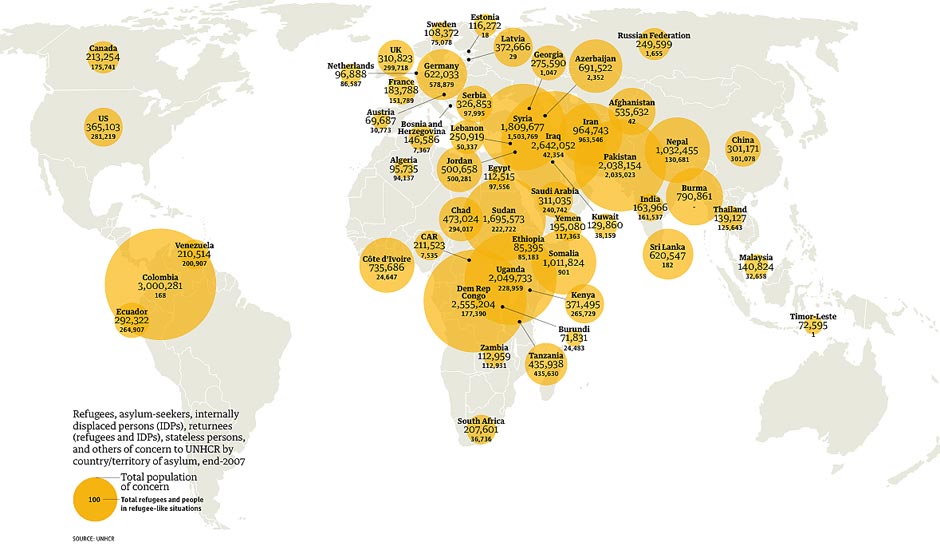
Graphic showing the world's refugees. Click the magnifying glass for the full image
Climate change is fuelling conflicts around the world and helping to drive the number of people forced out of their homes to new highs, the head of the UN's refugee agency said yesterday. After a few years of improvement, thanks mainly to large-scale resettlement in Afghanistan, the numbers of civilians uprooted by conflict is again rising. During 2007 the total jumped to 37.4 million, an increase of more than 3 million, according to statistics published today.
The figures, described as "unprecedented" by the UN, do not include people escaping natural disasters or poverty - only those fleeing conflict and persecution. But Antonio Guterres, the UN high commissioner for refugees, said that climate change could also uproot people by provoking conflicts over increasingly scarce resources, such as water.
In an interview with the Guardian, Guterres said: "Climate change is today one of the main drivers of forced displacement, both directly through impact on environment - not allowing people to live any more in the areas where they were traditionally living - and as a trigger of extreme poverty and conflict."
Guterres, who has held the post since 2005, said the number of refugees was likely to continue to increase for the foreseeable future. "More and more the international community will be facing an acceleration of people on the move for all kinds of reasons," he said.
As climate change, a global economic slowdown, conflict and persecution fuelled each other, it would be increasingly hard to categorise those on the run.
"What we are witnessing is a trend in the world where more and more people feel threatened by conflict, threatened by their own government, threatened by other political, religious ethnic or social groups, threatened by nature and nature's retaliation against human aggression - climate change is the example of that. And also threatened by ... a slowdown in global growth, plus structural change in energy and food markets," Guterres said.
The Portuguese diplomat is visiting London to launch a week of events marking World Refugee Day on Friday. Today a reproduction of a relief camp in the Darfur region will be erected in Trafalgar Square to raise awareness of the problem.
Guterres said funding from world governments had failed to keep up with the challenge of caring for refugees, describing it as "out of proportion with the dimension of the problem".
The task is also hindered by the legal distinction between refugees, who flee across borders and automatically become the UNHCR's responsibility, and internally displaced persons (IDPs), who flee their homes but remain in their home countries. In 2007 there were estimated to be 26 million of them, and only half receive direct or indirect help from the UNHCR. "They remain under the protection of their own governments, but the governments are sometimes part of the problem rather than solution," Guterres said.
He said the UNHCR was not seeking to widen its 1951 mandate, but wanted a review of the status of IDPs, to ensure they received more international help.
Statistics published today by the UNHCR show that nearly half the world's refugees are Afghan (about 3 million, mostly scattered in Pakistan and Iran), or Iraqi (2 million, largely in Syria and Jordan). The world's largest population of IDPs is in Colombia, where 3 million people have driven from their homes by years of insurgency and counter-insurgency. There are 2.4 million IDPs thought to be in Iraq, a rise of 600,000 over the past year. Almost all refugees end up in camps in their region, rather than in the west, which admits relatively few.
Guterres was critical of Britain's record, particularly on refugees from Iraq. Only 15% of their applications for refugee status have been granted, he said, and the UK's asylum system "still requires people to demonstrate that they are targets of violence and persecution, which is not always easy in situations of widespread violence." But he added: "At the same time it is true that the UK is not deporting people to central and southern Iraq."
Subscribe to:
Posts (Atom)