


Oil rises as Saudi Arabia nixes Bush plea
The OPEC nation rejects calls from the President to increase production as oil reaches a new record near $128 a barrel.
NEW YORK (CNNMoney.com) -- Oil prices surged nearly $3, reaching a record high of almost $128 a barrel Friday as Saudi Arabia rejected President Bush's call to increase production.
According to the White House, Saudia Arabia doesn't see enough demand to increase production.
President Bush met with Saudi Arabia's King Abdullah on Friday as part of his Middle East tour to appeal for greater production to help quell crippling fuel prices.
Crude began to rise earlier in the day after traders foresaw a jump in diesel fuel use following the earthquake in China and Goldman Sachs revised its price outlook sharply higher.
Oil prices: U.S. crude for June delivery was up $2.96 a barrel to $127.08 on the New York Mercantile Exchange. Earlier, crude hit $127.82, topping the previous intraday record of $126.98 set Tuesday. Last Friday, oil closed at a record $125.96 a barrel.
"Everything the market looks at is bullish," Peter Beutel, an oil analyst at Cameron Hanover, wrote in a research note Friday.
Traders fear that the rebuilding after the 7.9 magnitude earthquake that rocked southwest China Monday - and killed more than 20,000 people with tens of thousands of others still missing - will lead to a sharp increase in diesel fuel use, the Associated Press reported.
Rocketing fuel: Diesel fuel has been in tight supply for the last several months following a cold winter in the Northern Hemisphere, and as the popularity of diesel cars grows in Europe and the developing world.
With diesel prices outpacing gasoline, refiners in the United States have been ramping up production of diesel and sending it abroad. That has displaced some domestic gasoline production, helping push gas prices higher.
The price of diesel fuel hit a new record high Friday of $4.482 a gallon, according to a daily survey from AAA. Regular unleaded gasoline also reached a new record of $3.787 a gallon.
Goldman Sachs weighs in: Also contributing to Friday's oil price spike: analysts at the investment bank Goldman Sachs boosted their oil price predictions for the second half of the year from $107 to $141 a barrel.
"Supply constraints continue to push crude prices higher," Goldman analysts wrote in a research note Friday.
But the bank noted that despite the high prices, the global economy - and by implication, the demand for oil - continues to grow.
"The dire macroeconomic impact from the current oil shock has yet to materialize," the note said.
Original article posted here.
Showing posts with label Saudi Arabia. Show all posts
Showing posts with label Saudi Arabia. Show all posts
Friday, May 16, 2008


Wednesday, April 16, 2008
Surprise! We're not loved.
POLITICS: Attitudes Toward U.S. Worsen in Arab World
By Jim Lobe
WASHINGTON, Apr 14 (IPS) - Despite renewed U.S. efforts to achieve an Israeli-Palestinian peace agreement this year, popular views of the United States in the Arab world have actually worsened since 2006, according to a major new survey of public opinion in six Arab states.
Nearly two-thirds, or 64 percent, of more than 4,000 respondents in Egypt, Jordan, Lebanon, Morocco, Saudi Arabia and the United Arab Emirates (UAE) said they held a "very unfavourable" attitude of the United States, up from 57 percent in late 2006, while 19 percent more said their views were "somewhat unfavourable" -- roughly comparable to the results of 17 months ago.
At the same time, support for Iran and its nuclear programme appears to have risen over the same period, according to the new survey, the sixth in a series designed by University of Maryland Prof. Shibley Telhami and carried out by Zogby International since 2002.
The poll found that two-thirds of the Arab public (67 percent) believes Tehran has the right to pursue its nuclear programme and that international pressure to freeze it should cease. That compares to 61 percent who took the same position in 2006.
Remarkably, nearly three out of four Saudi respondents said that if Iran acquired nuclear weapons, it would have "positive" influence on the region, while 51 percent of UAE respondents agreed. Pluralities in Morocco and Egypt took the same position, while pluralities of roughly one-third in Lebanon and Jordan said Tehran's acquisition of a nuclear weapon it would make no difference.
The new survey also found that fears regarding both U.S. and Israeli designs in the region have also increased over the past 17 months, despite the length of time that has passed since the summer 2006 Israel-Hezbollah war which inflamed anti-Israeli and anti-western opinion throughout the region.
Asked to name two countries that, in their view, posed the "biggest threat" to them, a whopping 95 percent and 88 percent of respondents named Israel and the U.S., respectively. That compared to 85 percent and 72 percent, respectively, in late 2006.
By comparison, the sense of threat posed by Iran appears to have diminished over the same period. While 11 percent of Arab respondents named Iran as one of the two greatest threats in late 2006, only seven percent did so in the most recent survey.
The survey, which was conducted in all six countries last month, is certain to be greeted with considerable dismay here in the U.S. capital where policymakers had been cheered by some recent polling. One 23-nation survey released by BBC earlier this month suggested that Washington's image around the globe had bottomed out last year and that the greater emphasis the George W. Bush administration has placed on diplomacy, rather than war and military threats, during its second term, as well as reduced violence in Iraq, had begun to pay off, at least in public diplomacy terms.
But Telhami's "Annual Arab Public Opinion Poll" is highly regarded among Arabist scholars and public opinion specialists here who note that its consistency of methodology and questions over an unusually long period of time has given it considerable credibility. Telhami, an expert on Arab media, holds the Anwar Sadat Chair for Peace and Development at the University of Maryland and serves as a senior fellow at the Saban Centre for Middle East Policy at the Brookings Institution, a major think tank here.
The survey found that while views on some issues varied among the six countries, cynicism about U.S. motivations and policies was fairly consistent. Eighty percent said their views of the U.S. are formed more by U.S. "policies" than by U.S. "values" -- up from 70 percent who took that position in 2006.
Nearly two-thirds of respondents (65 percent) said they don't believe that democracy is a real objective in the region, while 20 percent said it is an important objective but Washington is going about it the wrong way.
A 36-percent plurality said they did not believe reports that violence in Iraq has been significantly reduced over the past year, while 31 percent said any reduction of violence that has been achieved has little to do with the "surge" of U.S. forces there and that, in any event, it was only a matter of time before violence increases. Only six percent of respondents said they believed the surge was working and would enhance the chances of a stable political settlement.
Asked what they believe would happen if the U.S. quickly withdrew its forces, 61 percent said Iraqis would find a way to bridge their differences -- up from 44 percent in 2006. Only 15 percent said civil war in Iraq would expand rapidly, down from 24 percent in 2006.
Respondents in Lebanon (88 percent), Jordan (87 percent), and Saudi Arabia (66 percent) were particularly optimistic that Iraqis would reach a peaceful settlement if the U.S. withdrew its forces quickly.
Overall, four out of five respondents said they believe that Iraqis are worse off as a result of the U.S. invasion. Only two percent said they believed that Iraqis were better off.
The survey found a sharp rise in the percentage of respondents, particularly in Egypt and Saudi Arabia, who identified the Palestinian cause as among their three most important public issues. Eight-six percent of all respondents named Palestine in that context, up from 77 percent in 2006 and 69 percent in 2005.
At the same time, however, a growing majority was found to be increasingly pessimistic about prospects for a two-state solution based on Israel's 1967 borders. Fifty-five percent overall said they believe the collapse of prospects for such a solution will likely lead to a state of "intense conflict for years to come". Views on the conflict were especially pessimistic in Lebanon and Jordan.
Asked which U.S. presidential candidate would have the best chance to advance peace in the Middle East, Democratic Sen. Barack Obama gained the most backing with 18 percent, followed by Sen. Hillary Clinton (13 percent), and John McCain (4 percent). But 20 percent of respondents said they weren't following the U.S. elections, and a plurality of 32 percent said the policy will be the same regardless of who is elected.
Asked to identify which foreign leader they admired the most, respondents generally volunteered those most outspokenly defiant of Israel and the U.S. The most popular was Hizbollah leader Hassan Nasrallay, who was named by 26 percent of respondents, up from 14 percent 17 months ago. Second-ranked was Syrian President Bashar Al-Assad at 16 percent, up from just two percent in 2006.
Iranian President Mahmoud Ahmadinejad came up third with 10 percent of respondents, up from four percent in 2006, while al Qaeda chief Osama bin Laden was cited by six percent of respondents, up from four percent. Al Qaeda also appeared to receive a somewhat more sympathetic response among respondents than in late 2006.
Asked what aspect of the group, if any, they sympathise with the most, one-third of respondents told interviewers then that they "do not sympathise at all with this organisation." Only 21 percent took that position in the latest poll.
Original article posted here.
By Jim Lobe
WASHINGTON, Apr 14 (IPS) - Despite renewed U.S. efforts to achieve an Israeli-Palestinian peace agreement this year, popular views of the United States in the Arab world have actually worsened since 2006, according to a major new survey of public opinion in six Arab states.
Nearly two-thirds, or 64 percent, of more than 4,000 respondents in Egypt, Jordan, Lebanon, Morocco, Saudi Arabia and the United Arab Emirates (UAE) said they held a "very unfavourable" attitude of the United States, up from 57 percent in late 2006, while 19 percent more said their views were "somewhat unfavourable" -- roughly comparable to the results of 17 months ago.
At the same time, support for Iran and its nuclear programme appears to have risen over the same period, according to the new survey, the sixth in a series designed by University of Maryland Prof. Shibley Telhami and carried out by Zogby International since 2002.
The poll found that two-thirds of the Arab public (67 percent) believes Tehran has the right to pursue its nuclear programme and that international pressure to freeze it should cease. That compares to 61 percent who took the same position in 2006.
Remarkably, nearly three out of four Saudi respondents said that if Iran acquired nuclear weapons, it would have "positive" influence on the region, while 51 percent of UAE respondents agreed. Pluralities in Morocco and Egypt took the same position, while pluralities of roughly one-third in Lebanon and Jordan said Tehran's acquisition of a nuclear weapon it would make no difference.
The new survey also found that fears regarding both U.S. and Israeli designs in the region have also increased over the past 17 months, despite the length of time that has passed since the summer 2006 Israel-Hezbollah war which inflamed anti-Israeli and anti-western opinion throughout the region.
Asked to name two countries that, in their view, posed the "biggest threat" to them, a whopping 95 percent and 88 percent of respondents named Israel and the U.S., respectively. That compared to 85 percent and 72 percent, respectively, in late 2006.
By comparison, the sense of threat posed by Iran appears to have diminished over the same period. While 11 percent of Arab respondents named Iran as one of the two greatest threats in late 2006, only seven percent did so in the most recent survey.
The survey, which was conducted in all six countries last month, is certain to be greeted with considerable dismay here in the U.S. capital where policymakers had been cheered by some recent polling. One 23-nation survey released by BBC earlier this month suggested that Washington's image around the globe had bottomed out last year and that the greater emphasis the George W. Bush administration has placed on diplomacy, rather than war and military threats, during its second term, as well as reduced violence in Iraq, had begun to pay off, at least in public diplomacy terms.
But Telhami's "Annual Arab Public Opinion Poll" is highly regarded among Arabist scholars and public opinion specialists here who note that its consistency of methodology and questions over an unusually long period of time has given it considerable credibility. Telhami, an expert on Arab media, holds the Anwar Sadat Chair for Peace and Development at the University of Maryland and serves as a senior fellow at the Saban Centre for Middle East Policy at the Brookings Institution, a major think tank here.
The survey found that while views on some issues varied among the six countries, cynicism about U.S. motivations and policies was fairly consistent. Eighty percent said their views of the U.S. are formed more by U.S. "policies" than by U.S. "values" -- up from 70 percent who took that position in 2006.
Nearly two-thirds of respondents (65 percent) said they don't believe that democracy is a real objective in the region, while 20 percent said it is an important objective but Washington is going about it the wrong way.
A 36-percent plurality said they did not believe reports that violence in Iraq has been significantly reduced over the past year, while 31 percent said any reduction of violence that has been achieved has little to do with the "surge" of U.S. forces there and that, in any event, it was only a matter of time before violence increases. Only six percent of respondents said they believed the surge was working and would enhance the chances of a stable political settlement.
Asked what they believe would happen if the U.S. quickly withdrew its forces, 61 percent said Iraqis would find a way to bridge their differences -- up from 44 percent in 2006. Only 15 percent said civil war in Iraq would expand rapidly, down from 24 percent in 2006.
Respondents in Lebanon (88 percent), Jordan (87 percent), and Saudi Arabia (66 percent) were particularly optimistic that Iraqis would reach a peaceful settlement if the U.S. withdrew its forces quickly.
Overall, four out of five respondents said they believe that Iraqis are worse off as a result of the U.S. invasion. Only two percent said they believed that Iraqis were better off.
The survey found a sharp rise in the percentage of respondents, particularly in Egypt and Saudi Arabia, who identified the Palestinian cause as among their three most important public issues. Eight-six percent of all respondents named Palestine in that context, up from 77 percent in 2006 and 69 percent in 2005.
At the same time, however, a growing majority was found to be increasingly pessimistic about prospects for a two-state solution based on Israel's 1967 borders. Fifty-five percent overall said they believe the collapse of prospects for such a solution will likely lead to a state of "intense conflict for years to come". Views on the conflict were especially pessimistic in Lebanon and Jordan.
Asked which U.S. presidential candidate would have the best chance to advance peace in the Middle East, Democratic Sen. Barack Obama gained the most backing with 18 percent, followed by Sen. Hillary Clinton (13 percent), and John McCain (4 percent). But 20 percent of respondents said they weren't following the U.S. elections, and a plurality of 32 percent said the policy will be the same regardless of who is elected.
Asked to identify which foreign leader they admired the most, respondents generally volunteered those most outspokenly defiant of Israel and the U.S. The most popular was Hizbollah leader Hassan Nasrallay, who was named by 26 percent of respondents, up from 14 percent 17 months ago. Second-ranked was Syrian President Bashar Al-Assad at 16 percent, up from just two percent in 2006.
Iranian President Mahmoud Ahmadinejad came up third with 10 percent of respondents, up from four percent in 2006, while al Qaeda chief Osama bin Laden was cited by six percent of respondents, up from four percent. Al Qaeda also appeared to receive a somewhat more sympathetic response among respondents than in late 2006.
Asked what aspect of the group, if any, they sympathise with the most, one-third of respondents told interviewers then that they "do not sympathise at all with this organisation." Only 21 percent took that position in the latest poll.
Original article posted here.
Saturday, March 22, 2008
Bad day for warmongering Dick
Saudi king rejects Cheney's belligerency
Saudi Arabia's King Abdullah in a meeting with visiting US Vice President Dick Cheney has rejected any US military strike against Iran.
King Abdullah in a meeting with the US vice president is against any US military strike against Iran, Saudi official sources say.
Cheney who arrived in Saudi Arabia on Friday discussed Iran's nuclear program and its increasing influence in the Middle East with senior Saudi officials, DPA reported.
Saudi Arabia, along with other Persian Gulf Arab countries, sees negotiations as the best way to resolve the standoff between the US and Iran.
The king also told Cheney that the Middle East should be free of nuclear weapons and other weapons of mass destruction.
The Saudis say any nuclear non-proliferation efforts should include Israel, which is widely believed to be the only nuclear power in the Middle East with around 200 nuclear warheads.
The US vice president's efforts to drum up support for Washington's war mongering policies against Iran comes as a recent NIE report declared that Tehran is not pursuing any nuclear weapons program.
The Islamic Republic says, as a signatory to the non-proliferation treaty (NPT), the country is entitled to use the nuclear energy for peaceful purposes.
Original article posted here.
 US Vice President Dick Cheney in Saudi Arabia |
King Abdullah in a meeting with the US vice president is against any US military strike against Iran, Saudi official sources say.
Cheney who arrived in Saudi Arabia on Friday discussed Iran's nuclear program and its increasing influence in the Middle East with senior Saudi officials, DPA reported.
Saudi Arabia, along with other Persian Gulf Arab countries, sees negotiations as the best way to resolve the standoff between the US and Iran.
The king also told Cheney that the Middle East should be free of nuclear weapons and other weapons of mass destruction.
The Saudis say any nuclear non-proliferation efforts should include Israel, which is widely believed to be the only nuclear power in the Middle East with around 200 nuclear warheads.
The US vice president's efforts to drum up support for Washington's war mongering policies against Iran comes as a recent NIE report declared that Tehran is not pursuing any nuclear weapons program.
The Islamic Republic says, as a signatory to the non-proliferation treaty (NPT), the country is entitled to use the nuclear energy for peaceful purposes.
Original article posted here.
Tuesday, February 26, 2008
Driving a dagger in the heart of the dollar (and making way for the Amero)
Geenspan tells Gulf to drop dollar
Alan Greenspan, the former chairman of the US central bank, or Fed, has said that inflation rates in Gulf states, which are reaching near record levels, would fall "significantly" if oil producers dropped their US dollar pegs.
Speaking at an investment conference on Monday in Jedda, Saudi Arabia, he said the pegs restrict the region's ability to control inflation by forcing them to duplicate US monetary policy at a time when the Fed is cutting rates to ward off an economic downturn.
Debate is rife in the Gulf on how to tackle inflation.
Levels have hit seven per cent in Saudi Arabia, the highest in 27 years and a 19-year peak of 9.3 per cent in the United Arab Emirates in 2006.
Free float?
"In the short term free floating ... will not fully dissipate inflationary pressure, although it would significantly do so," Greenspan said.
Saudi and UAE central bank chiefs are in favour of retaining dollar pegs, but Sheikh Hamad bin Jassim bin Jabr al-Thani, the prime minister of Qatar, is pushing for regional currency reform to avert possible unilateral revaluations designed to curb inflation.
According to Hamad Saud al-Sayyari, governor of the Saudi central bank, floating the Saudi riyal would not be appropriate for an economy that relies on oil exports.
"Floating is beneficial when the economy and exports are diverse ... as for the kingdom it remains reliant on the export of a single commodity," he said.
Investor attraction
The dollar peg was also defended by Sultan Nasser al-Suweidi, the UAE central bank governor, at a conference in Abu Dhabi on Monday.
He said the policy was helping Gulf states attract foreign investments.
"They did very well for our economies because it has led to more capital flows," al-Suweidi said.
Qatar, has the region's highest inflation, and is considering the revaluing of the Qatari riyal to combat inflation currently at 13.74 per cent.
The exchange rate contributes to about 40 per cent of inflation in Qatar, where the riyal is believed to be 30 per cent undervalued.
Qatar's stand
"We prefer always to act with all the GCC countries," Sheikh Hamad said.
Qatar currently chairs the six-nation Gulf Cooperation Council.
"It's now time for the Gulf to have its own currency," he said.
Sheikh Hamad said such a currency should be "like the Japanese yen or other currencies".
Deutsche Bank said last month that both Qatar and the UAE will probably cut ties to the US dollar this year and track currency baskets as Kuwait did last May.
Original article posted here.
Alan Greenspan, the former chairman of the US central bank, or Fed, has said that inflation rates in Gulf states, which are reaching near record levels, would fall "significantly" if oil producers dropped their US dollar pegs.
Speaking at an investment conference on Monday in Jedda, Saudi Arabia, he said the pegs restrict the region's ability to control inflation by forcing them to duplicate US monetary policy at a time when the Fed is cutting rates to ward off an economic downturn.
Debate is rife in the Gulf on how to tackle inflation.
Levels have hit seven per cent in Saudi Arabia, the highest in 27 years and a 19-year peak of 9.3 per cent in the United Arab Emirates in 2006.
Free float?
"In the short term free floating ... will not fully dissipate inflationary pressure, although it would significantly do so," Greenspan said.
Saudi and UAE central bank chiefs are in favour of retaining dollar pegs, but Sheikh Hamad bin Jassim bin Jabr al-Thani, the prime minister of Qatar, is pushing for regional currency reform to avert possible unilateral revaluations designed to curb inflation.
According to Hamad Saud al-Sayyari, governor of the Saudi central bank, floating the Saudi riyal would not be appropriate for an economy that relies on oil exports.
"Floating is beneficial when the economy and exports are diverse ... as for the kingdom it remains reliant on the export of a single commodity," he said.
Investor attraction
The dollar peg was also defended by Sultan Nasser al-Suweidi, the UAE central bank governor, at a conference in Abu Dhabi on Monday.
He said the policy was helping Gulf states attract foreign investments.
"They did very well for our economies because it has led to more capital flows," al-Suweidi said.
Qatar, has the region's highest inflation, and is considering the revaluing of the Qatari riyal to combat inflation currently at 13.74 per cent.
The exchange rate contributes to about 40 per cent of inflation in Qatar, where the riyal is believed to be 30 per cent undervalued.
Qatar's stand
"We prefer always to act with all the GCC countries," Sheikh Hamad said.
Qatar currently chairs the six-nation Gulf Cooperation Council.
"It's now time for the Gulf to have its own currency," he said.
Sheikh Hamad said such a currency should be "like the Japanese yen or other currencies".
Deutsche Bank said last month that both Qatar and the UAE will probably cut ties to the US dollar this year and track currency baskets as Kuwait did last May.
Original article posted here.
Sunday, November 18, 2007
Dying dollar, It will only get worse
OPEC blunder reveals debate on weak dollar
By SEBASTIAN ABBOT
RIYADH, Saudi Arabia — The accidental airing of a closed OPEC session Friday provided a surprise glimpse into a sensitive debate over the weakening U.S. dollar, with Saudi Arabia's foreign minister warning that even talking publicly about the currency's decline could further hurt its value.
The high-profile blunder ahead of a rare OPEC summit revealed the debate as Iran attempted to convince other member countries to express concern over dollar depreciation in the meeting's final declaration.
Oil is priced in dollars on the world market, and its depreciation has concerned oil producers because it has contributed to rising crude prices and has eroded the value of their dollar reserves. Cartel officials have resisted pressure to increase oil production to ease prices.
"The reality is that we have this problem. I think we should draft the declaration to reflect our concerns," Iranian Foreign Minister Manouchehr Mottaki said during a pre-summit meeting here with fellow ministers from the Organization of Petroleum Exporting Countries.
But Saud al-Faisal, foreign minister of U.S. ally Saudi Arabia, came out against the proposal with unusually frank comments.
"In my feeling, the mere mention that the OPEC countries are studying the issue of the dollar is itself going to have an impact that endangers the interests of the countries," he said.
"We all should be worried if any action that we take will lead us to do some injury to our returns on our product," al-Faisal said. "Nobody wants to have less money than more money. I am sure that we all agree on that."
Broadcast accidental
The closed meeting was accidentally broadcast to journalists and after about 40 minutes, an official rushed into the press room and yanked the television cable out of the wall.
A public declaration by OPEC expressing concern about the falling value of the dollar could send the currency even lower, putting at risk the vast dollar holdings oil producers have generated as crude prices have soared to record levels.
Iran and Venezuela have proposed trading oil in a basket of currencies to replace the historic link to the dollar, but they have been unable to generate enough support from fellow OPEC members.
After the meeting, OPEC Secretary General Abdalla Salem el-Badri said the group had decided not to mention concern over dollar depreciation in the declaration.
"We discussed it among ourselves, but I will tell you, you will not see it in the final declaration," he said. "I told you ... many times that we are concerned, but this is a member-country policy."
Saudi Foreign Minister al-Faisal suggested during the meeting that OPEC analyze the impact of dollar depreciation without documenting its efforts or concern.
"This is not new. We have done this in the past, decide to study something without putting down on paper that we are going to study it so that we avoid any implication that will bring adverse effect to our countries' finances," al-Faisal said.
Not everyone agreed with the Saudi foreign minister in the meeting. Nigerian Finance Minister Shamsuddeen Usman suggested accommodating Iran's proposed addition.
"While underlining our concern for the continued depreciation of the dollar and its adverse impact on our revenues, we instruct our finance ministers to study the issue exhaustively and advise us on ways to safeguard the purchasing power of our revenues, of our members' revenues," Usman suggested the statement should read.
Production speculation
Although the issue of dollar depreciation took center stage on the eve of the upcoming summit, which starts today, the run-up to the meeting was also dominated by speculation over whether OPEC would raise production after recent oil-price increases that have closed in on $100.
The record oil prices prompted U.S. Energy Secretary Samuel Bodman to call on OPEC to increase production earlier this week, but cartel officials have said they will hold off any decision until the group meets next month in Abu Dhabi, United Arab Emirates.
Original article posted here.
By SEBASTIAN ABBOT
RIYADH, Saudi Arabia — The accidental airing of a closed OPEC session Friday provided a surprise glimpse into a sensitive debate over the weakening U.S. dollar, with Saudi Arabia's foreign minister warning that even talking publicly about the currency's decline could further hurt its value.
The high-profile blunder ahead of a rare OPEC summit revealed the debate as Iran attempted to convince other member countries to express concern over dollar depreciation in the meeting's final declaration.
Oil is priced in dollars on the world market, and its depreciation has concerned oil producers because it has contributed to rising crude prices and has eroded the value of their dollar reserves. Cartel officials have resisted pressure to increase oil production to ease prices.
"The reality is that we have this problem. I think we should draft the declaration to reflect our concerns," Iranian Foreign Minister Manouchehr Mottaki said during a pre-summit meeting here with fellow ministers from the Organization of Petroleum Exporting Countries.
But Saud al-Faisal, foreign minister of U.S. ally Saudi Arabia, came out against the proposal with unusually frank comments.
"In my feeling, the mere mention that the OPEC countries are studying the issue of the dollar is itself going to have an impact that endangers the interests of the countries," he said.
"We all should be worried if any action that we take will lead us to do some injury to our returns on our product," al-Faisal said. "Nobody wants to have less money than more money. I am sure that we all agree on that."
Broadcast accidental
The closed meeting was accidentally broadcast to journalists and after about 40 minutes, an official rushed into the press room and yanked the television cable out of the wall.
A public declaration by OPEC expressing concern about the falling value of the dollar could send the currency even lower, putting at risk the vast dollar holdings oil producers have generated as crude prices have soared to record levels.
Iran and Venezuela have proposed trading oil in a basket of currencies to replace the historic link to the dollar, but they have been unable to generate enough support from fellow OPEC members.
After the meeting, OPEC Secretary General Abdalla Salem el-Badri said the group had decided not to mention concern over dollar depreciation in the declaration.
"We discussed it among ourselves, but I will tell you, you will not see it in the final declaration," he said. "I told you ... many times that we are concerned, but this is a member-country policy."
Saudi Foreign Minister al-Faisal suggested during the meeting that OPEC analyze the impact of dollar depreciation without documenting its efforts or concern.
"This is not new. We have done this in the past, decide to study something without putting down on paper that we are going to study it so that we avoid any implication that will bring adverse effect to our countries' finances," al-Faisal said.
Not everyone agreed with the Saudi foreign minister in the meeting. Nigerian Finance Minister Shamsuddeen Usman suggested accommodating Iran's proposed addition.
"While underlining our concern for the continued depreciation of the dollar and its adverse impact on our revenues, we instruct our finance ministers to study the issue exhaustively and advise us on ways to safeguard the purchasing power of our revenues, of our members' revenues," Usman suggested the statement should read.
Production speculation
Although the issue of dollar depreciation took center stage on the eve of the upcoming summit, which starts today, the run-up to the meeting was also dominated by speculation over whether OPEC would raise production after recent oil-price increases that have closed in on $100.
The record oil prices prompted U.S. Energy Secretary Samuel Bodman to call on OPEC to increase production earlier this week, but cartel officials have said they will hold off any decision until the group meets next month in Abu Dhabi, United Arab Emirates.
Original article posted here.
Monday, October 08, 2007
How can you work for peace when your primary economic comparative advantage and industry is war
1.4 billion dollars in possible US arms sales to Mideast announced
by Staff Writers
The Pentagon notified Congress Thursday of possible sales of missiles, armored vehicles and cargo aircraft upgrades worth nearly 1.4 billion dollars to four Mideast states.
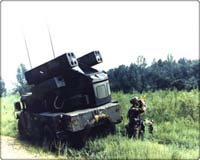 Egypt is requesting 164 Stinger Block I missiles, and 25 Avenger launchers. |
The Pentagon notified Congress Thursday of possible sales of missiles, armored vehicles and cargo aircraft upgrades worth nearly 1.4 billion dollars to four Mideast states.
US Defense Secretary Robert Gates and Secretary of State Condoleezza Rice earlier this year promoted a much larger package of arms sales to the region earlier this year as a means to counter Iran.
The biggest of the possible arms sales announced Thursday was to Saudi Arabia, which the Pentagon said wants to buy 61 light armored vehicles, and 50 Humvees along with assorted guns, machine guns and night vision goggles.
The Defense Security and Assistance Agency said the sale would be worth 631 million dollars.
"The proposed sale of light armored vehicles will provide a highly mobile, light combat vehicle capability enabling Saudi Arabia to rapidly identify, engage and defeat perimeter security threats and rapidly employ counter and anti-terrorism measures," the DSCA said in a statement.
The light armored vehicles, which are built by General Dynamic Land Systems, are the primary combat vehicle of the Saudi Arabia National Guard.
The United Arab Emirates requested 900 Hellfire II Longbow air to ground missiles, and 300 blast fragmentation warheads, which the DSCA valued at up to 428 million dollars.
"The UAE needs these missiles in order to defend its maritime and land borders," the DSCA said.
It said the sale would reduce dependence on US forces.
Egypt is requesting 164 Stinger Block I missiles, and 25 Avenger launchers. The missiles would be configured for launches from vehicles.
The DSCA valued that possible sale at 83 million dollars.
"Egypt will use the Stinger missile to upgrade its air defense capability and will have no difficulty absorbing them into its armed forces," it said said.
Kuwait is seeking upgrades of three L-100-30 aircraft, which are commercial versions of the military C-130, DSCA said.
The upgrades were worth up to 250 million dollars, the agency said.
Original article posted here.Sunday, October 07, 2007
More writing on the wall for dying dollar
Gulf funds drift away from dollar
By Babu Das Augustine, Banking Editor
Dubai: Asset diversification by the Gulf sovereign wealth funds and the possibility that the Organisation of Petroleum Exporting Countries (Opec) will change the pricing of oil from the dollar to another currency could mean more trouble for the dollar.
The dollar has been losing its charm as a reserve currency due to its persistent weakness against a host of other international currencies.
The September non-farm payrolls report on Friday showed 110,000 jobs were created in the US last month. Although the dollar reacted positively to the news and gained initially, the rally quickly fizzled.
Amid the dollar's free fall following the half per cent interest rate cut in September, Qatar last week said its $50 billion sovereign wealth fund has cut its exposure to the dollar by more than half to about 40 per cent of its portfolio.
"While the opportunities are growing, the risk levels of Asian assets have come down substantially in recent years," Ronnie Chan, chairman of Hang-Lung Properties Hong Kong, told Gulf News recently.
Analysts see the admission by Qatar as a signal that regional state-owned funds are moving away from the dollar.
Oil pricing
"Qatar has admitted that its investment fund has been diversifying their portfolios to compensate for the decline of the dollar. It would be naive to think that other Gulf funds are loyal to the dollar at the cost of heavy portfolio losses," said a Dubai-based investment banker.
During the past 12 months, companies, mainly state-owned investment arms and private equity firms from the GCC, have quietly acquired more than $50 billion in assets worldwide with Asia's and Europe's shares together accounting for more than 55 per cent.
The state-owned Kuwait Investment Authority, with assets of more than $150 billion, last year increased the Asian share of its portfolio to 20 per cent from 10 per cent.
Although gulf central banks have been discussing asset diversification in the past two years, there hasn't been any evidence of a major shift. The size of assets held by Gulf central banks are relatively small compared to the funds managed by the state-owned investment funds.
According to IMF estimates, global investment funds managed by governments control an estimated $2.5 trillion, outstripping hedge funds. Morgan Stanley estimates these assets could rise to $12 trillion by 2015, roughly the size of the US economy. Gulf countries account for a major share of these funds.
Currency market analysts believe that the gulf sovereign funds' gradual move away from the dollar is a precursor to Opec opting for a different currency in which to price oil.
"If the dollar were to lose its lustre as a reserve currency this could prove disruptive to the global financial system," Merrill Lynch said in a research note.
"Pricing oil in dollars might have made sense when there was a paucity of other relatively stable currencies and when the Middle East imported more from the US - but not any-more," said an analyst.
Original article posted here.
By Babu Das Augustine, Banking Editor
Dubai: Asset diversification by the Gulf sovereign wealth funds and the possibility that the Organisation of Petroleum Exporting Countries (Opec) will change the pricing of oil from the dollar to another currency could mean more trouble for the dollar.
The dollar has been losing its charm as a reserve currency due to its persistent weakness against a host of other international currencies.
The September non-farm payrolls report on Friday showed 110,000 jobs were created in the US last month. Although the dollar reacted positively to the news and gained initially, the rally quickly fizzled.
Amid the dollar's free fall following the half per cent interest rate cut in September, Qatar last week said its $50 billion sovereign wealth fund has cut its exposure to the dollar by more than half to about 40 per cent of its portfolio.
"While the opportunities are growing, the risk levels of Asian assets have come down substantially in recent years," Ronnie Chan, chairman of Hang-Lung Properties Hong Kong, told Gulf News recently.
Analysts see the admission by Qatar as a signal that regional state-owned funds are moving away from the dollar.
Oil pricing
"Qatar has admitted that its investment fund has been diversifying their portfolios to compensate for the decline of the dollar. It would be naive to think that other Gulf funds are loyal to the dollar at the cost of heavy portfolio losses," said a Dubai-based investment banker.
During the past 12 months, companies, mainly state-owned investment arms and private equity firms from the GCC, have quietly acquired more than $50 billion in assets worldwide with Asia's and Europe's shares together accounting for more than 55 per cent.
The state-owned Kuwait Investment Authority, with assets of more than $150 billion, last year increased the Asian share of its portfolio to 20 per cent from 10 per cent.
Although gulf central banks have been discussing asset diversification in the past two years, there hasn't been any evidence of a major shift. The size of assets held by Gulf central banks are relatively small compared to the funds managed by the state-owned investment funds.
According to IMF estimates, global investment funds managed by governments control an estimated $2.5 trillion, outstripping hedge funds. Morgan Stanley estimates these assets could rise to $12 trillion by 2015, roughly the size of the US economy. Gulf countries account for a major share of these funds.
Currency market analysts believe that the gulf sovereign funds' gradual move away from the dollar is a precursor to Opec opting for a different currency in which to price oil.
"If the dollar were to lose its lustre as a reserve currency this could prove disruptive to the global financial system," Merrill Lynch said in a research note.
"Pricing oil in dollars might have made sense when there was a paucity of other relatively stable currencies and when the Middle East imported more from the US - but not any-more," said an analyst.
Original article posted here.
Saturday, August 04, 2007
Once again astute political observations from most capable leader in the Arab world: Hassan Nasrallah
Nasrallah: 'US seeks to drown Mideast in wars'
Hizbullah leader Sheikh Hassan Nasrallah criticized a US plan on Friday to increase military assistance to Arab countries, accusing Washington of seeking to drown the Middle East in wars.
Nasrallah was referring to a proposed US plan announced earlier this week to sell advanced weaponry worth at least $20 billion to Persian Gulf nations and provide new 10-year military aid packages to Israel and Egypt.
"The United States is bringing billions of dollars worth of arms to ignite wars in this region," Nasrallah said in a speech beamed through giant television screens to hundreds of thousands of supporters in eastern Lebanon's city of Baalbek. "The American administration is working on instigating sectarian strife and civil wars in Palestine, Iraq, the Gulf and… between the countries of this region."
The increased aid is believed to be part of US plans to strengthen Middle East allies it deems to be moderate, largely as a counterweight to the growing influence of Iran - one of Hizbullah's main backers, along with Syria.
The Sunni-led governments of the Middle East are also wary of Shi'ite Iran's growing power, and Israel views the country as its principal enemy.
Nasrallah, whose speech was part of a series of events planned by the group to mark the anniversary of last year's war between Hizbullah and Israel, ridiculed US President George W. Bush's announcement Thursday that the US will freeze the assets of people deemed to be undermining Lebanon's democratic government.
The Hizbullah-led opposition in Lebanon has been locked in a fierce power struggle with the US-backed government of Fuad Saniora. The opposition's main demand has been the formation of a national unity Cabinet that would give the opposition veto power. Saniora, backed by the anti-Syrian parliamentary majority and the US, rejects the opposition's demand.
Syria had significant control over Lebanon before its troops were forced to leave in 2005 because of international pressure following the assassination of former Prime Minister Rafik Hariri. Many in Lebanon believe Syria was behind the killing - a charge Syria denies.
Bush's executive order targets anyone found to be helping Syria assert control in Lebanon or otherwise undermine the rule of law.
Nasrallah said the US was "using all its political, media, financial and legal means to terrorize, frighten and encircle the opposition in Lebanon."
"But all this will not lead them anywhere," he concluded.
Original article posted here .
Friday, August 03, 2007
Peace Propaganda, but Promoting War and Profits
US has been covertly arming Gulf States since 2004, officials say
Larisa Alexandrovna
 $20b arms sale to Saudi Arabia ‘done deal’
A recently disclosed US agreement with Saudi Arabia for a 10-year, $20 billion dollar arms sale is a “done deal,” according to intelligence officials and experts familiar with the negotiations.
Yesterday, Secretary of State Condoleezza Rice and Secretary of Defense Robert Gates made a rare joint visit to Saudi Arabia to meet with members of the monarchy, as well as representatives of other Gulf States including the United Arab Emirates, to discuss a $20 billion dollar arms deal to deliver weapons, training, and weapons systems upgrades to Saudi Arabia over the next ten years. Although officially the meeting is to negotiate an agreement, sources have confirmed to RAW STORY that the deal has already been approved.
“It is a done deal. Everyone who needed to has already signed off,” said a former National Security Council official, who wished to remain anonymous given the security aspects of the topic. The deal also includes massive aid packages to Egypt and Israel, which have not yet been formally announced.
Arming the Gulf states
According to current and former intelligence officials, however, the Bush administration has been arming Gulf Cooperation Council (GCC) states covertly since “at least” 2004, a year after the US-led invasion of Iraq in March of 2003.
The GCC is a union of regional allies, including Saudi Arabia, Bahrain, Kuwait, Oman, Qatar and the United Arab Emirates. Created in 1981, it is similar in structure and purpose to the European Union.
Using backchannels and corporate partners, arms have been furnished to the Gulf states to beef up security against what the US sees as an increased risk posed by Iran. Along with sharing various resources, GCC members have agreed to jointly combine military forces.
According to the NSC official, the current Saudi deal serves two purposes, both of which are a direct result of the US-led war against Iraq and the regional instability it has caused. One is to support the Saudi rulers, while the other is to isolate Iran.
The most pressing concern for the Saudi royal family is their ability to maintain power. The Saudi royal family, who are Sunnis, see the election of Shi’a Muslim Nouri al-Maliki as Iraqi Prime Minister as a signal that the Shi’a state of Iran could become more powerful and threaten the sovereignty of the House of Saud. Beyond that, the royals also fear that their own people might overthrow the monarchy should instability in the region continue to worsen.
“The Saudis see Maliki as the cat’s paw of Iran and they think we are actively supporting Maliki,” the NSC official said. “What the monarchy is actively worried about is that guys who got bloodied in Iraq will return home and overthrow them, and that would be very bad for us.”
Not everyone agrees.
In an email to RAW STORY Wednesday, Lawrence Wilkerson, former chief of staff to Secretary of State Colin Powell, said he believes the deal is unwise.
“I believe that the $20B arms package just announced – and the diplomacy accompanying it – is a complete refutation of the Bush/Rice policy of refusing to coddle the autocracies of the Middle East,” Wilkerson said. “Because we are afraid of Tehran, we are willing to fund massively regimes whose interests are not only counter to our own but who are actively engaged in covertly undermining U.S. interests, from supporting anti-U.S. elements in Iraq to building and funding thousands of madrassas in volatile places like the Federally Administered Territories in Pakistan.”
Since 1990, Saudi Arabia has spent over $39.6 billion in arming itself against both the threat of Iran and the growing likelihood of a domestic uprising. The US has also given $300 million more in arms during that period through the State Department, making that nation the single largest client of US defense contractors.
Bribing the House of Saud?
Several military and intelligence sources say that the other major impetus behind the arms deal is the Bush administration’s focus on destabilizing and isolating Iran. Part of that strategy involves cutting Iran off from dealing with companies that also have business dealing with Saudi Arabia and, at the same time, protecting Saudi Arabia from any fallout over US activities against Iran. According to the Washington Post, separate arms deals have also been approved for both Israel and Egypt to “strengthen pro-Western countries against Iran at a time when the hard-line regime seeks to extend its power in the region.”
Another motivation for the arms deal is the Bush administration’s need for support to curb the democratically elected Maliki’s influence while at the same time demonstrating “good faith” to the Saudis, who have increasingly become disillusioned with US policy in Iraq and mishandling of the Iraq war.
“There is a real fear that the [Saudi monarchy] will move towards France and Britain,” said the NSC official. A military official pointed out that with the increase in Asian demand for Saudi Arabia’s largest export, oil, the Arab nation now has more leeway to break away from its long-standing relationship with the United States.
Wilkerson points out, however, that the deal prioritizes aid to just three countries.
“By this recently-announced policy, we have effectively committed more than 80% of U.S. strategic aid to three countries – Israel, Egypt, and Saudi Arabia – all of whom are acting in ways fundamentally counter to our interests,” he said. “In my view, we are doing this in a futile and desperate attempt to ‘buy’ their assistance with respect to Iraq, as well as an attempt to enlist their efforts in countering Iran – the latter of which they would do anyway, even without our aid.”
“This is quintessentially a diplomacy of fear and desperation and not of wisdom and confidence,” he added.
The events of Sept. 11, 2001, when 19 men – 15 of them from Saudi Arabia – attacked the United States, do not seem to have had much effect on US interest in arming the Saudis.
When asked about this, one intelligence official said, “It was 14 or 15 guys, not the government of Saudi Arabia.”
Yet there is evidence that the Saudis have transferred or sold US arms to unauthorized partners.
During the 1980-88 Iran-Iraq war, the Saudis allegedly gave Iraq 1,500 US 2,000-pound bombs (Los Angeles Times, 14 September 1992). "Inadvertent" transfers of bombs and vehicles to Syria and Bangladesh during the Gulf War have also been reported (Arms Control Today, May 1992), as well as another that almost took place when an asylum-seeking Saudi F-15 pilot flew his aircraft to Sudan in November 1990. The plane was returned (Washington Post, 15 November 1990).
Deal with Northrop Grumman alleged
A former high level State Department official pointed to at least one company that is providing weapons to the Saudi National Guard: Northrop Grumman subsidiary Vinnell Corporation.
“The Vinnell Corp has been in that business for decades,” said this official.
The defense giant Northrop Grumman was in talks with the Saudis in March of this year to sell them their E-2D Hawkeye 2000, a form of early air warning system.
Vinnell is also the quasi-official security training firm for the Saudis, through a joint Saudi-US enterprise called Vinnell Arabia.
Yet another offshoot of Northrop is Vinnell-Brown & Root, which is a joint venture between Northrop Grumman and Halliburton, the controversial company of which Vice President Cheney was the CEO until the 2000 election.
Vinnell-Brown & Root is also involved in training the Saudi National Guard.
One source familiar with the backchannel sales of weapons to the GCC states said there is a connection between the leadership of the 3rd Infantry Division of the US Army, from Fort Stewart Georgia, and Vinnell Corporation, but would not elaborate.
In April 2006, Robert Joseph, undersecretary of state for arms control and international security, visited the GCC states in an attempt to broker a deal to install a missile defense system aimed against Iran.
While the arms list for the current deal is still shrouded in secrecy, if former deals are any indication, the Saudis will receive high caliber weapons that are top-of the line “system deployed with U.S. forces,” including M-1A2 Abrams main battle tanks, M-2A2 Bradley armored vehicles, F-15E Strike Eagle attack aircraft and Patriot surface-to-air missiles.
Saudis worry about Iraq fighters coming back
The greatest number of foreign fighters in Iraq are Saudi Arabs, making up roughly 45 percent of all foreign militants. Though not allied with any specific terrorist group, some Saudis are loosely affiliated with Al Qaeda; most, however, are simply fighting the Shi’a government of Iraq, which they perceive as a threat, as well as the US-led coalition, which they see as an even greater concern.
The result of this influx of foreign fighters and pervasive anti-Western sentiments has been a catastrophic radicalization of Muslims in general and Saudi Arabs in particular.
Such fighters, notes the former NSC official, have been radicalized and trained on the streets of Anbar province, and those who might return home to overthrow the Saudi monarchy will be that much more capable.
The Saudi monarchy only came into existence in 1932 and has owed its survival to the United States at every point since. By 1933, US oil interests had already offered $170,000 in gold for land concessions. In 1945 the US and King Abd al-Aziz agreed to a deal in which the US would provides military security to the regime in exchange for cheap oil and exclusive rights provided to US oil companies. Since 1945 the House of Saud has depended almost entirely on the military support of the US government, which has continued to provide arms and training to the Saudi National Guard, a praetorian-like special force that is responsible for the protection of the royal family from coup attempts, assassination attempts, and uprisings by its own people.
Larisa Alexandrovna is the Managing Editor-Investigative News for Raw Story. She is also the site's intelligence and national security correspondent.
Muriel Kane contributed to the research for this article.
Thursday, August 02, 2007
A perfect title
The $63 billion sham
SECRETARY OF STATE Condoleezza Rice said the United States wants to send $63 billion in military aid and weapons to the Middle East to "bolster forces of moderation and support a broader strategy to counter the negative influences of Al Qaeda, Hezbollah, Syria, and Iran."
Talk about wriggling in quicksand. Having destroyed Iraq to save us from horrors that did not exist, Rice now wants to save us from Iran's future nukes by selling American weapons of mass destruction. Over the next decade, the Bush administration wants to give Israel $30 billion in military aid, a nearly 43 percent increase over what that nation received over the last 10 years, according to The
Do you feel safe?
"This is throwing bad money after worse money," said Frida Berrigan, senior program associate at the Arms and Security Project of the New America Foundation. The program was formerly known as the Arms Trade Resource Center at the World Policy Institute. "You can see the whole arms package as a buyoff of Arab nations for what we've done in Iraq.
"Justifying the sales because these countries feel threatened by Iran doesn't hold water. Iran is five to 10 years away from a nuclear weapon. That gives the United States and its partners more than enough time to come up with diplomatic solutions," Berrigan said. "This is just going to reinforce Iran's desire to have a nuclear weapon."
The United States had already set records for global arms sales. The New York Times reported in November that the Bush administration and American military contractors doubled arms sales from $10.6 billion to $21 billion from September 2005 to September 2006. Berrigan estimates that the latest proposal will increase military aid and weaponry by another 25 percent.
This is a bipartisan craziness that never ended despite the end of the Cold War. Under the dual guise of national security and protecting American jobs, the first President Bush and President Clinton aggressively promoted US arms sales to more than twice their level of the last years of the Cold War.
Lawrence Korb, assistant defense secretary under President Reagan, told the Globe in 1996, "The brakes are off the system. . . . There is no coherent policy on the transfer of arms. It has become a money game; an absurd spiral in which we export arms only to have to develop more sophisticated ones to counter those spread out all over the world. . . . It is a frightening trend that undermines our moral authority in the New World Order."
The absurd spiral did nothing for regional stability, democracy or stop terrorism from spreading to American shores. Saudi Arabia was a big buyer under Clinton. It remained a "problematic ally," according to the 9/11 commission. This week, the US envoy to the United Nations, Zalmay Khalilzad, could not decide whether Saudi Arabia was "a great ally" or "undermining" the United States in Iraq.
There is no hint of a coherent policy. Under the president, 80 percent of nations that received arms from America in 2003 were classified by the State Department as being either undemocratic or having a poor human rights record, which covers all the Arab countries in the new deal. Israel is a democracy, but in its 2006 country profile, the State Department cites a source that determined that 322 of 660 Palestinians killed by the Israeli military "were not engaged in hostilities when killed and 141 were minors."
This latest deal is so over the top that Israel is not opposing the $33 billion to Arab states because it gets $30 billion to maintain its military edge. En route to the Middle East this week, Rice denied that the military package was an attempt to buy allies with bombs. She also denied that the United States was relaxing its standards for democracy and human rights.
But a report by the Economist Intelligence Unit said that "the weak response in the Middle East to pressures for democratization, as well as the experience with imported political change in Iraq, is making a mockery of George Bush's 'freedom' agenda." Reuters this week quoted Paul Salem, director of the Middle East Center at the Carnegie Endowment for International Peace, as saying that the arms deal meant Bush's effort to spread democracy in the region was "more than dead."
Berrigan said, "We've created a black hole in what used to be a country and this is supposed to be the solution? More military aid and more high-tech weaponry? The best case scenario is that Congress exercises its power and keeps this from happening."
Derrick Z. Jackson's e-mail address is jackson@globe.com.Original article posted here.
Saturday, July 21, 2007
Saudi Arabia: A pawn of imperialism, ememy of democracy
Understanding Saudi Arabia
The paymasters of the Iraqi insurgency
Thursday, June 07, 2007
Another Decade in Empires: Cronies, Colonies, Weapons and Bribes
BAE accused of secretly paying £1bn to Saudi prince ·
Money moved via US bank
· £30m payments a quarter
· Sanctioned by MoD
David Leigh and Rob Evans
Thursday June 7, 2007
The Guardian
Money moved via US bank
· £30m payments a quarter
· Sanctioned by MoD
David Leigh and Rob Evans
Thursday June 7, 2007
The Guardian
 |  Prince Bandar bin Sultan bin Abdul Aziz al-Saud. Photograph: AFP/Getty Images |
The arms company BAE secretly paid Prince Bandar of Saudi Arabia more than £1bn in connection with Britain's biggest ever weapons contract, it is alleged today.
A series of payments from the British firm was allegedly channelled through a US bank in Washington to an account controlled by one of the most colourful members of the Saudi ruling clan, who spent 20 years as their ambassador in the US.
It is claimed that payments of £30m were paid to Prince Bandar every quarter for at least 10 years.
It is alleged by insider legal sources that the money was paid to Prince Bandar with the knowledge and authorisation of Ministry of Defence officials under the Blair government and its predecessors. For more than 20 years, ministers have claimed they knew nothing of secret commissions, which were outlawed by Britain in 2002.
An inquiry by the Serious Fraud Office (SFO) into the transactions behind the £43bn Al-Yamamah arms deal, which was signed in 1985, is understood to have uncovered details of the payments to Prince Bandar.
But the investigation was halted last December by the SFO after a review by the attorney general, Lord Goldsmith.
He said it was in Britain's national interest to halt the investigation, and that there was little prospect of achieving convictions.
Tony Blair said he took "full responsibility" for the decision.
However, according to those familiar with the discussions at the time, Lord Goldsmith had warned colleagues that British "government complicity" was in danger of being revealed unless the SFO's corruption inquiries were stopped.
The abandonment of the investigation provoked an outcry from anti-corruption campaigners, and led to the world's official bribery watchdog, the OECD, launching its own investigation.
The fresh allegations may also cause BAE problems in America, where corrupt payments to foreign politicians have been outlawed since 1977.
The allegations of payments to Prince Bandar is bound to ignite fresh controversy over the original deal and the aborted SFO investigation.
The Saudi diplomat is known to have played a key role with Mrs Thatcher in setting up Britain's biggest ever series of weapons deals.
For more than 20 years Al-Yamamah, Arabic for "dove", has involved the sale of 120 Tornado aircraft, Hawk warplanes and other military equipment.
According to legal sources familiar with the records, BAE Systems made cash transfers to Prince Bandar every three months for 10 years or more.
BAE drew the money from a confidential account held at the Bank of England that had been set up to facilitate the Al-Yamamah deal. Up to £2bn a year was deposited in the accounts as part of a complex arrangement allowing Saudi oil to be sold in return for shipments of Tornado aircraft and other arms.
Both BAE and the government's arms sales department, the Defence Export Services Organisation (Deso), allegedly had drawing rights on the funds, which were held in a special Ministry of Defence account run by the government banker, the paymaster general.
Those close to Deso say regular payments were drawn down by BAE and despatched to Prince Bandar's account at Riggs bank in Washington DC.
Under the terms of a previously unknown MoD instruction from the department's permanent secretary, Sir Frank Cooper, the payment deal would have required Deso authorisation.
The money was not characterised as commission, but as quasi-official fees for marketing services. The payments are alleged to have continued for at least 10 years and beyond 2002, when Britain outlawed corrupt payments to overseas officials.
SFO investigators led by assistant director Helen Garlick first stumbled on the alleged payments, according to legal sources, when they unearthed highly classified documents at the MoD during their three-year investigation.
Before the investigation was abandoned, the SFO interviewed Alan Garwood, head of Deso. Sources close to the arms sales unit say that he and Stephen Pollard, the commercial director of the Saudi project, were questioned about the reasons for authorising the payments.
Prince Bandar, currently head of the country's national security council, was asked about the alleged payments by the Guardian this week.
He did not respond.
BAE Systems also would not explain the alleged payments. The company said: "Your approach is in common with that of the least responsible elements of the media - that is to assume BAE Systems' guilt in complete ignorance of the facts."
Its spokesman, John Neilson, added: "We have little doubt that among the reasons the attorney general considered the case was doomed was the fact that we acted in accordance with ... the relevant contracts, with the approval of the government of Saudi Arabia, together with, where relevant, that of the UK MoD."
The attorney general's office would not discuss claims about Lord Goldsmith's concerns of "government complicity" in the payments.
A spokesman said the SFO inquiry had been halted because of the "real and serious threat to national security".
"There were major legal difficulties ... given BAE's claim that the payments were made in accordance with the agreed contractual arrangements". The spokesman added: "None of this is altered by the Guardian story."
The MoD, where minister Paul Drayson runs Britain's government arms sales unit, also refused to elaborate.
"The MoD is unable to respond to the points made ... since to do so would involve disclosing confidential information about Al-Yamamah, and that would cause the damage that ending the investigation was designed to prevent," a spokesman said.
The Liberal Democrat deputy leader, Vince Cable, called for an urgent inquiry into the new disclosures last night.
"This is potentially more significant and damaging than anything previously revealed. It is unforgivable if the British government has been actively conniving in under-the-counter payments to a major figure in the Saudi government.
"There must be a full parliamentary inquiry into whether the government has deceived the public and undermined the anti-corruption legislation which it itself passed through parliament."
He added: "It increasingly looks as if the motives behind the decision to pull the SFO inquiry were less to do with UK national interests but more to do with the personal interests of one of two powerful Saudi ministers ... Tony Blair's claims that the government has been motivated by national security considerations look increasingly hollow."
Last month, Dr Cable raised the issue of BAE in the Commons and accused Prince Bandar of benefiting personally from the Al-Yamamah deal.
The new disclosures may also make BAE's attempted takeover of the US-based Armor Holdings more difficult. The deal requires approval from US regulators.
Separately, the state department has protested to the Foreign Office about the ending of the SFO inquiry, saying it undermines global efforts to stamp out corruption by exporters.
Story of a £43bn deal
1985 Al-Yamamah agreement signed by Saudi defence minister Prince Sultan and the then defence secretary Michael Heseltine. Saudis agree to buy 72 Tornado and 30 Hawk warplanes. The deal - "the dove" in Arabic - will in time be worth £43bn to BAE
1989 National Audit Office (NAO) starts inquiry into allegations that members of Saudi royal family and middlemen were secretly paid huge bribes to land Al-Yamamah contract
1992 MPs and auditor general Sir John Bourn suppress NAO report after government claims it would upset Saudis. Report never published
2001 Whistleblower alleges BAE operates "slush fund" to keep sweet the Saudi prince in charge of country's air force, but MoD covers up allegations
2004 Second whistleblower discloses to Guardian further details of slush fund. Serious Fraud Office starts investigation into alleged BAE corruption
2006 Government halts SFO inquiry; investigators were about to gain access to Swiss accounts thought to have been linked to Saudi royal family
2007 OECD, the world's anti-bribery watchdog, rebukes Blair government for terminating SFO investigation, and launches own inquiry
Wednesday, June 06, 2007
American values? Not when it comes to making money in Saudi Arabia
In Saudi Arabia, a view from behind the veil
Riyadh, Saudi Arabia — THE hem of my heavy Islamic cloak trailed over floors that glistened like ice. I walked faster, my eyes fixed on a familiar, green icon. I hadn't seen a Starbucks in months, but there it was, tucked into a corner of a fancy shopping mall in the Saudi capital. After all those bitter little cups of sludgy Arabic coffee, here at last was an improbable snippet of home — caffeinated, comforting, American.
I wandered into the shop, filling my lungs with the rich wafts of coffee. The man behind the counter gave me a bemused look; his eyes flickered. I asked for a latte. He shrugged, the milk steamer whined, and he handed over the brimming paper cup. I turned my back on his uneasy face.
Crossing the cafe, I felt the hard stares of Saudi men. A few of them stopped talking as I walked by and watched me pass. Them, too, I ignored. Finally, coffee in hand, I sank into the sumptuous lap of an overstuffed armchair.
"Excuse me," hissed the voice in my ear. "You can't sit here." The man from the counter had appeared at my elbow. He was glaring.
"Excuse me?" I blinked a few times.
"Emmm," he drew his discomfort into a long syllable, his brows knitted. "You cannot stay here."
"What? Uh … why?"
Then he said it: "Men only."
He didn't tell me what I would learn later: Starbucks had another, unmarked door around back that led to a smaller espresso bar, and a handful of tables smothered by curtains. That was the "family" section. As a woman, that's where I belonged. I had no right to mix with male customers or sit in plain view of passing shoppers. Like the segregated South of a bygone United States, today's Saudi Arabia shunts half the population into separate, inferior and usually invisible spaces.
At that moment, there was only one thing to do. I stood up. From the depths of armchairs, men in their white robes and red-checked kaffiyehs stared impassively over their mugs. I felt blood rushing to my face. I dropped my eyes, and immediately wished I hadn't. Snatching up the skirts of my robe to keep from stumbling, I walked out of the store and into the clatter of the shopping mall.
--
THAT was nearly four years ago, a lesson learned on one of my first trips to the kingdom. Until that day, I thought I knew what I was doing: I'd heard about Saudi Arabia, that the sexes are wholly segregated. From museums to university campuses to restaurants, the genders live corralled existences. One young, hip, U.S.-educated Saudi friend told me that he arranges to meet his female friends in other Arab cities. It's easier to fly to Damascus or Dubai, he shrugged, than to chill out coeducationally at home.
I was ready to cope, or so I thought. I arrived with a protective smirk in tow, planning to thicken the walls around myself. I'd report a few stories, and go home. I had no inkling that Saudi Arabia, the experience of being a woman there, would stick to me, follow me home on the plane and shadow me through my days, tainting the way I perceived men and women everywhere.
I'm leaving the Middle East now, closing up years spent covering the fighting and fallout that have swept the region since Sept. 11. Of all the strange, scary and joyful experiences of the past years, my time covering Saudi Arabia remains among the most jarring.
I spent my days in Saudi Arabia struggling unhappily between a lifetime of being taught to respect foreign cultures and the realization that this culture judged me a lesser being. I tried to draw parallels: If I went to South Africa during apartheid, would I feel compelled to be polite?
I would find that I still saw scraps of Saudi Arabia everywhere I went. Back home in Cairo, the usual cacophony of whistles and lewd coos on the streets sent me into blind rage. I slammed doors in the faces of deliverymen; cursed at Egyptian soldiers in a language they didn't speak; kept a resentful mental tally of the Western men, especially fellow reporters, who seemed to condone, even relish, the relegation of women in the Arab world.
In the West, there's a tendency to treat Saudi Arabia as a remote land, utterly removed from our lives. But it's not very far from us, nor are we as different as we might like to think. Saudi Arabia is a center of ideas and commerce, an important ally to the United States, the heartland of a major world religion. It is a highly industrialized, ultramodern home to expatriates from all over the world, including Americans who live in lush gated compounds with swimming pools, drink illegal glasses of bathtub gin and speak glowingly of the glorious desert and the famous hospitality of Saudis.
The rules are different here. The same U.S. government that heightened public outrage against the Taliban by decrying the mistreatment of Afghan women prizes the oil-slicked Saudi friendship and even offers wan praise for Saudi elections in which women are banned from voting. All U.S. fast-food franchises operating here, not just Starbucks, make women stand in separate lines. U.S.-owned hotels don't let women check in without a letter from a company vouching for her ability to pay; women checking into hotels alone have long been regarded as prostitutes.
As I roamed in and out of Saudi Arabia, the abaya, or Islamic robe, eventually became the symbol of those shifting rules.
I always delayed until the last minute. When I felt the plane dip low over Riyadh, I'd reach furtively into my computer bag to fish out the black robe and scarf crumpled inside. I'd slip my arms into the sleeves without standing up. If I caught the eyes of any male passengers as my fingers fumbled with the snaps, I'd glare. Was I imagining the smug looks on their faces?
The sleeves, the length of it, always felt foreign, at first. But it never took long to work its alchemy, to plant the insecurity. After a day or two, the notion of appearing without the robe felt shocking. Stripped of the layers of curve-smothering cloth, my ordinary clothes suddenly felt revealing, even garish. To me, the abaya implied that a woman's body is a distraction and an interruption, a thing that must be hidden from view lest it haul the society into vice and disarray. The simple act of wearing the robe implanted that self-consciousness by osmosis.
In the depths of the robe, my posture suffered. I'd draw myself in and bumble along like those adolescent girls who seem to think they can roll their breasts back into their bodies if they curve their spines far enough. That was why, it hit me one day, I always seemed to come back from Saudi Arabia with a backache.
The kingdom made me slouch.
--
SAUDI men often raised the question of women with me; they seemed to hope that I would tell them, either out of courtesy or conviction, that I endorsed their way of life. Some blamed all manner of Western ills, from gun violence to alcoholism, on women's liberation. "Do you think you could ever live here?" many of them asked. It sounded absurd every time, and every time I would repeat the obvious: No.
Early in 2005, I covered the kingdom's much-touted municipal elections, which excluded women not only from running for office, but also from voting. True to their tribal roots, candidates pitched tents in vacant lots and played host to voters for long nights of coffee, bull sessions and poetry recitations. I accepted an invitation to visit one of the tents, but the sight of a woman in their midst so badly ruffled the would-be voters that the campaign manager hustled over and asked me, with lavish apologies, to make myself scarce before I cost his man the election.
A few days later, a female U.S. official, visiting from Washington, gave a press appearance in a hotel lobby in Riyadh. Sporting pearls, a business suit and a bare, blond head, she praised the Saudi elections.
The election "is a departure from their culture and their history," she said. "It offers to the citizens of Saudi Arabia hope…. It's modest, but it's dramatic."
The American ambassador, a bespectacled Texan named James C. Oberwetter, also praised the voting from his nearby seat.
"When I got here a year ago, there were no political tents," he said. "It's like a backyard political barbecue in the U.S."
One afternoon, a candidate invited me to meet his daughter. She spoke fluent English and was not much younger than me. I cannot remember whether she was wearing hijab, the Islamic head scarf, inside her home, but I have a memory of pink. I asked her about the elections.
"Very good," she said.
So you really think so, I said gently, even though you can't vote?
"Of course," she said. "Why do I need to vote?"
Her father chimed in. He urged her, speaking English for my benefit, to speak candidly. But she insisted: What good was voting? She looked at me as if she felt sorry for me, a woman cast adrift on the rough seas of the world, no male protector in sight.
"Maybe you don't want to vote," I said. "But wouldn't you like to make that choice yourself?"
"I don't need to," she said calmly, blinking slowly and deliberately. "If I have a father or a husband, why do I need to vote? Why should I need to work? They will take care of everything."
Through the years I have met many Saudi women. Some are rebels; some are proudly defensive of Saudi ways, convinced that any discussion of women's rights is a disguised attack on Islam from a hostile Westerner. There was the young dental student who came home from the university and sat up half the night, writing a groundbreaking novel exploring the internal lives and romances of young Saudi women. The oil expert who scolded me for asking about female drivers, pointing out the pitfalls of divorce and custody laws and snapping: "Driving is the least of our problems." I have met women who work as doctors and business consultants. Many of them seem content.
Whatever their thoughts on the matter, they have been assigned a central, symbolic role in what seems to be one of the greatest existential questions in contemporary Saudi Arabia: Can the country opt to develop in some ways and stay frozen in others? Can the kingdom evolve economically and technologically in a global society without relinquishing its particular culture of extreme religious piety and ancient tribal code?
The men are stuck, too. Over coffee one afternoon, an economist told me wistfully of the days when he and his wife had studied overseas, how she'd hopped behind the wheel and did her own thing. She's an independent, outspoken woman, he said. Coming back home to Riyadh had depressed both of them.
"Here, I got another dependent: my wife," he said. He found himself driving her around, chaperoning her as if she were a child. "When they see a woman walking alone here, it's like a wolf watching a sheep. 'Let me take what's unattended.' " He told me that both he and his wife hoped, desperately, that social and political reform would finally dawn in the kingdom. He thought foreign academics were too easy on Saudi Arabia, that they urged only minor changes instead of all-out democracy because they secretly regarded Saudis as "savages" incapable of handling too much freedom.
"I call them propaganda papers," he said of the foreign analysis. "They come up with all these lame excuses." He and his wife had already lost hope for themselves, he said.
"For ourselves, the train has left the station. We are trapped," he said. "I think about my kids. At least when I look at myself in the mirror I'll say: 'At least I said this. At least I wrote this.' "
--
WHEN Saudi officials chat with an American reporter, they go to great lengths to depict a moderate, misunderstood kingdom. They complain about stereotypes in the Western press: Women banned from driving? Well, they don't want to drive anyway. They all have drivers, and why would a lady want to mess with parking?
The religious police who stalk the streets and shopping centers, forcing "Islamic values" onto the populace? Oh, Saudi officials say, they really aren't important, or strict, or powerful. You hear stories to the contrary? Mere exaggerations, perpetuated by people who don't understand Saudi Arabia.
I had an interview one afternoon with a relatively high-ranking Saudi official. Since I can't drive anywhere or meet a man in a cafe, I usually end up inviting sources for coffee in the lobby of my hotel, where the staff turns a blind eye to whether those in the "family section" are really family.
As the elevator touched down and the shiny doors swung open onto the lobby, the official rushed toward me.
"Do you think we could talk in your room?" he blurted out.
I stepped back. What was this, some crazy come-on?
"No, why?" I stammered, stepping wide around him. "We can sit right over here." I wanted to get to the coffee shop — no dice. He swung himself around, blocking my path and my view.
"It's not a good idea," he said. "Let's just go to your room."
"I really don't think … I mean," I said, stuttering in embarrassment.
Then, peering over his shoulder, I saw them: two beefy men in robes. Great bushes of beards sprang from their chins, they swung canes in their hands and scanned the hotel lobby through squinted eyes.
"Is that the religious police?" I said. "It is!" I was a little mesmerized. I'd always wanted to see them in action.
The ministry official seemed to shrink a little, his shoulders slumped in defeat.
"They're not supposed to be here," he muttered despondently. "What are they doing here?"
"Well, why don't we go to the mall next door?" I said, eyes fixed on the menacing men. "There's a coffee shop there, we could try that."
"No, they will go there next." While he wrung his hands nervously, I stepped back a little and considered the irony of our predicament. To avoid running afoul of what may be the world's most stringent public moral code, I was being asked to entertain a strange, older man in my hotel room, something I would never agree to back home.
I had to do something. He was about to walk away and cancel the meeting, and I couldn't afford to lose it. Then I remembered a couple of armchairs near the elevator, up on my floor. We rode up and ordered room-service coffee. We talked as the elevators chimed up and down the spine of the skyscraper and the roar of vacuum cleaners echoed in the hallway.
--
ONE glaring spring day, when the hot winds raced in off the plains and the sun blotted everything to white, I stood outside a Riyadh bank, sweating in my black cloak while I waited for a friend. The sidewalk was simmering, but I had nowhere else to go. As a woman, I was forbidden to enter the men's half of the bank to fetch him. Traffic screamed past on a nearby highway. The winds tugged at the layers of black polyester. My sunglasses began to slip down my glistening nose.
The door clattered open, and I looked up hopefully. But no, it was a security guard. And he was stomping straight at me, yelling in Arabic. I knew enough vocabulary to glean his message: He didn't want me standing there. I took off my shades, fixed my blue eyes on him blankly and finally turned away as if puzzled. I think of this as playing possum.
He disappeared again, only to reemerge with another security guard. This man was of indistinct South Asian origin and had an English vocabulary. He looked like a pit bull — short, stocky and teeth flashing as he barked: "Go! Go! You can't stand here! The men can SEE! The men can SEE!"
I looked down at him and sighed. I was tired. "Where do you want me to go? I have to wait for my friend. He's inside." But he was still snarling and flashing those teeth, arms akimbo. He wasn't interested in discussions.
"Not here. NOT HERE! The men can SEE you!" He flailed one arm toward the bank.
I lost my temper.
"I'm just standing here!" I snapped. "Leave me alone!" This was a slip. I had already learned that if you're a woman in a sexist country, yelling at a man only makes a crisis worse.
The pit bull advanced toward me, making little shooing motions with his hands, lips curled back. Involuntarily, I stepped back a few paces and found myself in the shrubbery. I guess that, from the bushes, I was hidden from the view of the window, thereby protecting the virtue of all those innocent male bankers. At any rate, it satisfied the pit bull, who climbed back onto the sidewalk and stood guard over me. I glared at him. He showed his teeth. The minutes passed. Finally, my friend reemerged.
A liberal, U.S.-educated professor at King Saud University, he was sure to share my outrage, I thought. Maybe he'd even call up the bank — his friend was the manager — and get the pit bull in trouble. I told him my story, words hot as the pavement.
He hardly blinked. "Yes," he said. "Oh." He put the car in reverse, and off we drove.
--
DRIVING to the airport, I felt the kingdom slipping off behind me, the flat emptiness of its deserts, the buildings that rear toward the sky, encased in mirrored glass, blank under a blaring sun. All the hints of a private life I have never seen. Saudis are bred from the desert; they find life in what looks empty to me.
Even if I were Saudi, would I understand it? I remember the government spokesman, Mansour Turki, who said to me: "Being a Saudi doesn't mean you see every face of Saudi society. Saudi men don't understand how Saudi women think. They have no idea, actually. Even my own family, my own mother or sister, she won't talk to me honestly."
I slipped my iPod headphones into my ears. I wanted to hear something thumping and American. It began the way it always does: an itch, an impatience, like a wrinkle in the sock, something that is felt, but not yet registered. The discomfort always starts when I leave.
By the time I boarded the plane, I was in a temper. I yanked at the clasps, shrugged off the abaya like a rejected embrace. I crumpled it up and tossed it childishly into the airplane seat.
Then I was just standing there, feeling stripped in my jeans and blouse. My limbs felt light, and modesty flashed through me. I was aware of the skin of my wrists and forearms, the triangle of naked neck. I scanned the eyes behind me, looking for a challenge. But none came. The Saudi passengers had watched my tantrum impassively.
I sat down, leaned back and breathed. This moment, it seems, is always the same. I take the abaya off, expecting to feel liberated. But somehow, it always feels like defeat.
--
megan.stack@latimes.com
Original article posted here.
As a woman in the male-dominated kingdom, Times reporter Megan Stack quietly fumed beneath her abaya. Even beyond its borders, her experience taints her perception of the sexes.
Riyadh, Saudi Arabia — THE hem of my heavy Islamic cloak trailed over floors that glistened like ice. I walked faster, my eyes fixed on a familiar, green icon. I hadn't seen a Starbucks in months, but there it was, tucked into a corner of a fancy shopping mall in the Saudi capital. After all those bitter little cups of sludgy Arabic coffee, here at last was an improbable snippet of home — caffeinated, comforting, American.

 click to enlarge
I wandered into the shop, filling my lungs with the rich wafts of coffee. The man behind the counter gave me a bemused look; his eyes flickered. I asked for a latte. He shrugged, the milk steamer whined, and he handed over the brimming paper cup. I turned my back on his uneasy face.
Crossing the cafe, I felt the hard stares of Saudi men. A few of them stopped talking as I walked by and watched me pass. Them, too, I ignored. Finally, coffee in hand, I sank into the sumptuous lap of an overstuffed armchair.
"Excuse me," hissed the voice in my ear. "You can't sit here." The man from the counter had appeared at my elbow. He was glaring.
"Excuse me?" I blinked a few times.
"Emmm," he drew his discomfort into a long syllable, his brows knitted. "You cannot stay here."
"What? Uh … why?"
Then he said it: "Men only."
He didn't tell me what I would learn later: Starbucks had another, unmarked door around back that led to a smaller espresso bar, and a handful of tables smothered by curtains. That was the "family" section. As a woman, that's where I belonged. I had no right to mix with male customers or sit in plain view of passing shoppers. Like the segregated South of a bygone United States, today's Saudi Arabia shunts half the population into separate, inferior and usually invisible spaces.
At that moment, there was only one thing to do. I stood up. From the depths of armchairs, men in their white robes and red-checked kaffiyehs stared impassively over their mugs. I felt blood rushing to my face. I dropped my eyes, and immediately wished I hadn't. Snatching up the skirts of my robe to keep from stumbling, I walked out of the store and into the clatter of the shopping mall.
--
THAT was nearly four years ago, a lesson learned on one of my first trips to the kingdom. Until that day, I thought I knew what I was doing: I'd heard about Saudi Arabia, that the sexes are wholly segregated. From museums to university campuses to restaurants, the genders live corralled existences. One young, hip, U.S.-educated Saudi friend told me that he arranges to meet his female friends in other Arab cities. It's easier to fly to Damascus or Dubai, he shrugged, than to chill out coeducationally at home.
I was ready to cope, or so I thought. I arrived with a protective smirk in tow, planning to thicken the walls around myself. I'd report a few stories, and go home. I had no inkling that Saudi Arabia, the experience of being a woman there, would stick to me, follow me home on the plane and shadow me through my days, tainting the way I perceived men and women everywhere.
I'm leaving the Middle East now, closing up years spent covering the fighting and fallout that have swept the region since Sept. 11. Of all the strange, scary and joyful experiences of the past years, my time covering Saudi Arabia remains among the most jarring.
I spent my days in Saudi Arabia struggling unhappily between a lifetime of being taught to respect foreign cultures and the realization that this culture judged me a lesser being. I tried to draw parallels: If I went to South Africa during apartheid, would I feel compelled to be polite?
I would find that I still saw scraps of Saudi Arabia everywhere I went. Back home in Cairo, the usual cacophony of whistles and lewd coos on the streets sent me into blind rage. I slammed doors in the faces of deliverymen; cursed at Egyptian soldiers in a language they didn't speak; kept a resentful mental tally of the Western men, especially fellow reporters, who seemed to condone, even relish, the relegation of women in the Arab world.
In the West, there's a tendency to treat Saudi Arabia as a remote land, utterly removed from our lives. But it's not very far from us, nor are we as different as we might like to think. Saudi Arabia is a center of ideas and commerce, an important ally to the United States, the heartland of a major world religion. It is a highly industrialized, ultramodern home to expatriates from all over the world, including Americans who live in lush gated compounds with swimming pools, drink illegal glasses of bathtub gin and speak glowingly of the glorious desert and the famous hospitality of Saudis.
The rules are different here. The same U.S. government that heightened public outrage against the Taliban by decrying the mistreatment of Afghan women prizes the oil-slicked Saudi friendship and even offers wan praise for Saudi elections in which women are banned from voting. All U.S. fast-food franchises operating here, not just Starbucks, make women stand in separate lines. U.S.-owned hotels don't let women check in without a letter from a company vouching for her ability to pay; women checking into hotels alone have long been regarded as prostitutes.
As I roamed in and out of Saudi Arabia, the abaya, or Islamic robe, eventually became the symbol of those shifting rules.
I always delayed until the last minute. When I felt the plane dip low over Riyadh, I'd reach furtively into my computer bag to fish out the black robe and scarf crumpled inside. I'd slip my arms into the sleeves without standing up. If I caught the eyes of any male passengers as my fingers fumbled with the snaps, I'd glare. Was I imagining the smug looks on their faces?
The sleeves, the length of it, always felt foreign, at first. But it never took long to work its alchemy, to plant the insecurity. After a day or two, the notion of appearing without the robe felt shocking. Stripped of the layers of curve-smothering cloth, my ordinary clothes suddenly felt revealing, even garish. To me, the abaya implied that a woman's body is a distraction and an interruption, a thing that must be hidden from view lest it haul the society into vice and disarray. The simple act of wearing the robe implanted that self-consciousness by osmosis.
In the depths of the robe, my posture suffered. I'd draw myself in and bumble along like those adolescent girls who seem to think they can roll their breasts back into their bodies if they curve their spines far enough. That was why, it hit me one day, I always seemed to come back from Saudi Arabia with a backache.
The kingdom made me slouch.
--
SAUDI men often raised the question of women with me; they seemed to hope that I would tell them, either out of courtesy or conviction, that I endorsed their way of life. Some blamed all manner of Western ills, from gun violence to alcoholism, on women's liberation. "Do you think you could ever live here?" many of them asked. It sounded absurd every time, and every time I would repeat the obvious: No.
Early in 2005, I covered the kingdom's much-touted municipal elections, which excluded women not only from running for office, but also from voting. True to their tribal roots, candidates pitched tents in vacant lots and played host to voters for long nights of coffee, bull sessions and poetry recitations. I accepted an invitation to visit one of the tents, but the sight of a woman in their midst so badly ruffled the would-be voters that the campaign manager hustled over and asked me, with lavish apologies, to make myself scarce before I cost his man the election.
A few days later, a female U.S. official, visiting from Washington, gave a press appearance in a hotel lobby in Riyadh. Sporting pearls, a business suit and a bare, blond head, she praised the Saudi elections.
The election "is a departure from their culture and their history," she said. "It offers to the citizens of Saudi Arabia hope…. It's modest, but it's dramatic."
The American ambassador, a bespectacled Texan named James C. Oberwetter, also praised the voting from his nearby seat.
"When I got here a year ago, there were no political tents," he said. "It's like a backyard political barbecue in the U.S."
One afternoon, a candidate invited me to meet his daughter. She spoke fluent English and was not much younger than me. I cannot remember whether she was wearing hijab, the Islamic head scarf, inside her home, but I have a memory of pink. I asked her about the elections.
"Very good," she said.
So you really think so, I said gently, even though you can't vote?
"Of course," she said. "Why do I need to vote?"
Her father chimed in. He urged her, speaking English for my benefit, to speak candidly. But she insisted: What good was voting? She looked at me as if she felt sorry for me, a woman cast adrift on the rough seas of the world, no male protector in sight.
"Maybe you don't want to vote," I said. "But wouldn't you like to make that choice yourself?"
"I don't need to," she said calmly, blinking slowly and deliberately. "If I have a father or a husband, why do I need to vote? Why should I need to work? They will take care of everything."
Through the years I have met many Saudi women. Some are rebels; some are proudly defensive of Saudi ways, convinced that any discussion of women's rights is a disguised attack on Islam from a hostile Westerner. There was the young dental student who came home from the university and sat up half the night, writing a groundbreaking novel exploring the internal lives and romances of young Saudi women. The oil expert who scolded me for asking about female drivers, pointing out the pitfalls of divorce and custody laws and snapping: "Driving is the least of our problems." I have met women who work as doctors and business consultants. Many of them seem content.
Whatever their thoughts on the matter, they have been assigned a central, symbolic role in what seems to be one of the greatest existential questions in contemporary Saudi Arabia: Can the country opt to develop in some ways and stay frozen in others? Can the kingdom evolve economically and technologically in a global society without relinquishing its particular culture of extreme religious piety and ancient tribal code?
The men are stuck, too. Over coffee one afternoon, an economist told me wistfully of the days when he and his wife had studied overseas, how she'd hopped behind the wheel and did her own thing. She's an independent, outspoken woman, he said. Coming back home to Riyadh had depressed both of them.
"Here, I got another dependent: my wife," he said. He found himself driving her around, chaperoning her as if she were a child. "When they see a woman walking alone here, it's like a wolf watching a sheep. 'Let me take what's unattended.' " He told me that both he and his wife hoped, desperately, that social and political reform would finally dawn in the kingdom. He thought foreign academics were too easy on Saudi Arabia, that they urged only minor changes instead of all-out democracy because they secretly regarded Saudis as "savages" incapable of handling too much freedom.
"I call them propaganda papers," he said of the foreign analysis. "They come up with all these lame excuses." He and his wife had already lost hope for themselves, he said.
"For ourselves, the train has left the station. We are trapped," he said. "I think about my kids. At least when I look at myself in the mirror I'll say: 'At least I said this. At least I wrote this.' "
--
WHEN Saudi officials chat with an American reporter, they go to great lengths to depict a moderate, misunderstood kingdom. They complain about stereotypes in the Western press: Women banned from driving? Well, they don't want to drive anyway. They all have drivers, and why would a lady want to mess with parking?
The religious police who stalk the streets and shopping centers, forcing "Islamic values" onto the populace? Oh, Saudi officials say, they really aren't important, or strict, or powerful. You hear stories to the contrary? Mere exaggerations, perpetuated by people who don't understand Saudi Arabia.
I had an interview one afternoon with a relatively high-ranking Saudi official. Since I can't drive anywhere or meet a man in a cafe, I usually end up inviting sources for coffee in the lobby of my hotel, where the staff turns a blind eye to whether those in the "family section" are really family.
As the elevator touched down and the shiny doors swung open onto the lobby, the official rushed toward me.
"Do you think we could talk in your room?" he blurted out.
I stepped back. What was this, some crazy come-on?
"No, why?" I stammered, stepping wide around him. "We can sit right over here." I wanted to get to the coffee shop — no dice. He swung himself around, blocking my path and my view.
"It's not a good idea," he said. "Let's just go to your room."
"I really don't think … I mean," I said, stuttering in embarrassment.
Then, peering over his shoulder, I saw them: two beefy men in robes. Great bushes of beards sprang from their chins, they swung canes in their hands and scanned the hotel lobby through squinted eyes.
"Is that the religious police?" I said. "It is!" I was a little mesmerized. I'd always wanted to see them in action.
The ministry official seemed to shrink a little, his shoulders slumped in defeat.
"They're not supposed to be here," he muttered despondently. "What are they doing here?"
"Well, why don't we go to the mall next door?" I said, eyes fixed on the menacing men. "There's a coffee shop there, we could try that."
"No, they will go there next." While he wrung his hands nervously, I stepped back a little and considered the irony of our predicament. To avoid running afoul of what may be the world's most stringent public moral code, I was being asked to entertain a strange, older man in my hotel room, something I would never agree to back home.
I had to do something. He was about to walk away and cancel the meeting, and I couldn't afford to lose it. Then I remembered a couple of armchairs near the elevator, up on my floor. We rode up and ordered room-service coffee. We talked as the elevators chimed up and down the spine of the skyscraper and the roar of vacuum cleaners echoed in the hallway.
--
ONE glaring spring day, when the hot winds raced in off the plains and the sun blotted everything to white, I stood outside a Riyadh bank, sweating in my black cloak while I waited for a friend. The sidewalk was simmering, but I had nowhere else to go. As a woman, I was forbidden to enter the men's half of the bank to fetch him. Traffic screamed past on a nearby highway. The winds tugged at the layers of black polyester. My sunglasses began to slip down my glistening nose.
The door clattered open, and I looked up hopefully. But no, it was a security guard. And he was stomping straight at me, yelling in Arabic. I knew enough vocabulary to glean his message: He didn't want me standing there. I took off my shades, fixed my blue eyes on him blankly and finally turned away as if puzzled. I think of this as playing possum.
He disappeared again, only to reemerge with another security guard. This man was of indistinct South Asian origin and had an English vocabulary. He looked like a pit bull — short, stocky and teeth flashing as he barked: "Go! Go! You can't stand here! The men can SEE! The men can SEE!"
I looked down at him and sighed. I was tired. "Where do you want me to go? I have to wait for my friend. He's inside." But he was still snarling and flashing those teeth, arms akimbo. He wasn't interested in discussions.
"Not here. NOT HERE! The men can SEE you!" He flailed one arm toward the bank.
I lost my temper.
"I'm just standing here!" I snapped. "Leave me alone!" This was a slip. I had already learned that if you're a woman in a sexist country, yelling at a man only makes a crisis worse.
The pit bull advanced toward me, making little shooing motions with his hands, lips curled back. Involuntarily, I stepped back a few paces and found myself in the shrubbery. I guess that, from the bushes, I was hidden from the view of the window, thereby protecting the virtue of all those innocent male bankers. At any rate, it satisfied the pit bull, who climbed back onto the sidewalk and stood guard over me. I glared at him. He showed his teeth. The minutes passed. Finally, my friend reemerged.
A liberal, U.S.-educated professor at King Saud University, he was sure to share my outrage, I thought. Maybe he'd even call up the bank — his friend was the manager — and get the pit bull in trouble. I told him my story, words hot as the pavement.
He hardly blinked. "Yes," he said. "Oh." He put the car in reverse, and off we drove.
--
DRIVING to the airport, I felt the kingdom slipping off behind me, the flat emptiness of its deserts, the buildings that rear toward the sky, encased in mirrored glass, blank under a blaring sun. All the hints of a private life I have never seen. Saudis are bred from the desert; they find life in what looks empty to me.
Even if I were Saudi, would I understand it? I remember the government spokesman, Mansour Turki, who said to me: "Being a Saudi doesn't mean you see every face of Saudi society. Saudi men don't understand how Saudi women think. They have no idea, actually. Even my own family, my own mother or sister, she won't talk to me honestly."
I slipped my iPod headphones into my ears. I wanted to hear something thumping and American. It began the way it always does: an itch, an impatience, like a wrinkle in the sock, something that is felt, but not yet registered. The discomfort always starts when I leave.
By the time I boarded the plane, I was in a temper. I yanked at the clasps, shrugged off the abaya like a rejected embrace. I crumpled it up and tossed it childishly into the airplane seat.
Then I was just standing there, feeling stripped in my jeans and blouse. My limbs felt light, and modesty flashed through me. I was aware of the skin of my wrists and forearms, the triangle of naked neck. I scanned the eyes behind me, looking for a challenge. But none came. The Saudi passengers had watched my tantrum impassively.
I sat down, leaned back and breathed. This moment, it seems, is always the same. I take the abaya off, expecting to feel liberated. But somehow, it always feels like defeat.
--
megan.stack@latimes.com
Original article posted here.
Thursday, May 17, 2007
The Dick keeps doing what he does best: miscalculating and failing
All signs point to Cheney trip failing its objectives
By Abdul Jalil Mustafa
US Vice President Dick Cheney ended a Middle East tour on Monday amid signs that he had failed in forging an Arab alliance in supptort of a possible US strike against Iran over its controversial nuclear programme, according to Jordanian politicians and academics. Cheney has also been apparently unsuccessful in drawing backing to the ailing Shiite-led Iraqi government of Nuri al-Maliki from the predominantly Sunni states of the so-called Arab quartet - Saudi Arabia, the United Arab Emirates, Jordan and Egypt, they said. "I don't think that Cheney has been able to convince these Arab countries to become allies of the Unites States against Iran," Mohammad Abu Hudaib, Chairman of the Foreign Affairs Committee at the lower house of parliament told dpa.
"I don't believe Arab countries are prepared to support any new crazy behaviour in the region, given Washington's failure to give due regard to the advice of Arab countries concerning the situation in Iraq and the Arab-Israeli conflict," he said. Abu Hudaib referred to a growing disappointment on the part of Arab leaders over the cool reaction from the administration of President George W Bush to the Arab Peace plan that was re-launched at the Riyadh summit at the end of March. The Arab summit made it clear that priority should be given to an Arab-Israeli settlement which they considered key for resolving all hot issues in the region, including the situation in Iraq.
Arab leaders also issued an appeal for curbing Shiite militias, widely believed to be playing havoc with the Iraqi security, and involving the Sunni community in a true and meaningful peace process as prerequisites for a breakthrough in the deteriorating Iraqi situation. "The US administration is apparently haunted by the Iranian nuclear case and the crisis it is suffering from in Iraq and is not heeding what is going on in Palestine," Abu Hudaib said. "The Americans may think that a military strike against Iran could bring them out of their ordeal in Iraq, but this is not the case, because the Iranians have understood the rules of the game and they are exploiting the US crisis in Iraq to go ahead with their nuclear ambitions," he added.
The Iranian nuclear issue and the situation in Iraq topped Cheney's talks with Jordan's King Abdullah at the Red Sea port of Aqaba earlier Monday and before that with UAE, Saudi and Egyptian leaders. The monarch reflected the viewpoint of Jordan and other Arab leaders when he urged a "peaceful solution to the Iranian nuclear case in order to avert further tension and turmoil in the region," an Amman-based Arab diplomat said. Iraq's Arab neighbours always believed that a US strike on Iran with the aim of halting Tehren's nuclear program would be a "catastrophe," he added.
This analysis was shared by head of the Political Science Department at the University of Jordan Faisal Al-Rofoua. While castigating Iran for its "expansionist schemes in the region and endeavours to convert people from the Sunni to the Shiite ideology," Al-Rofoua considered these factors as insufficient justification for Arab countries to rally behind the United States. "I believe Arab states are inclined to bow to the US storm but at the same time to behave in a rational manner towards Iranian machinations out of the conviction that the United States will leave this area one day but the Iranians will remain our neighbours with whom we should learn how to coexist," Al-Rofoua told dpa.
Original article posted here.
By Abdul Jalil Mustafa
US Vice President Dick Cheney ended a Middle East tour on Monday amid signs that he had failed in forging an Arab alliance in supptort of a possible US strike against Iran over its controversial nuclear programme, according to Jordanian politicians and academics. Cheney has also been apparently unsuccessful in drawing backing to the ailing Shiite-led Iraqi government of Nuri al-Maliki from the predominantly Sunni states of the so-called Arab quartet - Saudi Arabia, the United Arab Emirates, Jordan and Egypt, they said. "I don't think that Cheney has been able to convince these Arab countries to become allies of the Unites States against Iran," Mohammad Abu Hudaib, Chairman of the Foreign Affairs Committee at the lower house of parliament told dpa.
"I don't believe Arab countries are prepared to support any new crazy behaviour in the region, given Washington's failure to give due regard to the advice of Arab countries concerning the situation in Iraq and the Arab-Israeli conflict," he said. Abu Hudaib referred to a growing disappointment on the part of Arab leaders over the cool reaction from the administration of President George W Bush to the Arab Peace plan that was re-launched at the Riyadh summit at the end of March. The Arab summit made it clear that priority should be given to an Arab-Israeli settlement which they considered key for resolving all hot issues in the region, including the situation in Iraq.
Arab leaders also issued an appeal for curbing Shiite militias, widely believed to be playing havoc with the Iraqi security, and involving the Sunni community in a true and meaningful peace process as prerequisites for a breakthrough in the deteriorating Iraqi situation. "The US administration is apparently haunted by the Iranian nuclear case and the crisis it is suffering from in Iraq and is not heeding what is going on in Palestine," Abu Hudaib said. "The Americans may think that a military strike against Iran could bring them out of their ordeal in Iraq, but this is not the case, because the Iranians have understood the rules of the game and they are exploiting the US crisis in Iraq to go ahead with their nuclear ambitions," he added.
The Iranian nuclear issue and the situation in Iraq topped Cheney's talks with Jordan's King Abdullah at the Red Sea port of Aqaba earlier Monday and before that with UAE, Saudi and Egyptian leaders. The monarch reflected the viewpoint of Jordan and other Arab leaders when he urged a "peaceful solution to the Iranian nuclear case in order to avert further tension and turmoil in the region," an Amman-based Arab diplomat said. Iraq's Arab neighbours always believed that a US strike on Iran with the aim of halting Tehren's nuclear program would be a "catastrophe," he added.
This analysis was shared by head of the Political Science Department at the University of Jordan Faisal Al-Rofoua. While castigating Iran for its "expansionist schemes in the region and endeavours to convert people from the Sunni to the Shiite ideology," Al-Rofoua considered these factors as insufficient justification for Arab countries to rally behind the United States. "I believe Arab states are inclined to bow to the US storm but at the same time to behave in a rational manner towards Iranian machinations out of the conviction that the United States will leave this area one day but the Iranians will remain our neighbours with whom we should learn how to coexist," Al-Rofoua told dpa.
Original article posted here.
Tuesday, May 08, 2007
Money over Faith. US lackey undermining Muslim State
Report: Saudis, US sponsoring covert action against Iran
Michael Roston
The governments of Saudi Arabia and the United States are working with other states in the Middle East to sponsor covert action against Iran, according to a report in this month's edition of The Atlantic. The report also suggests that covert attacks may occur against Iran's oil sector.
David Samuels, in a lengthy article on Secretary of State Condoleezza Rice's diplomatic initiatives in the Middle East, reports that the US is promoting a campaign against Iran that includes covert action.
Last fall, he writes, "Rice and her colleagues in the administration decided to embark on a daring and risky third course: a coordinated campaign, directed with the help of the intelligence services of Saudi Arabia, Egypt, Jordan, Israel, and the United Arab Emirates....The bill for the covert part of this activity, which has involved funding sectarian political movements and paramilitary groups in Iraq, Iran, Lebanon, and the Palestinian territories, is said to amount to more than $300 million. It is being paid by Saudi Arabia and other concerned Gulf states, for whom the combination of a hasty American withdrawal from Iraq and a nuclear-armed Iran means trouble."
Samuels suggests that Iran has already faced a variety of internal attacks as a consequence of this covert program.
"They pointed to an upsurge in antigovernment guerrilla activity inside Iran, including a bomb in Zahedan, the economic center of the province of Baluchistan, that killed 11 soldiers in the elite Islamic Revolutionary Guard Corps on February 14; the mysterious death of the Iranian scientist Ardashir Hosseinpour, who worked on uranium enrichment at the Isfahan nuclear facility; and the defection of a high-ranking Iranian general named Ali Asgari, a former deputy minister of defense who was also the Revolutionary Guard officer responsible for training and supplying Hezbollah during its war against the Israelis in southern Lebanon in the 1980s," Samuels notes.
More than that, Samuels warns that these covert actions may soon target Iran's petroleum sector.
"People focus altogether on the nuclear facilities and how difficult they would be to take out," he quotes former Secretary of State George Shultz as saying. "But it’s not difficult for somebody to sabotage those refineries."
Samuels' report echoes an earlier story by the New Yorker's Seymour Hersh.
"The clandestine operations have been kept secret, in some cases, by leaving the execution or the funding to the Saudis, or by finding other ways to work around the normal congressional appropriations process, current and former officials close to the Administration said," he wrote in the March 5 article.
Samuels full report is available to subscribers at The Atlantic's website.
Original article posted here.
Michael Roston
The governments of Saudi Arabia and the United States are working with other states in the Middle East to sponsor covert action against Iran, according to a report in this month's edition of The Atlantic. The report also suggests that covert attacks may occur against Iran's oil sector.
David Samuels, in a lengthy article on Secretary of State Condoleezza Rice's diplomatic initiatives in the Middle East, reports that the US is promoting a campaign against Iran that includes covert action.
Last fall, he writes, "Rice and her colleagues in the administration decided to embark on a daring and risky third course: a coordinated campaign, directed with the help of the intelligence services of Saudi Arabia, Egypt, Jordan, Israel, and the United Arab Emirates....The bill for the covert part of this activity, which has involved funding sectarian political movements and paramilitary groups in Iraq, Iran, Lebanon, and the Palestinian territories, is said to amount to more than $300 million. It is being paid by Saudi Arabia and other concerned Gulf states, for whom the combination of a hasty American withdrawal from Iraq and a nuclear-armed Iran means trouble."
Samuels suggests that Iran has already faced a variety of internal attacks as a consequence of this covert program.
"They pointed to an upsurge in antigovernment guerrilla activity inside Iran, including a bomb in Zahedan, the economic center of the province of Baluchistan, that killed 11 soldiers in the elite Islamic Revolutionary Guard Corps on February 14; the mysterious death of the Iranian scientist Ardashir Hosseinpour, who worked on uranium enrichment at the Isfahan nuclear facility; and the defection of a high-ranking Iranian general named Ali Asgari, a former deputy minister of defense who was also the Revolutionary Guard officer responsible for training and supplying Hezbollah during its war against the Israelis in southern Lebanon in the 1980s," Samuels notes.
More than that, Samuels warns that these covert actions may soon target Iran's petroleum sector.
"People focus altogether on the nuclear facilities and how difficult they would be to take out," he quotes former Secretary of State George Shultz as saying. "But it’s not difficult for somebody to sabotage those refineries."
Samuels' report echoes an earlier story by the New Yorker's Seymour Hersh.
"The clandestine operations have been kept secret, in some cases, by leaving the execution or the funding to the Saudis, or by finding other ways to work around the normal congressional appropriations process, current and former officials close to the Administration said," he wrote in the March 5 article.
Samuels full report is available to subscribers at The Atlantic's website.
Original article posted here.
Thursday, March 29, 2007
Maybe Bush's dog Barney still loves him, but . . .
Saudi king: U.S. presence in Iraq is 'illegitimate occupation'
By Noha El-Hennawy and Borzou Daragahi, Los Angeles Times
Saudi king: U.S. presence in Iraq is 'illegitimate occupation'
RIYADH, SAUDI ARABIA - Saudi Arabia's King Abdullah, one of the United States' closest Arab allies, told Arab leaders on Wednesday that the U.S. presence in Iraq was illegal and warned that unless Arab governments settled their differences, foreign powers such as the United States would continue to dictate the region's politics.
"In beloved Iraq, blood is flowing between brothers, in the shadow of an illegitimate foreign occupation, and abhorrent sectarianism threatens a civil war," the king said at the opening of the Arab League summit meeting here.
Abdullah insisted that only when Arab leaders unite will they be able to prevent "foreign powers from drawing the region's future."The real blame should be directed at us, the leaders of the Arab nation," he said. "Our constant disagreements and rejection of unity have made the Arab nation lose confidence in our sincerity and lose hope."
His speech, a nod to hardliners, underscored growing differences between Saudi Arabia and the Bush administration as the Saudis take on a greater leadership role in the Middle East, partly at U.S. urging.
A host of problems threatening this volatile, oil-rich region arose during the first sessions of the two-day summit, including the standoff between Iran and Britain over Tehran's capture of 15 Britons, fears of an impending nuclear arms race, Iraq and the Lebanese standoff with opposition forces.
But much of the attention went to the conflict between Palestinians and Israelis, viewed by many as the wellspring for the region's rising Islamic radicalism. Abdullah condemned the U.S.-backed aid boycott of the Palestinian government. Arab states have called for an end to the sanctions after Hamas formed a unity government last month with the moderate Fatah party.
Saudis want to revive their 2002 peace plan in which they proposed swapping Arab recognition of Israel for concessions, including the withdrawal of Israeli forces from land occupied following the 1967 Six Day War. Israel, which has shunned the proposal in the past, has warmed up recently.
There has been increasing discussion of wider regional meetings in which Israel and the Palestinians would join representatives of four major Arab nations -- Saudi Arabia, Egypt, Jordan and the United Arab Emirates -- and members of the so-called Quartet, the United States, European Union, Russia and the United Nations.
The White House sees the Arab League gathering as a possible way to revive a stalled peace process, although analysts say Israeli Prime Minister Ehud Olmert's domestic unpopularity gives him limited bargaining room.
Experts on the Saudi kingdom divided over the significance of Abdullah's comment about the U.S. presence in Iraq, with one cautioning against reading too much into it and another calling the statement extraordinary, given that Riyadh has recognized the Iraqi government and accepted post-invasion U.N. resolutions regarding Iraq.
Original article posted here.
By Noha El-Hennawy and Borzou Daragahi, Los Angeles Times
Saudi king: U.S. presence in Iraq is 'illegitimate occupation'
RIYADH, SAUDI ARABIA - Saudi Arabia's King Abdullah, one of the United States' closest Arab allies, told Arab leaders on Wednesday that the U.S. presence in Iraq was illegal and warned that unless Arab governments settled their differences, foreign powers such as the United States would continue to dictate the region's politics.
"In beloved Iraq, blood is flowing between brothers, in the shadow of an illegitimate foreign occupation, and abhorrent sectarianism threatens a civil war," the king said at the opening of the Arab League summit meeting here.
Abdullah insisted that only when Arab leaders unite will they be able to prevent "foreign powers from drawing the region's future."The real blame should be directed at us, the leaders of the Arab nation," he said. "Our constant disagreements and rejection of unity have made the Arab nation lose confidence in our sincerity and lose hope."
His speech, a nod to hardliners, underscored growing differences between Saudi Arabia and the Bush administration as the Saudis take on a greater leadership role in the Middle East, partly at U.S. urging.
A host of problems threatening this volatile, oil-rich region arose during the first sessions of the two-day summit, including the standoff between Iran and Britain over Tehran's capture of 15 Britons, fears of an impending nuclear arms race, Iraq and the Lebanese standoff with opposition forces.
But much of the attention went to the conflict between Palestinians and Israelis, viewed by many as the wellspring for the region's rising Islamic radicalism. Abdullah condemned the U.S.-backed aid boycott of the Palestinian government. Arab states have called for an end to the sanctions after Hamas formed a unity government last month with the moderate Fatah party.
Saudis want to revive their 2002 peace plan in which they proposed swapping Arab recognition of Israel for concessions, including the withdrawal of Israeli forces from land occupied following the 1967 Six Day War. Israel, which has shunned the proposal in the past, has warmed up recently.
There has been increasing discussion of wider regional meetings in which Israel and the Palestinians would join representatives of four major Arab nations -- Saudi Arabia, Egypt, Jordan and the United Arab Emirates -- and members of the so-called Quartet, the United States, European Union, Russia and the United Nations.
The White House sees the Arab League gathering as a possible way to revive a stalled peace process, although analysts say Israeli Prime Minister Ehud Olmert's domestic unpopularity gives him limited bargaining room.
Experts on the Saudi kingdom divided over the significance of Abdullah's comment about the U.S. presence in Iraq, with one cautioning against reading too much into it and another calling the statement extraordinary, given that Riyadh has recognized the Iraqi government and accepted post-invasion U.N. resolutions regarding Iraq.
Original article posted here.
Wednesday, March 28, 2007
Even the lackies losing faith . . .
Bush's Royal Trouble
Why Is King Abdullah Saying No to Dinner?
By Jim Hoagland
President Bush enjoys hosting formal state dinners about as much as having a root canal. Or proposing tax increases. So his decision to schedule a mid-April White House gala for Saudi Arabia's King Abdullah signified the president's high regard for an Arab monarch who is also a Bush family friend.
Now the White House ponders what Abdullah's sudden and sparsely explained cancellation of the dinner signifies. Nothing good -- especially for Condoleezza Rice's most important Middle East initiatives -- is the clearest available answer.
Abdullah's bowing out of the April 17 event is, in fact, one more warning sign that the Bush administration's downward spiral at home is undermining its ability to achieve its policy objectives abroad. Friends as well as foes see the need, or the chance, to distance themselves from the politically besieged Bush.
Official versions discount that possibility, of course. Bandar bin Sultan, the Saudi national security adviser, flew to Washington last week to explain to Bush that April 17 posed a scheduling problem. " 'It is not convenient' was the way it was put," says one official.
But administration sources report that Bush and his senior advisers were not convinced by Bandar's vagueness -- especially since it followed Saudi decisions to seek common ground with Iran and the radicals of Hezbollah and Hamas instead of confronting them as part of Rice's proposed "realignment" of the Middle East into moderates and extremists.
Abdullah's reluctance to be seen socializing at the White House this spring reflects two related dynamics: a scampering back by the Saudis to their traditional caution in trying to balance regional forces, and their displeasure with negative U.S. reaction to their decision to return to co-opting or placating foes.
Abdullah gave a warm welcome to Iranian President Mahmoud Ahmadinejad in Riyadh in early March, not long after the Saudis pressured Palestinian President Mahmoud Abbas into accepting a political accord that entrenches Hamas in an unwieldy coalition government with Abbas's Fatah movement.
"The Saudis surprised us by going that far," explained one White House official in a comment that reached -- and irritated -- Saudi officials. So don't count on Abdullah to put new force behind his long-stalled Israeli-Palestinian peace initiative at the Arab summit scheduled this week in Riyadh.
Rice had hoped the summit would provide a boost in her current proximity talks with Israeli and Palestinian officials, but she appears to have struck a dry well. "She is conducting crisis management, not grand diplomacy," a European official who talked to her recently said disappointedly.
Adds an admirer who tracks Rice's intentions and assessments in the Middle East: "Condi is doing everything she can. But she is dancing with a corpse that just keeps flopping over in another direction every time she tries to move it."
A few months ago, Bandar was championing the confrontational "realignment" approach in Saudi family councils: Iran's power would be broken, the Syrians would have to give up hegemonic designs on Lebanon, etc., etc. Now the Saudi prince visits Tehran and Moscow regularly. He helped set the stage for the Palestinians' Mecca accord, which has caused Israel to reduce what little cooperation it felt it could extend to Abbas.
And he delivered the king's regrets about dinner. (The White House declined all comment about the April 17 dinner and Bandar's visit.) This is less a clear strategic reversal than a tactical adjustment for the Saudis: They remain frightened of the expanding ambitions of Iran. And the personal bond between the Saudi royals -- especially Bandar -- and Bush and his father remains strong.
But the Saudis, too, know how to read election returns. They see Bush swimming against a tide of scandal and stench that engulfs his most trusted aides. In the traditional Saudi worldview, this is a moment to hedge, not to indulge in the kind of leadership needed to break the Israeli-Palestinian deadlock or the deadly morass of Iraq.
It could be less calculated than that. Part of the royal family was unhappy with Bandar's earlier break-their-bones realignment rhetoric. Abdullah would not want to come to Washington to front for a divided family. He may need more time to patch things.
But Rice will get no relief when she returns to Washington. She will have to deal with more depressing society news: Jordan's King Abdullah, who has spent more time in George W. Bush's Washington than any other foreign leader, has let the White House know that he can't make that state visit discussed for September. Can you do 2008? the king asks instead.
Original article posted here.
Why Is King Abdullah Saying No to Dinner?
By Jim Hoagland
President Bush enjoys hosting formal state dinners about as much as having a root canal. Or proposing tax increases. So his decision to schedule a mid-April White House gala for Saudi Arabia's King Abdullah signified the president's high regard for an Arab monarch who is also a Bush family friend.
Now the White House ponders what Abdullah's sudden and sparsely explained cancellation of the dinner signifies. Nothing good -- especially for Condoleezza Rice's most important Middle East initiatives -- is the clearest available answer.
Abdullah's bowing out of the April 17 event is, in fact, one more warning sign that the Bush administration's downward spiral at home is undermining its ability to achieve its policy objectives abroad. Friends as well as foes see the need, or the chance, to distance themselves from the politically besieged Bush.
Official versions discount that possibility, of course. Bandar bin Sultan, the Saudi national security adviser, flew to Washington last week to explain to Bush that April 17 posed a scheduling problem. " 'It is not convenient' was the way it was put," says one official.
But administration sources report that Bush and his senior advisers were not convinced by Bandar's vagueness -- especially since it followed Saudi decisions to seek common ground with Iran and the radicals of Hezbollah and Hamas instead of confronting them as part of Rice's proposed "realignment" of the Middle East into moderates and extremists.
Abdullah's reluctance to be seen socializing at the White House this spring reflects two related dynamics: a scampering back by the Saudis to their traditional caution in trying to balance regional forces, and their displeasure with negative U.S. reaction to their decision to return to co-opting or placating foes.
Abdullah gave a warm welcome to Iranian President Mahmoud Ahmadinejad in Riyadh in early March, not long after the Saudis pressured Palestinian President Mahmoud Abbas into accepting a political accord that entrenches Hamas in an unwieldy coalition government with Abbas's Fatah movement.
"The Saudis surprised us by going that far," explained one White House official in a comment that reached -- and irritated -- Saudi officials. So don't count on Abdullah to put new force behind his long-stalled Israeli-Palestinian peace initiative at the Arab summit scheduled this week in Riyadh.
Rice had hoped the summit would provide a boost in her current proximity talks with Israeli and Palestinian officials, but she appears to have struck a dry well. "She is conducting crisis management, not grand diplomacy," a European official who talked to her recently said disappointedly.
Adds an admirer who tracks Rice's intentions and assessments in the Middle East: "Condi is doing everything she can. But she is dancing with a corpse that just keeps flopping over in another direction every time she tries to move it."
A few months ago, Bandar was championing the confrontational "realignment" approach in Saudi family councils: Iran's power would be broken, the Syrians would have to give up hegemonic designs on Lebanon, etc., etc. Now the Saudi prince visits Tehran and Moscow regularly. He helped set the stage for the Palestinians' Mecca accord, which has caused Israel to reduce what little cooperation it felt it could extend to Abbas.
And he delivered the king's regrets about dinner. (The White House declined all comment about the April 17 dinner and Bandar's visit.) This is less a clear strategic reversal than a tactical adjustment for the Saudis: They remain frightened of the expanding ambitions of Iran. And the personal bond between the Saudi royals -- especially Bandar -- and Bush and his father remains strong.
But the Saudis, too, know how to read election returns. They see Bush swimming against a tide of scandal and stench that engulfs his most trusted aides. In the traditional Saudi worldview, this is a moment to hedge, not to indulge in the kind of leadership needed to break the Israeli-Palestinian deadlock or the deadly morass of Iraq.
It could be less calculated than that. Part of the royal family was unhappy with Bandar's earlier break-their-bones realignment rhetoric. Abdullah would not want to come to Washington to front for a divided family. He may need more time to patch things.
But Rice will get no relief when she returns to Washington. She will have to deal with more depressing society news: Jordan's King Abdullah, who has spent more time in George W. Bush's Washington than any other foreign leader, has let the White House know that he can't make that state visit discussed for September. Can you do 2008? the king asks instead.
Original article posted here.
Subscribe to:
Posts (Atom)