


Obama Fuzzed Up Reality in Speech
By David Swanson
Editor’s Note: There were some head-scratching moments in Barack Obama’s speech to the Muslim world, like when the President claimed that American blacks overcame slavery and segregation without the need for violence (there was, however, that event called the Civil War in which black regiments played an important part).
There was also the condemnation of small Hamas rockets threatening children in southern Israel, when he and various predecessors have fired remote-controlled missiles which have had far more deadly consequences for Afghan and other children. In this guest essay, David Swanson of AfterDowningStreet.org looks at other anomalies:
President Barack Obama's speech in Cairo probably did a world of good. It was packed with noble sentiments and some truth-telling. But imagine how much more good would be done if all the best parts of it corresponded to reality.
If we treated people around the world with "respect," would we continue occupying their nations against their adamant desires?
If we truly "seek no military bases" in Afghanistan, why are we building them on such massive scale?
And why are we locking up hundreds of people there whom Obama hopes to keep outside the rule of law and never bring to trial (or at least he's fighting for that power in court and recently declared that he possessed it), people who will not all die any time soon?
If we respect the Iraqi people, why must our president tell them they are better off now? Why not ask them whether they think they are better off?
If we have a "dual responsibility" to help Iraq and to leave Iraq, is it relevant that the people of Iraq reject that idea, and that we would reject it if imposed on our own nation by another?
If we "pursue no bases" in Iraq and will remove "combat brigades by next August" and will "remove combat troops from Iraqi cities by July" and "remove all our troops from Iraq by 2012," why are we renaming troops "non-combat troops", why are we redrawing city boundaries to avoid withdrawing, why are we in fact creating exceptions in order to remain in cities?
And why do the Commander in Chief's immediate subordinates keep telling reporters that the United States will never leave Iraq?
If we were "respectful of the sovereignty of nations and the rule of law," would we occupy other nations, would we use preventive detention, would we decline to prosecute torturers, assassins, and war criminals, would we object to Iran's possible future nuclear power while refusing to acknowledge that of Israel?
If we do not "accept the legitimacy of continued Israeli settlements," why do we fund them, and why do we accept every existing one?
If we respected the people of Gaza, wouldn't our president accept an invitation to visit there and acknowledge the responsibility of having paid for the weapons that caused the destruction?
Imagine if we truly supported "governments that reflect the will of the people." Does the king of Saudi Arabia reflect the will of his people better than Hamas reflects the will of their people?
And what about here at home? If the will of the American people were at all relevant, we'd end the wars, end the super-militarism, close bases, fund schools and green energy, throw corporations out of government, create single-payer healthcare, pass the Employee Free Choice Act, and so forth.
I'm not blaming Obama for the Senate, but the idea that our own government reflects the basic will of its people is absurd.
The speech, of course, was better than I've made it sound. It's good for Obama to have said we don't want bases and that we'll leave.
That's better than had he not said those things. It's tremendous for him to have acknowledged our overthrow of Iran's democratically elected president. It's important that he acknowledged the good and the admirable in Muslim culture.
But I do wish his interfaith closing had not kicked sand in the teeth of those of us who are not religious, and I wish the best of what he said were being acted on rather than spoken about.
David Swanson is the author of the upcoming book "Daybreak: Undoing the Imperial Presidency and Forming a More Perfect Union" by Seven Stories Press. You can pre-order it for a discount price at http://tinyurl.com/daybreakbook
Original article posted here.
Showing posts with label Egypt. Show all posts
Showing posts with label Egypt. Show all posts
Saturday, June 06, 2009


Wednesday, April 16, 2008
Surprise! We're not loved.
POLITICS: Attitudes Toward U.S. Worsen in Arab World
By Jim Lobe
WASHINGTON, Apr 14 (IPS) - Despite renewed U.S. efforts to achieve an Israeli-Palestinian peace agreement this year, popular views of the United States in the Arab world have actually worsened since 2006, according to a major new survey of public opinion in six Arab states.
Nearly two-thirds, or 64 percent, of more than 4,000 respondents in Egypt, Jordan, Lebanon, Morocco, Saudi Arabia and the United Arab Emirates (UAE) said they held a "very unfavourable" attitude of the United States, up from 57 percent in late 2006, while 19 percent more said their views were "somewhat unfavourable" -- roughly comparable to the results of 17 months ago.
At the same time, support for Iran and its nuclear programme appears to have risen over the same period, according to the new survey, the sixth in a series designed by University of Maryland Prof. Shibley Telhami and carried out by Zogby International since 2002.
The poll found that two-thirds of the Arab public (67 percent) believes Tehran has the right to pursue its nuclear programme and that international pressure to freeze it should cease. That compares to 61 percent who took the same position in 2006.
Remarkably, nearly three out of four Saudi respondents said that if Iran acquired nuclear weapons, it would have "positive" influence on the region, while 51 percent of UAE respondents agreed. Pluralities in Morocco and Egypt took the same position, while pluralities of roughly one-third in Lebanon and Jordan said Tehran's acquisition of a nuclear weapon it would make no difference.
The new survey also found that fears regarding both U.S. and Israeli designs in the region have also increased over the past 17 months, despite the length of time that has passed since the summer 2006 Israel-Hezbollah war which inflamed anti-Israeli and anti-western opinion throughout the region.
Asked to name two countries that, in their view, posed the "biggest threat" to them, a whopping 95 percent and 88 percent of respondents named Israel and the U.S., respectively. That compared to 85 percent and 72 percent, respectively, in late 2006.
By comparison, the sense of threat posed by Iran appears to have diminished over the same period. While 11 percent of Arab respondents named Iran as one of the two greatest threats in late 2006, only seven percent did so in the most recent survey.
The survey, which was conducted in all six countries last month, is certain to be greeted with considerable dismay here in the U.S. capital where policymakers had been cheered by some recent polling. One 23-nation survey released by BBC earlier this month suggested that Washington's image around the globe had bottomed out last year and that the greater emphasis the George W. Bush administration has placed on diplomacy, rather than war and military threats, during its second term, as well as reduced violence in Iraq, had begun to pay off, at least in public diplomacy terms.
But Telhami's "Annual Arab Public Opinion Poll" is highly regarded among Arabist scholars and public opinion specialists here who note that its consistency of methodology and questions over an unusually long period of time has given it considerable credibility. Telhami, an expert on Arab media, holds the Anwar Sadat Chair for Peace and Development at the University of Maryland and serves as a senior fellow at the Saban Centre for Middle East Policy at the Brookings Institution, a major think tank here.
The survey found that while views on some issues varied among the six countries, cynicism about U.S. motivations and policies was fairly consistent. Eighty percent said their views of the U.S. are formed more by U.S. "policies" than by U.S. "values" -- up from 70 percent who took that position in 2006.
Nearly two-thirds of respondents (65 percent) said they don't believe that democracy is a real objective in the region, while 20 percent said it is an important objective but Washington is going about it the wrong way.
A 36-percent plurality said they did not believe reports that violence in Iraq has been significantly reduced over the past year, while 31 percent said any reduction of violence that has been achieved has little to do with the "surge" of U.S. forces there and that, in any event, it was only a matter of time before violence increases. Only six percent of respondents said they believed the surge was working and would enhance the chances of a stable political settlement.
Asked what they believe would happen if the U.S. quickly withdrew its forces, 61 percent said Iraqis would find a way to bridge their differences -- up from 44 percent in 2006. Only 15 percent said civil war in Iraq would expand rapidly, down from 24 percent in 2006.
Respondents in Lebanon (88 percent), Jordan (87 percent), and Saudi Arabia (66 percent) were particularly optimistic that Iraqis would reach a peaceful settlement if the U.S. withdrew its forces quickly.
Overall, four out of five respondents said they believe that Iraqis are worse off as a result of the U.S. invasion. Only two percent said they believed that Iraqis were better off.
The survey found a sharp rise in the percentage of respondents, particularly in Egypt and Saudi Arabia, who identified the Palestinian cause as among their three most important public issues. Eight-six percent of all respondents named Palestine in that context, up from 77 percent in 2006 and 69 percent in 2005.
At the same time, however, a growing majority was found to be increasingly pessimistic about prospects for a two-state solution based on Israel's 1967 borders. Fifty-five percent overall said they believe the collapse of prospects for such a solution will likely lead to a state of "intense conflict for years to come". Views on the conflict were especially pessimistic in Lebanon and Jordan.
Asked which U.S. presidential candidate would have the best chance to advance peace in the Middle East, Democratic Sen. Barack Obama gained the most backing with 18 percent, followed by Sen. Hillary Clinton (13 percent), and John McCain (4 percent). But 20 percent of respondents said they weren't following the U.S. elections, and a plurality of 32 percent said the policy will be the same regardless of who is elected.
Asked to identify which foreign leader they admired the most, respondents generally volunteered those most outspokenly defiant of Israel and the U.S. The most popular was Hizbollah leader Hassan Nasrallay, who was named by 26 percent of respondents, up from 14 percent 17 months ago. Second-ranked was Syrian President Bashar Al-Assad at 16 percent, up from just two percent in 2006.
Iranian President Mahmoud Ahmadinejad came up third with 10 percent of respondents, up from four percent in 2006, while al Qaeda chief Osama bin Laden was cited by six percent of respondents, up from four percent. Al Qaeda also appeared to receive a somewhat more sympathetic response among respondents than in late 2006.
Asked what aspect of the group, if any, they sympathise with the most, one-third of respondents told interviewers then that they "do not sympathise at all with this organisation." Only 21 percent took that position in the latest poll.
Original article posted here.
By Jim Lobe
WASHINGTON, Apr 14 (IPS) - Despite renewed U.S. efforts to achieve an Israeli-Palestinian peace agreement this year, popular views of the United States in the Arab world have actually worsened since 2006, according to a major new survey of public opinion in six Arab states.
Nearly two-thirds, or 64 percent, of more than 4,000 respondents in Egypt, Jordan, Lebanon, Morocco, Saudi Arabia and the United Arab Emirates (UAE) said they held a "very unfavourable" attitude of the United States, up from 57 percent in late 2006, while 19 percent more said their views were "somewhat unfavourable" -- roughly comparable to the results of 17 months ago.
At the same time, support for Iran and its nuclear programme appears to have risen over the same period, according to the new survey, the sixth in a series designed by University of Maryland Prof. Shibley Telhami and carried out by Zogby International since 2002.
The poll found that two-thirds of the Arab public (67 percent) believes Tehran has the right to pursue its nuclear programme and that international pressure to freeze it should cease. That compares to 61 percent who took the same position in 2006.
Remarkably, nearly three out of four Saudi respondents said that if Iran acquired nuclear weapons, it would have "positive" influence on the region, while 51 percent of UAE respondents agreed. Pluralities in Morocco and Egypt took the same position, while pluralities of roughly one-third in Lebanon and Jordan said Tehran's acquisition of a nuclear weapon it would make no difference.
The new survey also found that fears regarding both U.S. and Israeli designs in the region have also increased over the past 17 months, despite the length of time that has passed since the summer 2006 Israel-Hezbollah war which inflamed anti-Israeli and anti-western opinion throughout the region.
Asked to name two countries that, in their view, posed the "biggest threat" to them, a whopping 95 percent and 88 percent of respondents named Israel and the U.S., respectively. That compared to 85 percent and 72 percent, respectively, in late 2006.
By comparison, the sense of threat posed by Iran appears to have diminished over the same period. While 11 percent of Arab respondents named Iran as one of the two greatest threats in late 2006, only seven percent did so in the most recent survey.
The survey, which was conducted in all six countries last month, is certain to be greeted with considerable dismay here in the U.S. capital where policymakers had been cheered by some recent polling. One 23-nation survey released by BBC earlier this month suggested that Washington's image around the globe had bottomed out last year and that the greater emphasis the George W. Bush administration has placed on diplomacy, rather than war and military threats, during its second term, as well as reduced violence in Iraq, had begun to pay off, at least in public diplomacy terms.
But Telhami's "Annual Arab Public Opinion Poll" is highly regarded among Arabist scholars and public opinion specialists here who note that its consistency of methodology and questions over an unusually long period of time has given it considerable credibility. Telhami, an expert on Arab media, holds the Anwar Sadat Chair for Peace and Development at the University of Maryland and serves as a senior fellow at the Saban Centre for Middle East Policy at the Brookings Institution, a major think tank here.
The survey found that while views on some issues varied among the six countries, cynicism about U.S. motivations and policies was fairly consistent. Eighty percent said their views of the U.S. are formed more by U.S. "policies" than by U.S. "values" -- up from 70 percent who took that position in 2006.
Nearly two-thirds of respondents (65 percent) said they don't believe that democracy is a real objective in the region, while 20 percent said it is an important objective but Washington is going about it the wrong way.
A 36-percent plurality said they did not believe reports that violence in Iraq has been significantly reduced over the past year, while 31 percent said any reduction of violence that has been achieved has little to do with the "surge" of U.S. forces there and that, in any event, it was only a matter of time before violence increases. Only six percent of respondents said they believed the surge was working and would enhance the chances of a stable political settlement.
Asked what they believe would happen if the U.S. quickly withdrew its forces, 61 percent said Iraqis would find a way to bridge their differences -- up from 44 percent in 2006. Only 15 percent said civil war in Iraq would expand rapidly, down from 24 percent in 2006.
Respondents in Lebanon (88 percent), Jordan (87 percent), and Saudi Arabia (66 percent) were particularly optimistic that Iraqis would reach a peaceful settlement if the U.S. withdrew its forces quickly.
Overall, four out of five respondents said they believe that Iraqis are worse off as a result of the U.S. invasion. Only two percent said they believed that Iraqis were better off.
The survey found a sharp rise in the percentage of respondents, particularly in Egypt and Saudi Arabia, who identified the Palestinian cause as among their three most important public issues. Eight-six percent of all respondents named Palestine in that context, up from 77 percent in 2006 and 69 percent in 2005.
At the same time, however, a growing majority was found to be increasingly pessimistic about prospects for a two-state solution based on Israel's 1967 borders. Fifty-five percent overall said they believe the collapse of prospects for such a solution will likely lead to a state of "intense conflict for years to come". Views on the conflict were especially pessimistic in Lebanon and Jordan.
Asked which U.S. presidential candidate would have the best chance to advance peace in the Middle East, Democratic Sen. Barack Obama gained the most backing with 18 percent, followed by Sen. Hillary Clinton (13 percent), and John McCain (4 percent). But 20 percent of respondents said they weren't following the U.S. elections, and a plurality of 32 percent said the policy will be the same regardless of who is elected.
Asked to identify which foreign leader they admired the most, respondents generally volunteered those most outspokenly defiant of Israel and the U.S. The most popular was Hizbollah leader Hassan Nasrallay, who was named by 26 percent of respondents, up from 14 percent 17 months ago. Second-ranked was Syrian President Bashar Al-Assad at 16 percent, up from just two percent in 2006.
Iranian President Mahmoud Ahmadinejad came up third with 10 percent of respondents, up from four percent in 2006, while al Qaeda chief Osama bin Laden was cited by six percent of respondents, up from four percent. Al Qaeda also appeared to receive a somewhat more sympathetic response among respondents than in late 2006.
Asked what aspect of the group, if any, they sympathise with the most, one-third of respondents told interviewers then that they "do not sympathise at all with this organisation." Only 21 percent took that position in the latest poll.
Original article posted here.
Sunday, February 03, 2008
Egypt confirmed what we already knew
Ships did not cause Internet cable damage
CAIRO - Damage to undersea Internet cables in the Mediterranean that hit business across the Middle East and South Asia was not caused by ships, Egypt’s communications ministry said on Sunday, ruling out earlier reports.
The transport ministry added that footage recorded by onshore video cameras of the location of the cables showed no maritime traffic in the area when the cables were damaged.
‘The ministry’s maritime transport committee reviewed footage covering the period of 12 hours before and 12 hours after the cables were cut and no ships sailed the area,’ a statement said.
‘The area is also marked on maps as a no-go zone and it is therefore ruled out that the damage to the cables was caused by ships,’ the statement added.
Two cables were damaged earlier this week in the Mediterranean sea and another off the coast of Dubai, causing widespread disruption to Internet and international telephone services in Egypt, Gulf Arab states and South Asia.
A fourth cable linking Qatar to the United Arab Emirates was damaged on Sunday causing yet more disruptions, telecommunication provider Qtel said.
Earlier reports said that the damage had been caused by ships that had been diverted off their usual route because of bad weather.
Egypt’s communication and information technology ministry said it would report its findings to the owners of the two damaged Mediterranean cables, FLAG Telecom and SEA-ME-WE4.
A repair ship was expected to begin work to fix the two Mediterranean cables on Tuesday.
Original article posted here.
CAIRO - Damage to undersea Internet cables in the Mediterranean that hit business across the Middle East and South Asia was not caused by ships, Egypt’s communications ministry said on Sunday, ruling out earlier reports.
The transport ministry added that footage recorded by onshore video cameras of the location of the cables showed no maritime traffic in the area when the cables were damaged.
‘The ministry’s maritime transport committee reviewed footage covering the period of 12 hours before and 12 hours after the cables were cut and no ships sailed the area,’ a statement said.
‘The area is also marked on maps as a no-go zone and it is therefore ruled out that the damage to the cables was caused by ships,’ the statement added.
Two cables were damaged earlier this week in the Mediterranean sea and another off the coast of Dubai, causing widespread disruption to Internet and international telephone services in Egypt, Gulf Arab states and South Asia.
A fourth cable linking Qatar to the United Arab Emirates was damaged on Sunday causing yet more disruptions, telecommunication provider Qtel said.
Earlier reports said that the damage had been caused by ships that had been diverted off their usual route because of bad weather.
Egypt’s communication and information technology ministry said it would report its findings to the owners of the two damaged Mediterranean cables, FLAG Telecom and SEA-ME-WE4.
A repair ship was expected to begin work to fix the two Mediterranean cables on Tuesday.
Original article posted here.
Thursday, January 24, 2008
Monday, October 22, 2007
Egypt surprised but weazl is not. The answer is called Israel
Egypt angry at EU block to nuclear free zone
Vienna: Egypt has sent a high-level protest to dozens of European countries expressing "astonishment and regret" at their refusal to endorse Cairo's call for a Middle East nuclear free zone at a conference last month.
"Egypt is unaware of the substantive reasons that led to such a decision being taken by your country and I would therefore greatly appreciate your views on the matter," said the letter.
The letter, which was made available on Wednesday to The Associated Press, also asks for an explanation. The October 4 letter, signed by Egyptian Foreign Minister Ahmad Aboul Gaith, was an unusual reflection of rancour on the part of Cairo with the decision by most EU countries and aspiring members to move away from their traditional support of such a zone.
Tension
It also highlighted the tensions over the issue. Egypt and other Muslim countries consider Israel the main nuclear threat in the region.
The United States and its allies see Iran's defiance of the UN Security Council in its development of technology that could be used to make the bomb as the greatest menace to Middle East peace.
European countries at past conferences of the International Atomic Energy Agency have voted in favour of establishing a nuclear zone free. But at last month's session, 25 of the 27 EU countries abstained on the resolution as did other countries hoping to join the union.
Original article posted here.
Vienna: Egypt has sent a high-level protest to dozens of European countries expressing "astonishment and regret" at their refusal to endorse Cairo's call for a Middle East nuclear free zone at a conference last month.
"Egypt is unaware of the substantive reasons that led to such a decision being taken by your country and I would therefore greatly appreciate your views on the matter," said the letter.
The letter, which was made available on Wednesday to The Associated Press, also asks for an explanation. The October 4 letter, signed by Egyptian Foreign Minister Ahmad Aboul Gaith, was an unusual reflection of rancour on the part of Cairo with the decision by most EU countries and aspiring members to move away from their traditional support of such a zone.
Tension
It also highlighted the tensions over the issue. Egypt and other Muslim countries consider Israel the main nuclear threat in the region.
The United States and its allies see Iran's defiance of the UN Security Council in its development of technology that could be used to make the bomb as the greatest menace to Middle East peace.
European countries at past conferences of the International Atomic Energy Agency have voted in favour of establishing a nuclear zone free. But at last month's session, 25 of the 27 EU countries abstained on the resolution as did other countries hoping to join the union.
Original article posted here.
Monday, October 08, 2007
How can you work for peace when your primary economic comparative advantage and industry is war
1.4 billion dollars in possible US arms sales to Mideast announced
by Staff Writers
The Pentagon notified Congress Thursday of possible sales of missiles, armored vehicles and cargo aircraft upgrades worth nearly 1.4 billion dollars to four Mideast states.
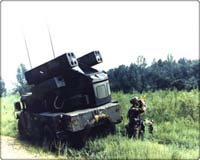 Egypt is requesting 164 Stinger Block I missiles, and 25 Avenger launchers. |
The Pentagon notified Congress Thursday of possible sales of missiles, armored vehicles and cargo aircraft upgrades worth nearly 1.4 billion dollars to four Mideast states.
US Defense Secretary Robert Gates and Secretary of State Condoleezza Rice earlier this year promoted a much larger package of arms sales to the region earlier this year as a means to counter Iran.
The biggest of the possible arms sales announced Thursday was to Saudi Arabia, which the Pentagon said wants to buy 61 light armored vehicles, and 50 Humvees along with assorted guns, machine guns and night vision goggles.
The Defense Security and Assistance Agency said the sale would be worth 631 million dollars.
"The proposed sale of light armored vehicles will provide a highly mobile, light combat vehicle capability enabling Saudi Arabia to rapidly identify, engage and defeat perimeter security threats and rapidly employ counter and anti-terrorism measures," the DSCA said in a statement.
The light armored vehicles, which are built by General Dynamic Land Systems, are the primary combat vehicle of the Saudi Arabia National Guard.
The United Arab Emirates requested 900 Hellfire II Longbow air to ground missiles, and 300 blast fragmentation warheads, which the DSCA valued at up to 428 million dollars.
"The UAE needs these missiles in order to defend its maritime and land borders," the DSCA said.
It said the sale would reduce dependence on US forces.
Egypt is requesting 164 Stinger Block I missiles, and 25 Avenger launchers. The missiles would be configured for launches from vehicles.
The DSCA valued that possible sale at 83 million dollars.
"Egypt will use the Stinger missile to upgrade its air defense capability and will have no difficulty absorbing them into its armed forces," it said said.
Kuwait is seeking upgrades of three L-100-30 aircraft, which are commercial versions of the military C-130, DSCA said.
The upgrades were worth up to 250 million dollars, the agency said.
Original article posted here.Sunday, July 08, 2007
Just like the good ole days of the 70s, when all our allies were torturers, dictators and drug runners
Mubarak Party Faces Fraud Allegations
by Adam Morrow and Khaled Moussa al-Omrani
CAIRO - Doubts are being raised now over the landslide victory of the ruling National Democratic Party (NDP) of President Hosni Mubarak in midterm elections for the Shura Council last month.
NDP spokesmen attributed the results to "good electoral planning," but opposition figures and rights groups say election to the consultative chamber of parliament was marked by widespread vote rigging and coercion.
"The electoral process was subject to shameless and obvious fraud on an unprecedented scale," Saad al-Husseini, secretary-general of the opposition Muslim Brotherhood bloc in parliament, told IPS.
After two rounds of countrywide voting June 11 and 18, the ruling party secured 84 of the 88 council seats being contested. Of the remaining four seats, three went to independents and one to the opposition leftist Tegemmua Party.
The Shura Council has a total of 264 members, of whom 176 are elected and 88 are appointed directly by the president. Council members serve six-year terms, with half the seats coming up for reelection or reappointment every three years. The council is generally confined to a "consultative" role, with little real authority to effect legislation.
Although Egypt's two main secular opposition parties boycotted the elections, the Muslim Brotherhood – the country's largest opposition movement – fielded 19 candidates in the first round of voting. Despite the widespread grassroots support enjoyed by the Islamist group, it failed to win a single seat.
According to Muslim Brotherhood spokesmen, state security forces prevented voters from reaching polling stations in voting districts featuring Brotherhood candidates. A report released by three local human rights organizations shortly after the elections appeared to confirm this, noting that "voters were prevented from casting ballots" amid "a high turnout of central security officers."
Although the Muslim Brotherhood is officially banned by the state, its members – who run in elections as nominal independents – have controlled roughly one fifth of the People's Assembly since the last parliamentary election, held in late 2005. That election, too, saw widespread electoral fraud and intimidation of voters.
For the last six months, the authorities have waged a wide-ranging arrest campaign against the Muslim Brotherhood, detaining hundreds of its leading members since January. Shortly before the first round of voting, police reportedly arrested more than 700 of the group's members.
According to Husseini, final tallies for ballots cast in the Shura elections served to confirm that vote rigging had been widespread.
"In voting districts that didn't feature Brotherhood contenders, NDP candidates won by an average of 40,000 votes," he said. "In districts where Brotherhood candidates did run, however, NDP nominees won by an average of 150,000 votes. This isn't natural."
On June 24, NDP secretary-general Safwat Sherif, a veteran of the party's old guard, was reelected by sitting Shura members for a second term as council speaker. In a statement, Sherif insisted the contest had been "fair and transparent," adding that his party "respected the constitution and the law" and "didn't allow violations in the electoral process."
Government spokesmen also pointed to relatively high turnout rates as proof of the contest's legitimacy. According to figures issued by the official election council, the two voting rounds saw 31 percent and 19 percent of registered voters cast ballots respectively.
But even some government-affiliated observers questioned these figures.
"The official turnout rate wasn't accurate at all," Diaa Rashwan, senior analyst at the government-run al-Ahram Center for Political and Strategic Studies told IPS. "Although they say it was 31 percent, there were hardly any signs on the street that an election was even taking place."
Critics also pointed to the lack of judicial oversight. According to a controversial constitutional amendment made in March, the president has the authority to appoint an election council mandated with establishing electoral regulations and supervising polling stations.
"The primary goal of the constitutional amendments was the removal of judicial supervision in order to guarantee the ruling party's continued control of elections," said Husseini. "All of the electoral fraud comes as a direct result of this lack of judicial oversight."
Farouk al-Ashry, a leading member of the Nasserist Party, which boycotted the Shura races, agreed that elections held in the absence of neutral observers were destined to failure.
"Participation in an election supervised by the ruling regime is just silly," he was quoted as saying in the local press. "The methods employed by the NDP hardly encourage voter participation."
Nevertheless, the official election committee concluded that the races had been both "accurate" and "transparent," with the exception, they said, of a few minor incidents that had no effect on electoral results.
The NDP's control over the council was bolstered further on June 23, when Mubarak appointed an additional 44 council members. These included longtime party stalwarts as well as several members of the party's influential Policies Committee, headed by presidential scion Gamal Mubarak.
Original article posted here.Thursday, July 05, 2007
A Summit of Cronies. No Nasser to be found.
Occupation? What Occupation?
by Uri Avnery
There never was a darker Middle East summit meeting. The darkest there can be.
The four leaders at Sharm-el-Sheikh did not sit together at an intimate round table. Each one sat alone behind a huge table of his own. That ensured a striking separation between them. The four long tables hardly touched. Each one of the leaders, with his assistants behind him, sat like a solitary island in a vast sea.
All four – Hosni Mubarak, King Abdullah of Jordan, Ehud Olmert, and Mahmoud Abbas – bore a severe countenance. Throughout the official part of the conference, not a single smile could be seen.
One after the other, the four delivered their monologues. An exercise in shallow hypocrisy, in empty deceit. Not one of the four raised himself above the murky puddle of sanctimonious phrases.
A short monologue from Mubarak. A short monologue from Abdullah. A medium-length monologue from Abbas. An interminably long monologue from Olmert – a typical Israeli speech, overbearing, educating the whole world, sermonizing, and dripping with morality. Held, of course, in Hebrew, with the obvious aim of appealing to the home public.
The speech included all the required phrases – "Our soul longs for peace," "The vision of two states," "We do not want to rule over another people," "For the good of coming generations," blah, blah, blah. All in standard colonial style: Olmert even talked about "Judea and Samaria," using the official terminology of the occupation.
But in order to "strengthen" Abbas, Olmert addressed him as "president" and not as "chairman," which has been the de rigueur title used by all Israeli representatives since the establishment of the Palestinian Authority. (The wise men of Oslo circumvented this difficulty by referring – in all three languages – to the head of the Authority by the Arab title of ra'is, which can mean both president and chairman.)
And the word that did not appear throughout this long monologue? "Occupation."
Occupation? What occupation? Where occupation? Anybody seen any occupation?
The occupation was not on the agenda of this dark summit. Even in their wildest dreams, the Arab participants could not imagine anything more wonderful than "easing the restrictions." Making life a little bit less difficult for the suffering population. Giving back the Palestinian tax revenues. (That is to say, Israel may give back some of the money it has pocketed.) Moving some of the roadblocks that prevent people from going from one village to the next. (That has already been promised many times and will not happen this time either, because the army and the Shin Bet object. Olmert has already announced that it is impossible for "security reasons.")
With the air of a sultan throwing coins to the paupers in the street, Olmert announced his intention of releasing some Fatah prisoners. 250 coins, 250 prisoners. That was the "generous gift" that was to make the Palestinians jump for joy, "strengthen" Abbas and awaken to new life the dry bones of his organization.
If Olmert had not been sitting so far away from Abbas, he could just as well have spat in his face.
First at all, the number is ridiculous. There are now about 10,000 Palestinian "security" prisoners in Israeli prisons. Every night, about a dozen more are being taken from their homes. Since there is no more room in the prison facilities, the wardens will be pleased to get rid of some inmates. In previous gestures of this nature, the Israeli government has set free prisoners whose term was nearing the end anyhow, and car thieves.
Second, fraternization between Fatah and Hamas is well established in prison. The violent struggle in Gaza has not been projected into the prisons. The famous "prisoners' document," which laid the foundation for the (now defunct) unity government, was worked out jointly by Fatah and Hamas prisoners.
Olmert's announcement of his readiness to release Fatah – and only Fatah – prisoners is designed to sabotage this unity. It could stigmatize the Fatah people as collaborators and Abbas as a leader who is concerned only with the members of his own organization, not giving a damn for the others.
So what did come out of this summit conference? Some say zero plus, some say zero minus. No wonder that the Arab participants looked so somber.
What was it good for? Abbas was in need of strengthening after losing the Gaza Strip. Olmert promised the Americans to strengthen him. But after the conference, Olmert could have used the phrase customarily uttered by Israeli leaders visiting bereaved families: "I came to strengthen, but it is I who has been strengthened."
The sole winner was Olmert. The conference has proved that Mubarak's and Abdullah influence on Israel is nil, and Abbas' position is even worse.
To eliminate any doubt about this, Olmert sent the army at once into the kasbah of Nablus, the heart of Abbas' virtual kingdom, in order to "arrest" the leaders of the military arm of Fatah. They put up determined resistance, wounding several soldiers. A lieutenant lost a hand and a leg. In another incursion, this time into Gaza, 13 Palestinians were killed, including a boy of 9. According to the official version, the aim was to throw the militants off balance so that they would feel hunted.
If this is not occupation, what is it? But God forbid that anyone mention this word in diplomatic discourse – the 10 letters that have turned into an obscenity. A 10-letter word that has become taboo in polite society.
The disappearance of the occupation as a subject for discussion is the real message of the conference. All the arrangements and ceremonies were designed to create the false impression that Olmert and Abbas were the heads of two states conducting negotiations on the basis of equality – rather than the leader of an occupying power and a representative of the occupied population.
That is true for all the discourse about the Israeli-Palestinian conflict at this stage: the world has become so used to the occupation that its very existence has ceased to be a subject for discussion.
That is also evident in the daily reporting on the conflict in the Israeli and foreign media. They report on what's happening – the Gaza takeover by Hamas, the actions of the Israeli army, the problems of Abbas, the decisions of the Israeli government – without the context of the occupation. As if the occupation, with all its killing, destroying, depriving, and dispossessing, were a natural phenomenon like the light of the sun during the day or the twinkling of the stars at night.
There are many subjects that are being discussed, such as: whether to ease the situation of the Palestinians or to increase their misery, whether to allow Abbas' policemen to move freely with their weapons in the West Bank towns to try and eliminate the militias that fight against Israel, whether to enlarge the settlements or not. But all these discussions are based on the unquestioned assumption that the occupation is there forever.
All the talk about "strengthening" is conducted in this context: Abbas and his people are supposed to function as an administration under occupation. According to Olmert and Bush's perception, their job is to fulfill the orders of the occupation, in return for their own money and perhaps some small arms. Incidentally, that is very similar to the "autonomy" promised by Menachem Begin to the "Arab inhabitants of Judea, Samaria, and the Gaza District." Olmert is quite ready to talk about the "Two-State Solution" – much talk, with a lot of bloated words and pathos – while doing everything possible in practice to prevent this "vision" from being realized before the coming of the Messiah.
Into this reality Tony Blair is now stepping.
He is being sent by the Quartet – something that does not really exist, a diplomatic fiction of four that are one.
Europe does not exist as far as the Israeli-Palestinian conflict is concerned, except as a financial instrument of the White House. When the president of the USA wants it, Europe sends alms to the Palestinians (and arms to Israel). When the president of the USA wants to starve the Palestinians, Europe imposes a blockade on them.
The UN has long ago become an instrument of the U.S. Department of State, especially in the Middle East. When the American drill sergeant shouts, the UN jumps to attention or stands at ease.
Russia dreams of regaining the status of a Great Power. As in the days of the czars and Stalin, it thinks in terms of "spheres of influence." The Middle East is an American sphere of influence. Therefore, Russia will not interfere, except by mouthing high-sounding phrases.
The Quartet is simply an American front organization. And Tony Blair is sent to Palestine as a special envoy of President Bush. The master sends his poodle.
What for? If Bush really wanted to realize his "vision" of two states, he wouldn't need Blair. He could do it all alone in a matter of weeks. Even poor Condoleezza could do it, instead of babbling about preparing final-status plans and pigeonholing them, if only she were backed by the determined will of the president.
So what is Blair's appointment for? Is it only to give some status to a redundant international star? To give a consolation prize to somebody who loyally lied and cheated for Bush before and during the Iraq war?
Yes, of course. But his main task is to draw out developments and gain time, to postpone everything, to foster make-believe activity, to provide the Palestinians and the world media with an illusion of progress.
Blair will come, meet, make declarations, ooze charm from every pore, generate headlines, fly, come back, make more announcements, meet again with kings, presidents and prime ministers. A long tail of news-thirsty journalists will follow him everywhere, generate media noise, write, tape, and take pictures, as if he were a male Paris Hilton.
Meanwhile Palestinians and Israelis will keep dying, the wall will be finished, more land will be expropriated, settlements will be enlarged, targeted "terrorists" will be killed, the blockade on Gaza will be tightened, and all the hundred and one daily activities of the occupation will go on, the occupation that dares not speak its name.
The declared task of Blair, too, is to "strengthen Abbas." Woe to the task. Woe to Blair. Woe in particular to Abbas.
Original article posted here.
by Uri Avnery
There never was a darker Middle East summit meeting. The darkest there can be.
The four leaders at Sharm-el-Sheikh did not sit together at an intimate round table. Each one sat alone behind a huge table of his own. That ensured a striking separation between them. The four long tables hardly touched. Each one of the leaders, with his assistants behind him, sat like a solitary island in a vast sea.
All four – Hosni Mubarak, King Abdullah of Jordan, Ehud Olmert, and Mahmoud Abbas – bore a severe countenance. Throughout the official part of the conference, not a single smile could be seen.
One after the other, the four delivered their monologues. An exercise in shallow hypocrisy, in empty deceit. Not one of the four raised himself above the murky puddle of sanctimonious phrases.
A short monologue from Mubarak. A short monologue from Abdullah. A medium-length monologue from Abbas. An interminably long monologue from Olmert – a typical Israeli speech, overbearing, educating the whole world, sermonizing, and dripping with morality. Held, of course, in Hebrew, with the obvious aim of appealing to the home public.
The speech included all the required phrases – "Our soul longs for peace," "The vision of two states," "We do not want to rule over another people," "For the good of coming generations," blah, blah, blah. All in standard colonial style: Olmert even talked about "Judea and Samaria," using the official terminology of the occupation.
But in order to "strengthen" Abbas, Olmert addressed him as "president" and not as "chairman," which has been the de rigueur title used by all Israeli representatives since the establishment of the Palestinian Authority. (The wise men of Oslo circumvented this difficulty by referring – in all three languages – to the head of the Authority by the Arab title of ra'is, which can mean both president and chairman.)
And the word that did not appear throughout this long monologue? "Occupation."
Occupation? What occupation? Where occupation? Anybody seen any occupation?
The occupation was not on the agenda of this dark summit. Even in their wildest dreams, the Arab participants could not imagine anything more wonderful than "easing the restrictions." Making life a little bit less difficult for the suffering population. Giving back the Palestinian tax revenues. (That is to say, Israel may give back some of the money it has pocketed.) Moving some of the roadblocks that prevent people from going from one village to the next. (That has already been promised many times and will not happen this time either, because the army and the Shin Bet object. Olmert has already announced that it is impossible for "security reasons.")
With the air of a sultan throwing coins to the paupers in the street, Olmert announced his intention of releasing some Fatah prisoners. 250 coins, 250 prisoners. That was the "generous gift" that was to make the Palestinians jump for joy, "strengthen" Abbas and awaken to new life the dry bones of his organization.
If Olmert had not been sitting so far away from Abbas, he could just as well have spat in his face.
First at all, the number is ridiculous. There are now about 10,000 Palestinian "security" prisoners in Israeli prisons. Every night, about a dozen more are being taken from their homes. Since there is no more room in the prison facilities, the wardens will be pleased to get rid of some inmates. In previous gestures of this nature, the Israeli government has set free prisoners whose term was nearing the end anyhow, and car thieves.
Second, fraternization between Fatah and Hamas is well established in prison. The violent struggle in Gaza has not been projected into the prisons. The famous "prisoners' document," which laid the foundation for the (now defunct) unity government, was worked out jointly by Fatah and Hamas prisoners.
Olmert's announcement of his readiness to release Fatah – and only Fatah – prisoners is designed to sabotage this unity. It could stigmatize the Fatah people as collaborators and Abbas as a leader who is concerned only with the members of his own organization, not giving a damn for the others.
So what did come out of this summit conference? Some say zero plus, some say zero minus. No wonder that the Arab participants looked so somber.
What was it good for? Abbas was in need of strengthening after losing the Gaza Strip. Olmert promised the Americans to strengthen him. But after the conference, Olmert could have used the phrase customarily uttered by Israeli leaders visiting bereaved families: "I came to strengthen, but it is I who has been strengthened."
The sole winner was Olmert. The conference has proved that Mubarak's and Abdullah influence on Israel is nil, and Abbas' position is even worse.
To eliminate any doubt about this, Olmert sent the army at once into the kasbah of Nablus, the heart of Abbas' virtual kingdom, in order to "arrest" the leaders of the military arm of Fatah. They put up determined resistance, wounding several soldiers. A lieutenant lost a hand and a leg. In another incursion, this time into Gaza, 13 Palestinians were killed, including a boy of 9. According to the official version, the aim was to throw the militants off balance so that they would feel hunted.
If this is not occupation, what is it? But God forbid that anyone mention this word in diplomatic discourse – the 10 letters that have turned into an obscenity. A 10-letter word that has become taboo in polite society.
The disappearance of the occupation as a subject for discussion is the real message of the conference. All the arrangements and ceremonies were designed to create the false impression that Olmert and Abbas were the heads of two states conducting negotiations on the basis of equality – rather than the leader of an occupying power and a representative of the occupied population.
That is true for all the discourse about the Israeli-Palestinian conflict at this stage: the world has become so used to the occupation that its very existence has ceased to be a subject for discussion.
That is also evident in the daily reporting on the conflict in the Israeli and foreign media. They report on what's happening – the Gaza takeover by Hamas, the actions of the Israeli army, the problems of Abbas, the decisions of the Israeli government – without the context of the occupation. As if the occupation, with all its killing, destroying, depriving, and dispossessing, were a natural phenomenon like the light of the sun during the day or the twinkling of the stars at night.
There are many subjects that are being discussed, such as: whether to ease the situation of the Palestinians or to increase their misery, whether to allow Abbas' policemen to move freely with their weapons in the West Bank towns to try and eliminate the militias that fight against Israel, whether to enlarge the settlements or not. But all these discussions are based on the unquestioned assumption that the occupation is there forever.
All the talk about "strengthening" is conducted in this context: Abbas and his people are supposed to function as an administration under occupation. According to Olmert and Bush's perception, their job is to fulfill the orders of the occupation, in return for their own money and perhaps some small arms. Incidentally, that is very similar to the "autonomy" promised by Menachem Begin to the "Arab inhabitants of Judea, Samaria, and the Gaza District." Olmert is quite ready to talk about the "Two-State Solution" – much talk, with a lot of bloated words and pathos – while doing everything possible in practice to prevent this "vision" from being realized before the coming of the Messiah.
Into this reality Tony Blair is now stepping.
He is being sent by the Quartet – something that does not really exist, a diplomatic fiction of four that are one.
Europe does not exist as far as the Israeli-Palestinian conflict is concerned, except as a financial instrument of the White House. When the president of the USA wants it, Europe sends alms to the Palestinians (and arms to Israel). When the president of the USA wants to starve the Palestinians, Europe imposes a blockade on them.
The UN has long ago become an instrument of the U.S. Department of State, especially in the Middle East. When the American drill sergeant shouts, the UN jumps to attention or stands at ease.
Russia dreams of regaining the status of a Great Power. As in the days of the czars and Stalin, it thinks in terms of "spheres of influence." The Middle East is an American sphere of influence. Therefore, Russia will not interfere, except by mouthing high-sounding phrases.
The Quartet is simply an American front organization. And Tony Blair is sent to Palestine as a special envoy of President Bush. The master sends his poodle.
What for? If Bush really wanted to realize his "vision" of two states, he wouldn't need Blair. He could do it all alone in a matter of weeks. Even poor Condoleezza could do it, instead of babbling about preparing final-status plans and pigeonholing them, if only she were backed by the determined will of the president.
So what is Blair's appointment for? Is it only to give some status to a redundant international star? To give a consolation prize to somebody who loyally lied and cheated for Bush before and during the Iraq war?
Yes, of course. But his main task is to draw out developments and gain time, to postpone everything, to foster make-believe activity, to provide the Palestinians and the world media with an illusion of progress.
Blair will come, meet, make declarations, ooze charm from every pore, generate headlines, fly, come back, make more announcements, meet again with kings, presidents and prime ministers. A long tail of news-thirsty journalists will follow him everywhere, generate media noise, write, tape, and take pictures, as if he were a male Paris Hilton.
Meanwhile Palestinians and Israelis will keep dying, the wall will be finished, more land will be expropriated, settlements will be enlarged, targeted "terrorists" will be killed, the blockade on Gaza will be tightened, and all the hundred and one daily activities of the occupation will go on, the occupation that dares not speak its name.
The declared task of Blair, too, is to "strengthen Abbas." Woe to the task. Woe to Blair. Woe in particular to Abbas.
Original article posted here.
Friday, June 15, 2007
Promoting Democracy? Not when it comes to our cronies
Arrests in Egypt Point Toward a Crackdown

Shawn Baldwin for The New York Times
Naisa Said, with her children, awaits word on her husband, Abdellatif Muhammad Said, who was arrested.
CAIRO, June 14 — Heavily armed police officers woke the Said family at 2 a.m. with pounding on the front door. The parents dressed quickly as their two children drifted between sleep and fear. The police seized books, documents and computer equipment. They blindfolded the father, Abdellatif Muhammad Said, 40, and took him away.
The raid occurred about two weeks ago in a tidy, two-bedroom apartment that also served as an office for a family business that promoted an unconventional view of Islam over the Internet. The Saids and their relatives concluded that they had run afoul of the state-sanctioned vision of faith.
That may well be true. But in the weeks since Mr. Said disappeared into the netherworld of Egyptian jails, it has also begun to appear that his case may have as much to do with efforts to challenge the governing party’s monopoly on power, as it does with holding a view of Islam that many Muslims consider heretical. The arrest appears part of a zero-tolerance policy toward anybody who challenges the status quo, political analysts said.
In recent days, hundreds of members of the Muslim Brotherhood, the popular outlawed political movement, have been arrested. A request was denied to free from prison the onetime presidential candidate and political dissident Ayman Nour. A prominent member of Parliament who helped form a new political party was forced out in connection with a years-old financial case.
The state-controlled press has virulently attacked Egyptians who attended a conference in Doha, Qatar, to discuss democracy. And elections on Monday to select members of the upper house of Parliament were described by independent organizations as manipulated to ensure that the governing party won a majority of the seats — a charge the government denies.
“They don’t want any divergence, they don’t want any noise,” said Mohamed Sayyid Said, deputy director of the government-financed Ahram Center for Political and Strategic Studies. “They don’t want anyone to talk. They don’t want anyone to disagree.”
Government officials declined to respond to requests for information about the arrests or the recent series of events described by analysts as a political crackdown.
Ezzat Darag, a member of the governing National Democratic Party bloc in Parliament, defended the government’s actions. “The general atmosphere is freedom, freedom, freedom,” he said. “You can’t open up all the way. There has to be a ceiling of respect.”
A prominent religious scholar at the Islamic Research Institute at Al Azhar also defended the arrests on religious and political grounds. “They didn’t arrest them because of their ideas alone,” said the scholar, Sheik Abdel Moety Bayoumy. “These ideas constitute a movement that has political goals and can cause sedition. Politics always starts with an idea, and sedition starts with ideas.”
The nexus between democracy, religion and Mr. Said is his cousin — Amr Tharwat. Like Mr. Said, Mr. Tharwat contends that Islamic law should be based solely on the Koran, not the sayings and traditions of the Prophet Muhammad, known as the Hadiths. The men support a secular government and seek to promote peace and tolerance among faiths, though their rejection of the Hadiths is considered radical within the faith.
Mr. Tharwat attended the democracy conference in Doha. He worked for the Ibn Khaldun Center for Development Studies, headed by Saad Eddin Ibrahim, who is Egypt’s most renowned democracy advocate. Mr. Tharwat was arrested on the same night as Mr. Said.
“Their goal was to disrupt, derail and intimidate,” Mr. Ibrahim said. “The government’s obsession is now to create conformity with its ideas.”
Mr. Tharwat was supposed to oversee Ibn Khaldun’s poll monitoring operation on Monday, for the election of 88 members of the upper house of Parliament. The governing party, which won 69 of the 71 seats that were decided without a runoff, said the election was fair and open.
Some voters said, though, that it appeared that ballot boxes were already full when the polling places opened in the morning. The government denied the charge, but Mr. Ibrahim said some of his monitors confirmed the accusation.
The Interior Ministry did not respond to questions about Mr. Tharwat’s arrest. But another critical link is Mr. Ibrahim. Once imprisoned in connection with his work to promote democracy, he is again a focus of state ire because he attended the Doha conference and because he met, briefly, with President Bush in Prague. The government-controlled press labeled him an agent of the United States and Israel for those actions. Mr. Ibrahim’s essays have appeared on Mr. Said’s Web site.
President Hosni Mubarak is furious with Mr. Ibrahim, so much so that officials suggested that he leave the country for a time to allow the president to cool off, said Mr. Ibrahim and other people familiar with the president’s thinking who spoke anonymously because of the sensitivity of the issue.
But on the fourth floor of the Said family house, there is no talk of Mr. Ibrahim or politics, only talk of Mr. Said and Mr. Tharwat and their possible whereabouts. The authorities have been referring to the family as Koranists, a derogatory label in the context of the faith, suggesting allegiance to a cultlike organization.
The head of the family and the force behind the movement in Egypt is Mr. Said’s half brother, Ahmed Sobhy Mansour, a former scholar at Al Azhar. He was granted asylum by the United States.
For the last year he has paid his relatives about $150 a month to update his writings and to post them on the Web as part of what he calls “an effort to reform Islam from within.”
Mr. Said’s wife, Naisa, has waited with her two children, Baher, 4, and Amira 3, for any news about her husband and his cousin. “Ours is a school of thought, not a movement or a group,” she said. “We want to fight the extremists from within the Koran. Now I am worried they will take me and my children, too.”
Tuesday, June 05, 2007
Bush Style Egyptian Democracy: Crush Opposition through the Use of the Kangaroo Court Judiciary
Egypt Muslim Brotherhood Trial Resumes
BY OMAR SINAN
CAIRO, Egypt (AP) - A military trial of 40 senior members of Egypt's most powerful opposition group on charges of terrorism and money laundering resumed Sunday, a defense attorney and a court official said.
The trial is part of an ongoing government crackdown against the banned Muslim Brotherhood whose members hold almost 20 percent of the seats in parliament and pose the most significant challenge to President Hosni Mubarak's regime.
Human rights groups have condemned Egypt's policy of trying civilians before military courts, which usually issue swift and harsh verdicts with no possibility of appeal except asking the president for clemency.
The Brotherhood has undergone several military trials, but this is the largest in years.
More than 100 Arab and Western lawyers representing the defendants arrived at the military base north of Cairo where Sunday's session took place. But only a few were let in the courtroom, said Abdel Moneim Abdel Maksoud, a member of the group's defense team.
A court official, speaking on condition of anonymity because he was not authorized to speak to the media, said Judge General Abdel Fattah Abdallah opened Sunday's session by reading the charges. The defendants denied all of the charges.
During the proceedings, Khayrat el-Shater, the Brotherhood's No. 3, stood behind bars with the other defendants.
Civilian courts have twice ordered the release of several defendants, including el-Shater, known as the group's chief strategist and financier. But Mubarak has ignored the rulings.
Abdel Maksoud argued with the judge over the detentions, saying there was no order or rule to renew their imprisonment.
"If the court was implementing the law, they should have been released by now, but it is a political case," he added.
After the defense's arguments, the trial was adjourned until July 15.
The Brotherhood has been banned since 1954 but continues to operate. Its lawmakers, who run as independents, hold 88 seats in the 454-seat parliament.
The group advocates implementing Islamic law but says it wants democratic reforms in Egypt, where Mubarak has had a quarter century of authoritarian rule.
More than 400 Brotherhood members have been arrested in a crackdown since December, after Brotherhood students carried out a military-like parade. The government has alleged the movement was forming an armed wing, but the group denies the claim.
Original article posted here.
BY OMAR SINAN
CAIRO, Egypt (AP) - A military trial of 40 senior members of Egypt's most powerful opposition group on charges of terrorism and money laundering resumed Sunday, a defense attorney and a court official said.
The trial is part of an ongoing government crackdown against the banned Muslim Brotherhood whose members hold almost 20 percent of the seats in parliament and pose the most significant challenge to President Hosni Mubarak's regime.
Human rights groups have condemned Egypt's policy of trying civilians before military courts, which usually issue swift and harsh verdicts with no possibility of appeal except asking the president for clemency.
The Brotherhood has undergone several military trials, but this is the largest in years.
More than 100 Arab and Western lawyers representing the defendants arrived at the military base north of Cairo where Sunday's session took place. But only a few were let in the courtroom, said Abdel Moneim Abdel Maksoud, a member of the group's defense team.
A court official, speaking on condition of anonymity because he was not authorized to speak to the media, said Judge General Abdel Fattah Abdallah opened Sunday's session by reading the charges. The defendants denied all of the charges.
During the proceedings, Khayrat el-Shater, the Brotherhood's No. 3, stood behind bars with the other defendants.
Civilian courts have twice ordered the release of several defendants, including el-Shater, known as the group's chief strategist and financier. But Mubarak has ignored the rulings.
Abdel Maksoud argued with the judge over the detentions, saying there was no order or rule to renew their imprisonment.
"If the court was implementing the law, they should have been released by now, but it is a political case," he added.
After the defense's arguments, the trial was adjourned until July 15.
The Brotherhood has been banned since 1954 but continues to operate. Its lawmakers, who run as independents, hold 88 seats in the 454-seat parliament.
The group advocates implementing Islamic law but says it wants democratic reforms in Egypt, where Mubarak has had a quarter century of authoritarian rule.
More than 400 Brotherhood members have been arrested in a crackdown since December, after Brotherhood students carried out a military-like parade. The government has alleged the movement was forming an armed wing, but the group denies the claim.
Original article posted here.
Thursday, April 12, 2007
Another US ally, another democracy hater, human rights violator
Egypt rights groups allege fraud, low voter turnout in constitutional referendum
Joshua Pantesco at 12:06 PM ET

[JURIST] Six Egyptian human rights organizations issued a report Tuesday alleging that only five percent of Egyptian citizens participated in last month's constitutional referendum [JURIST report], far lower than the 27 percent voting rate announced by Egyptian Justice Minister Mamdouh Marei, and that the vote was marred by fraud. Seventy-six percent of those casting ballots voted in favor of 34 amendments [JURIST report] to the country's constitution [text]. The vote was boycotted [JURIST report] by the country's main opposition party. The rights groups criticized not only the low voter turnout, but also raised fraud allegations of ballot stuffing and voter intimidation and said the substance of the amendments merely cements President Hosny Mubarak's hold on power and grants the police wide-ranging arrest powers, among other complaints.
Original article posted here.
Joshua Pantesco at 12:06 PM ET
 | |
Original article posted here.
Tuesday, March 13, 2007
Another Example Upholding Freedom of Major US Ally -- Blogger in Jail for Insulting Egypt's Mubarak
An Egyptian appeals court on Monday upheld a 4-year jail sentence against a blogger convicted of insulting Islam and President Hosni Mubarak.
Abdel-Karim Suleiman, 22, last month became the first Egyptian to be jailed for his writing on the Internet in what human rights groups and bloggers described as a dangerous precedent that could limit online freedom in the country.
"This was not a verdict issued on a legal basis," said Gamal Eid, a human rights activist and one of Suleiman's lawyers.
"This is a religious verdict similar to those of the Inquisition," he told Reuters.
The court in the port city of Alexandria also allowed a group of Islamist lawyers to file a separate lawsuit against Suleiman demanding compensation on the grounds that his writings had harmed them as Muslims.
A photographer working with Reuters said the Islamist lawyers criticised Suleiman's lawyers during the proceedings for defending him.
"You are an infidel," one of the Islamist lawyers shouted at a member of Suleiman's defence team after the trial, sparking a shouting match between the groups.
The case against Suleiman, a secular-minded Muslim who uses the name Kareem Amer on his blog (http://karam903.blogspot.com), was based on a complaint by al-Azhar University about eight articles written since 2004.
Suleiman accused the conservative Sunni institution of promoting extremist thought and described some companions of the Prophet Mohammad as "terrorists". He also compared President Hosni Mubarak to the dictatorial Pharaohs of ancient Egypt.
Many in the religiously conservative Arab nation reject Suleiman's views on religion.
Suleiman stood at the defendant's pen on Monday wearing a blue prison uniform. He did not deny writing the articles but said they merely represented his views.
Ahmed Seif al-Islam, one of his lawyers, said the defence team planned to take the case to the Court of Cassation, Egypt's highest appeals court.
He said the lower court's ruling rested on articles in the penal code that did not justify the sentence.
"The problem in these kind of cases is that the people who distinguish between their religious feelings and the law are few," he said.
Original article posted here.
Abdel-Karim Suleiman, 22, last month became the first Egyptian to be jailed for his writing on the Internet in what human rights groups and bloggers described as a dangerous precedent that could limit online freedom in the country.
"This was not a verdict issued on a legal basis," said Gamal Eid, a human rights activist and one of Suleiman's lawyers.
"This is a religious verdict similar to those of the Inquisition," he told Reuters.
The court in the port city of Alexandria also allowed a group of Islamist lawyers to file a separate lawsuit against Suleiman demanding compensation on the grounds that his writings had harmed them as Muslims.
A photographer working with Reuters said the Islamist lawyers criticised Suleiman's lawyers during the proceedings for defending him.
"You are an infidel," one of the Islamist lawyers shouted at a member of Suleiman's defence team after the trial, sparking a shouting match between the groups.
The case against Suleiman, a secular-minded Muslim who uses the name Kareem Amer on his blog (http://karam903.blogspot.com), was based on a complaint by al-Azhar University about eight articles written since 2004.
Suleiman accused the conservative Sunni institution of promoting extremist thought and described some companions of the Prophet Mohammad as "terrorists". He also compared President Hosni Mubarak to the dictatorial Pharaohs of ancient Egypt.
Many in the religiously conservative Arab nation reject Suleiman's views on religion.
Suleiman stood at the defendant's pen on Monday wearing a blue prison uniform. He did not deny writing the articles but said they merely represented his views.
Ahmed Seif al-Islam, one of his lawyers, said the defence team planned to take the case to the Court of Cassation, Egypt's highest appeals court.
He said the lower court's ruling rested on articles in the penal code that did not justify the sentence.
"The problem in these kind of cases is that the people who distinguish between their religious feelings and the law are few," he said.
Original article posted here.
Subscribe to:
Posts (Atom)